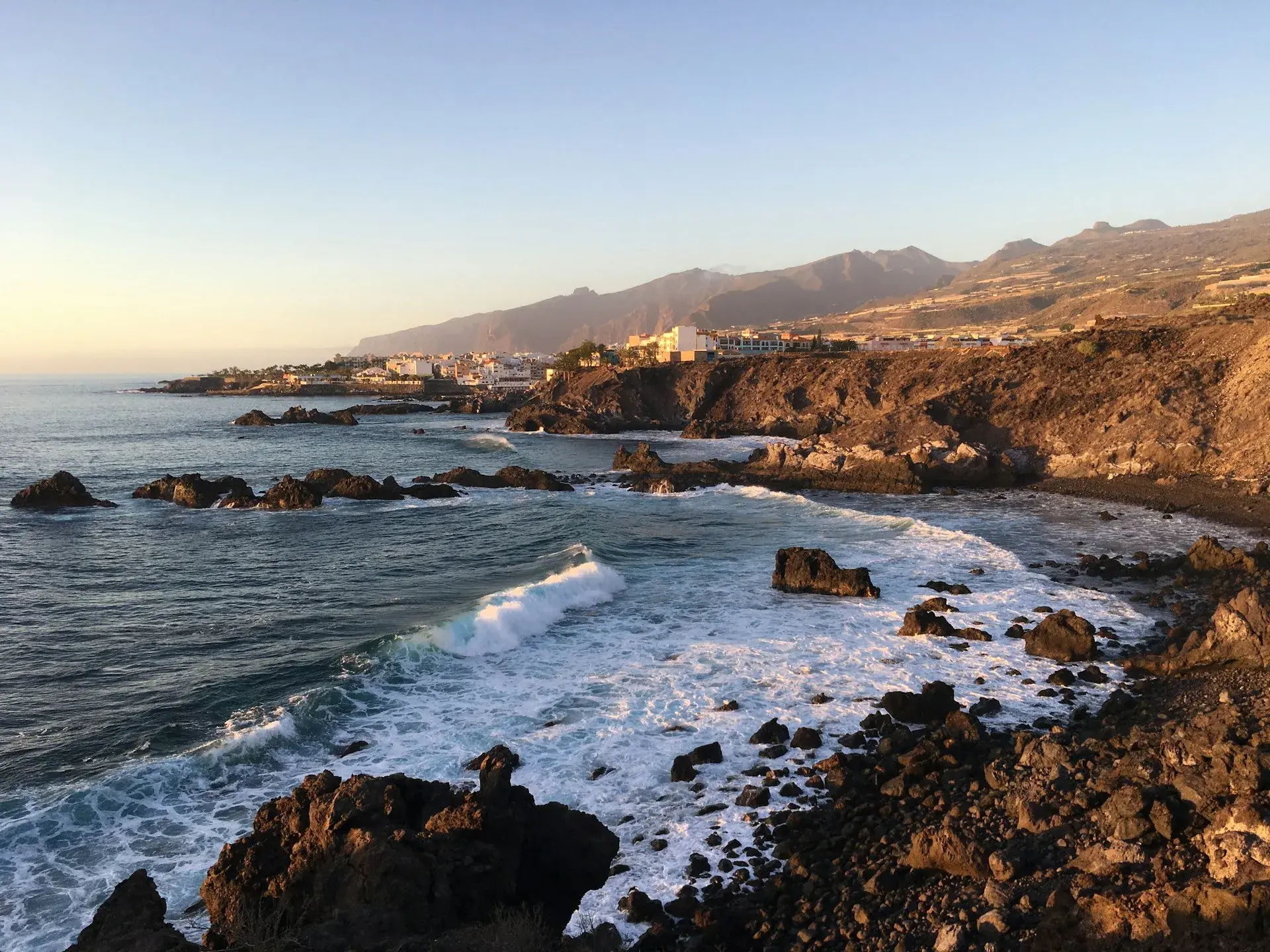
Photo by Maria Bobrova on Unsplash
Best Beaches in the North of Tenerife: Black Sand and Big Waves
The beaches in the north of Tenerife have black sand, face the open Atlantic and are almost never crowded. If you want calm water and facilities, the ones that work best are Playa Jardín in Puerto de la Cruz, San Marcos in Icod and Mesa del Mar in Tacoronte; if you want scenery and waves, El Bollullo, El Socorro and the coves of Anaga; and if you would rather swim without waves, the natural pools of Bajamar, Punta del Hidalgo and Garachico replace the beach for half the year. This guide follows the coast from east to west with the real status of each beach in 2026: Benijo and Los Patos remain closed, car access to El Bollullo is restricted and Playa Jardín has had occasional swimming bans.
How the north differs from the south
The difference is not just the colour of the sand. The north is hit head-on by the trade winds, the north-easterly wind that forms the sea of clouds over the midlands, and so it has more cloud, more humidity and considerably fewer hours of sunshine than Arona or Adeje. The sea is the Atlantic without breakwaters: strong waves all year, frequent ground swell from October to March and rip currents as the main hazard. Lifeguards are concentrated on the town beaches (Playa Jardín, San Marcos, El Socorro, Las Teresitas) and at the municipal pools; Anaga, El Bollullo and the coves of Los Realejos are never supervised. In exchange, you get cliffs, banana plantations running down to the shore, fish restaurants next to the sand and beaches where there is room for everyone even in August. The guide to the best beaches in the south of Tenerife covers the other side of the island, and the general guide to the best beaches in Tenerife compares both.
Anaga: Roque de las Bodegas, Almáciga, Benijo and Antequera
The Taganana coast, inside the Parque Rural de Anaga, has the most photographed beaches on the island, an hour from Santa Cruz via the TF-12 and TF-134. TITSA line 946 links the Intercambiador (bus station) in Santa Cruz with San Andrés, Taganana and Almáciga in around an hour, with fewer services in winter; guagua is the local word for bus. For trails and viewpoints, see the Anaga Rural Park guide.
Roque de las Bodegas
- Area and sand: the first beach on the coast road after Taganana; black sand with callaos (rounded boulders) and rocks, about 380 metres, the largest and busiest in the area.
- Sea: gentler waves than at Almáciga and Benijo, but with strong currents and sets that arrive suddenly; no permanent lifeguards.
- Facilities and parking: fresh fish restaurants next to the sand, the only ones on the Taganana coast; fewer than fifty spaces along the roadside.
- Best for / drawbacks: families who prefer a beach with a restaurant, and lunch with a view; callaos at the water's edge and scarce parking at weekends.
Almáciga
- Area and sand: a kilometre further on, below the hamlet where the 946 bus terminates; black sand with rocks, about 300 metres.
- Sea: strong waves all year; the beach used by Anaga's surf schools. No facilities or lifeguards.
- Parking: fewer than fifty spaces.
- Best for / drawbacks: surfing, photography and sunset, and the swimming alternative while Benijo stays closed; swim only when the sea is calm and stay close to the shore.
Benijo
The cove facing the Roques de Anaga has been officially closed since July 2024 because of rockfalls onto its access stairway. In 2026 Santa Cruz City Council processed the stabilisation of the slope as an emergency measure, but in autumn the work had still not been carried out and there was no reopening date, and the local police fine anyone who goes down. The viewpoint and the restaurants remain open. The Benijo beach guide covers the closure, access and the coastal path towards Almáciga.
Antequera
On the Igueste de San Andrés side, Antequera is a dark grey sand beach of about 400 metres that you can only reach on foot or by boat. The trail from Igueste passes the old semaphore station and demands good fitness, navigation skills and several hours; at high tide the beach is almost covered. The easy alternative is a boat trip from Santa Cruz or San Andrés. There are no facilities, naturism is traditional here and swimming is only sensible in calm conditions. It is not a plan for children.
The golden exception: Las Teresitas
It is on the northern side of Santa Cruz, although it looks nothing like the rest of this list: a stretch of golden sand of about 1,300 metres with palm trees, created in the 1970s with sand from the Sahara and protected by a breakwater that keeps the water calm. It has lifeguards, showers, toilets, changing rooms, beach bars, sun loungers and adapted bathing with amphibious chairs. TITSA line 910 runs from the Intercambiador in Santa Cruz roughly every twenty minutes and spares you the car park, which fills up on summer weekends. It is the safest beach for swimming with children in the whole northern half of the island.
La Laguna: Bajamar and Punta del Hidalgo
The La Laguna coast has no big beaches, but it does have the best municipal natural pools in the north. Bajamar has two large pools and a children's pool, lifeguards, showers, accessible toilets, a ramp into the water with an amphibious chair and a small light-sand beach sheltered by the breakwater; in Punta del Hidalgo, El Arenisco offers the same facilities and accessibility. Both hold a Blue Flag in 2026, along with the one at Jóver, in Tejina. TITSA line 050 gets there from the Intercambiador in La Laguna in about forty minutes. They have their own guide: the natural pools of Tenerife.
Acentejo: Mesa del Mar and El Pris (Tacoronte)
- Area and sand: the steep Tacoronte coast, with a road of tight bends and a short tunnel that comes out onto the beach; black sand, about 350 metres, with a Blue Flag in 2026.
- Sea: moderate waves; next to the beach there are two natural pools, one usable all year and another that only fills in summer.
- Facilities and parking: showers, toilets, accessible entry, restaurants and a small jetty; several parking areas in the village and public transport only in summer.
- Best for / drawbacks: a quiet day of beach and pool, and sunset over Teide; the road down and a village that fills up in August.
Fifteen minutes' walk along the coast, El Pris is a fishing village with a natural pool with steps and ramps with handrails, comfortable for older visitors and families, and restaurants serving Canarian food.
Puerto de la Cruz and the Orotava Valley
Playa Jardín and Punta Brava
- Area and sand: the western end of Puerto de la Cruz, right next to Loro Parque; black sand in three coves (Playa Jardín, Playa Chica and Punta Brava) with gardens designed by César Manrique and rock breakwaters.
- Sea: acceptable inside the breakwaters and powerful outside them. It was closed to swimming from July 2024 to June 2025, and in 2026 there were temporary closures of the central section after poor test results from the public health authority (the latest from 7 to 9 October), with no cause identified. Check its status before you go and look at the flag and the signs before going in.
- Facilities: toilets, showers, sun loungers, children's play area, restaurants and accessible entry at all three coves.
- Parking and bus: more than a hundred spaces per cove, hard to find in summer; urban line 381 stops at Punta Brava.
- Best for / drawbacks: a fully equipped town beach, walks, sunsets and the fishing-village feel of Punta Brava; the occasional bans and water that is cooler and rougher than in the south.
El Bollullo (La Orotava)
- Area and sand: El Rincón, a protected landscape of banana plantations between Puerto de la Cruz and La Orotava; fine black sand, about 200 metres below a cliff with rock stacks in the water.
- Sea: powerful all year; a beach for looking at, walking and experienced surfing, not for swimming with children. No lifeguards.
- Facilities: a restaurant at the top and sun loungers in season.
- Access and parking: a stepped path from the restaurant; from the centre of Puerto de la Cruz, about 45 minutes on foot along the coastal path. Since December 2025 the City Council only lets residents and workers drive through and has closed the private car parks at the end of the track, so you have to park about a kilometre and a half earlier and walk down a road without pavements.
- Best for / drawbacks: scenery, photography, surfing and hikers; the walk and the access restriction.
Los Patos (La Orotava)
A kilometre east of El Bollullo, Los Patos is the classic naturist beach of the north: a kilometre of black sand at low tide, a cliff behind and Teide in the background. It is closed: after reopening in 2022, La Orotava City Council closed access again in late 2023 because of rockfalls, and in 2025 it commissioned a geological study which, because this is a protected area, complicates any intervention. In autumn 2026 there was no reopening date. Do not go down the closed stairway: the reason is the instability of the cliff.
Los Realejos: El Socorro and Castro
El Socorro
- Area and sand: the Los Realejos coast, with a signposted turn-off from the northern motorway next to the Mirador de San Pedro; fine grey sand, about 400 metres long and 60 wide.
- Sea: strong waves and currents that break far from the shore, so surfers and swimmers share the beach; it hosts surf training and competitions. Blue Flag in 2026. In 2026 it was temporarily closed to swimming from 23 to 25 September after a poor test result from the public health authority; check its status before you go.
- Facilities: lifeguard post in season, toilets, showers, beach bar and accessible entry.
- Parking and bus: a large free car park that fills up in summer and on Sundays; town bus service.
- Best for / drawbacks: surfing, bodyboarding, sunset and sand without buildings; not a beach for a calm swim, and with a ground swell the red flag is common.
Castro
Below the Rambla de Castro, the area of palm trees and trails between Los Realejos and Puerto de la Cruz, lies a beach of callaos that you can only reach on foot, with no facilities or lifeguards. It is a spot for those already walking the rambla trail, not a beach destination: the sea comes in hard. Wear closed shoes and go at low tide.
Icod de los Vinos and the Isla Baja
San Marcos (Icod de los Vinos)
- Area and sand: the shell-shaped bay of the port of San Marcos, below the old town of Icod and its dragon tree; black sand, about 160 metres sheltered by the inlet.
- Sea: the calmest in the north, which is why it has been the area's family beach, and it keeps its Blue Flag in 2026.
- Facilities: toilets, showers, sun loungers and restaurants with terraces over the sand.
- Parking and bus: fewer than fifty spaces; line 363 (Puerto de la Cruz–Buenavista) stops at Icod bus station.
- Best for / drawbacks: families, fish lunches and a swim without waves; the harbour breakwater altered the currents and the beach has lost sand, to the point that in 2026 residents described it as unusable because of the stones, with the restoration project on hold. Check its condition before going with children.
Garachico and Los Silos
Garachico has no sandy beach, but El Caletón, the natural pools formed by lava from the 1706 eruption, is the best place to swim in the Isla Baja, with lifeguards in summer, showers and parking. Further west, in Los Silos, the Charco de la Araña appears at low tide next to a small beach of callaos; charco is the local word for a natural rock pool. Both are in the natural pools guide, and the old town of Garachico, one of the prettiest villages in Tenerife, is worth the trip on its own.
Which one to choose for your trip
- With children: Las Teresitas above all; then the pools at Bajamar and Punta del Hidalgo, San Marcos (if its condition allows) and Playa Jardín with a green flag.
- Surfing: El Socorro and Almáciga; El Bollullo for experienced surfers.
- Scenery and photography: Benijo from the viewpoint, Almáciga, El Bollullo and the cliffs of Antequera from the boat.
- Peace and quiet: Mesa del Mar and El Pris on weekdays, Castro, Antequera.
- Naturism: Antequera and the coves of Anaga; Los Patos when it reopens.
- Without a car: Las Teresitas (910), Almáciga and Roque de las Bodegas (946), Bajamar and Punta del Hidalgo (050), Playa Jardín (Puerto de la Cruz town buses), San Marcos (363 to Icod).
- Eating by the sea: Roque de las Bodegas, San Marcos, El Pris and Punta Brava.
Tips for a beach day in the north
Check the sea conditions before you set off: with a ground swell, the open beaches (Anaga, El Bollullo, El Socorro) are not safe and the natural pools close. Go in the morning, because in summer the trade-wind clouds often cover the coast from mid-afternoon. Check the tides if you want sand at Antequera or Castro, wear closed shoes for the stepped descents and the callaos, and on any unsupervised beach do not swim alone or stray far from the shore. If the day starts with a red flag, the alternative plan is in the guide to what to see in the north of Tenerife: La Orotava, Garachico, the dragon tree of Icod or the viewpoints of Anaga.
Beach-by-beach guides
Each of these beaches has its own page, with access, parking, bus, facilities and sea conditions:
- Las Teresitas Beach, Tenerife
- Almáciga Beach, Tenerife
- Roque de las Bodegas Beach, Tenerife
- El Bollullo Beach, Tenerife
- Playa Jardín, Puerto de la Cruz
- El Socorro Beach, Los Realejos
- San Marcos Beach, Icod de los Vinos
Frequently asked questions
What is the best beach in the north of Tenerife for swimming?
Las Teresitas is the only one with calm water guaranteed by a breakwater and every facility. Among the black-sand beaches, San Marcos has the most sheltered bay and Playa Jardín the most effective breakwaters, although both have had problems in 2026. For swimming without waves, the pools at Bajamar and El Arenisco are safer than any beach.
Are Benijo and Los Patos open?
No. Benijo has been closed since July 2024 and Los Patos since late 2023, both because of rockfalls and with no reopening date as of autumn 2026. Almáciga is the alternative in Anaga, and El Bollullo, with its access on foot, in the Orotava Valley.
Are there lifeguards on the northern beaches?
Only on the town beaches and in season: Las Teresitas, Playa Jardín, El Socorro and San Marcos have a lifeguard post, and the municipal pools at Bajamar, Punta del Hidalgo and Garachico are supervised in summer. Anaga, El Bollullo, Castro and Antequera are not supervised.
Can you get to the northern beaches by bus?
Yes, to most of them: the 910 to Las Teresitas, the 946 to Taganana and Almáciga, the 050 to Bajamar and Punta del Hidalgo, the Puerto de la Cruz town buses to Playa Jardín and Punta Brava, and the 363 to Icod and Garachico. El Bollullo and Castro are reached on foot; Antequera only on foot from Igueste or by boat.
How warm is the water in the north?
Slightly cooler than in the south, but fine for swimming all year: around 19 °C in late winter and 23 to 24 °C in early autumn. The wind and the lack of sun make it feel cooler when you get out of the water.
Keep planning
- The best natural pools in Tenerife: Bajamar, El Caletón, Charco del Viento and the other rock pools, with access and safety.
- Anaga Rural Park: a visitor's guide: roads, trails and viewpoints to combine with the Taganana beaches.
- The best beaches in the south of Tenerife: if you need guaranteed sun and calm water.
- The best beaches in Tenerife: the full island selection by type of trip.
You may also like
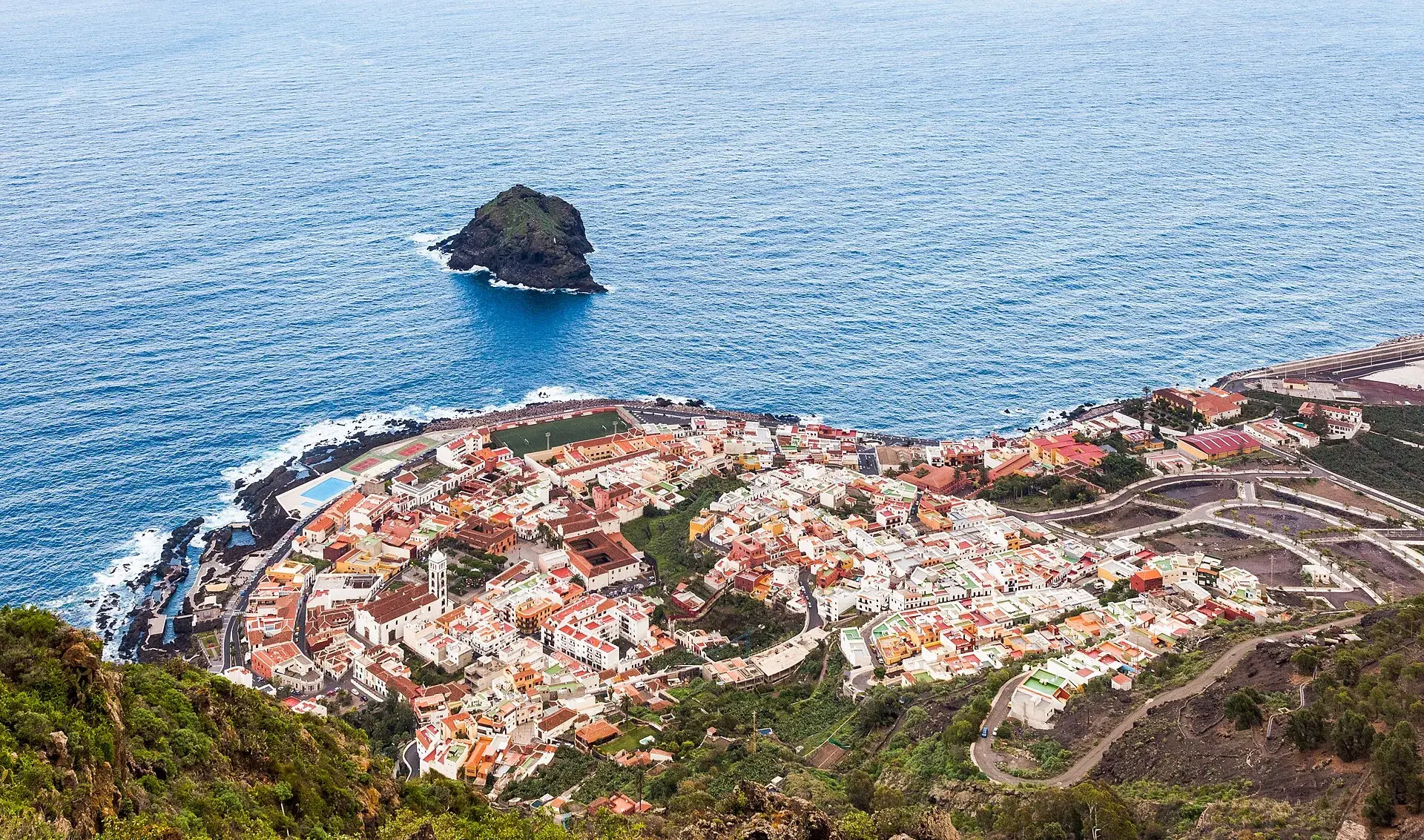
Garachico, Tenerife: old town, El Caletón and the Isla Baja
What to see in Garachico in half a day: the port buried by lava in 1706, the historic centre, El Caletón, the castle, San Roque, buses and where to park.
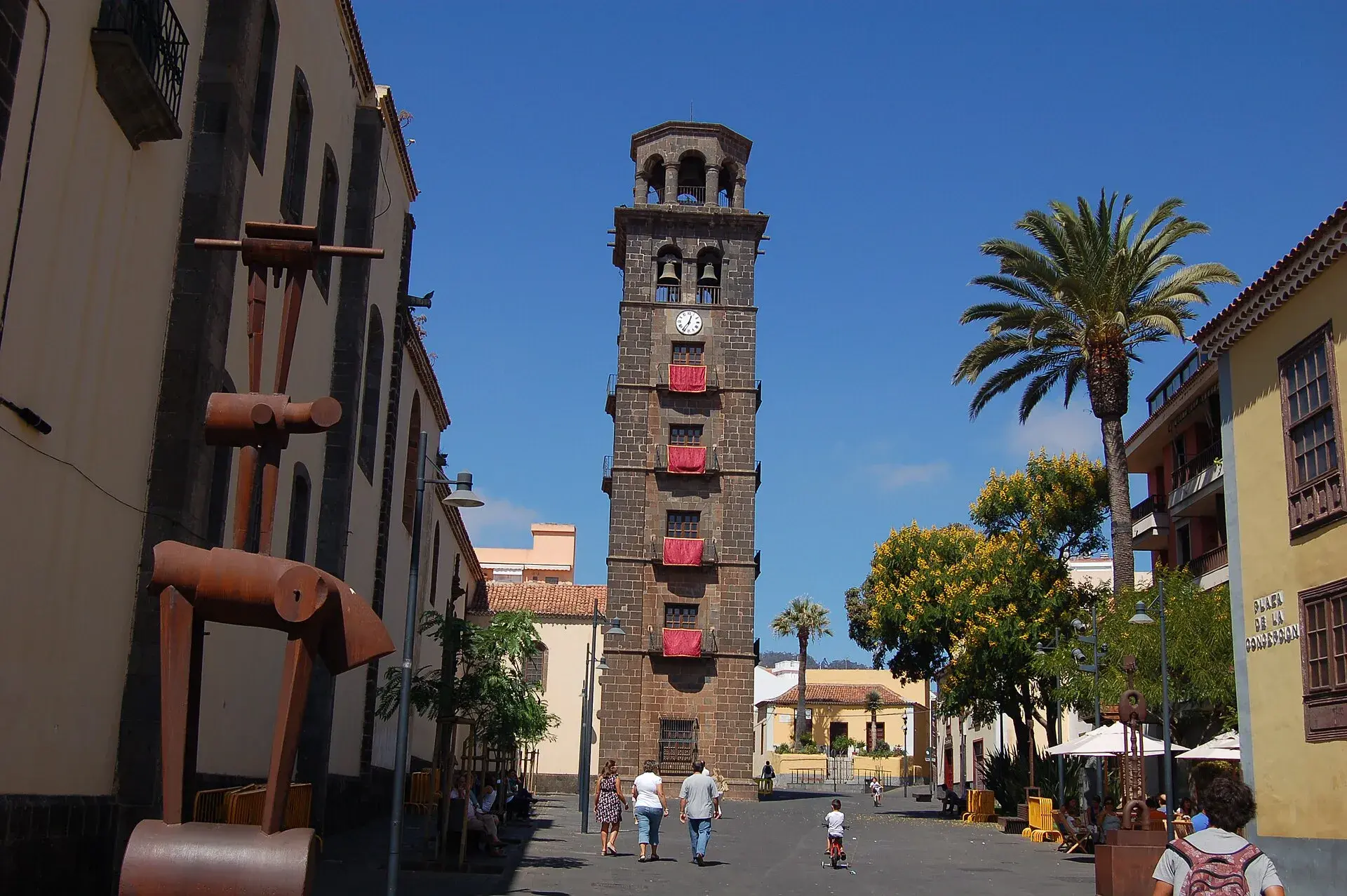
La Laguna, Tenerife: old town, museums and how to get there
What to see in La Laguna step by step: walking route through the World Heritage old town, cathedral, museums, tram, parking, festivals and a trip to Anaga.
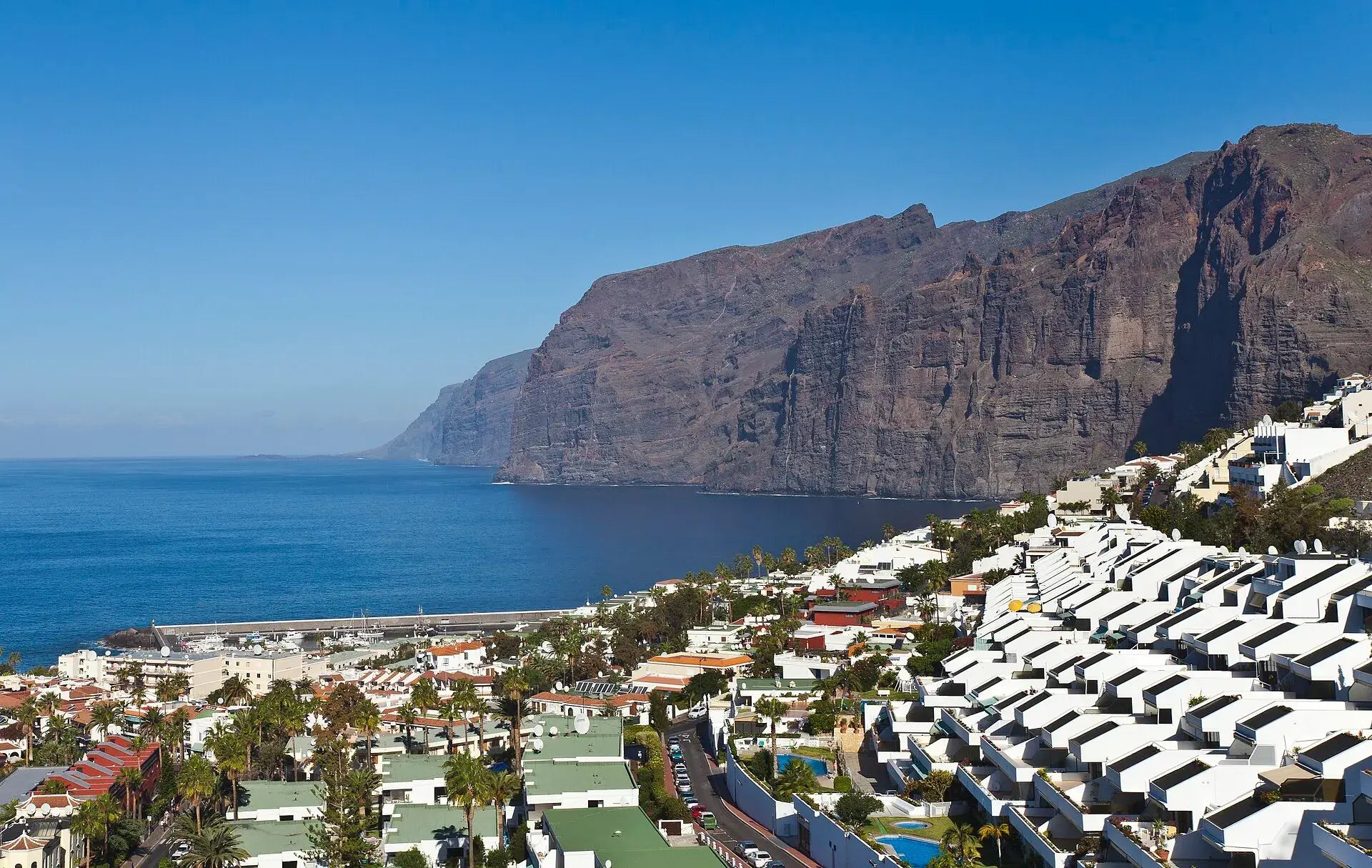
Los Gigantes Tenerife: cliffs, boat trips, beaches and access
Los Gigantes (Tenerife): cliffs up to 600 m, Archipenque viewpoint, boats from the marina, Los Guíos, rock pools, buses 473 and 477 and where to park.
Tenerife protected areas rules: trail quotas and drones
Rules for Tenerife's protected areas: trails that need booking, Teide, Masca and El Pijaral, drones, camping, wildfire alerts, dogs and fines in 2026.