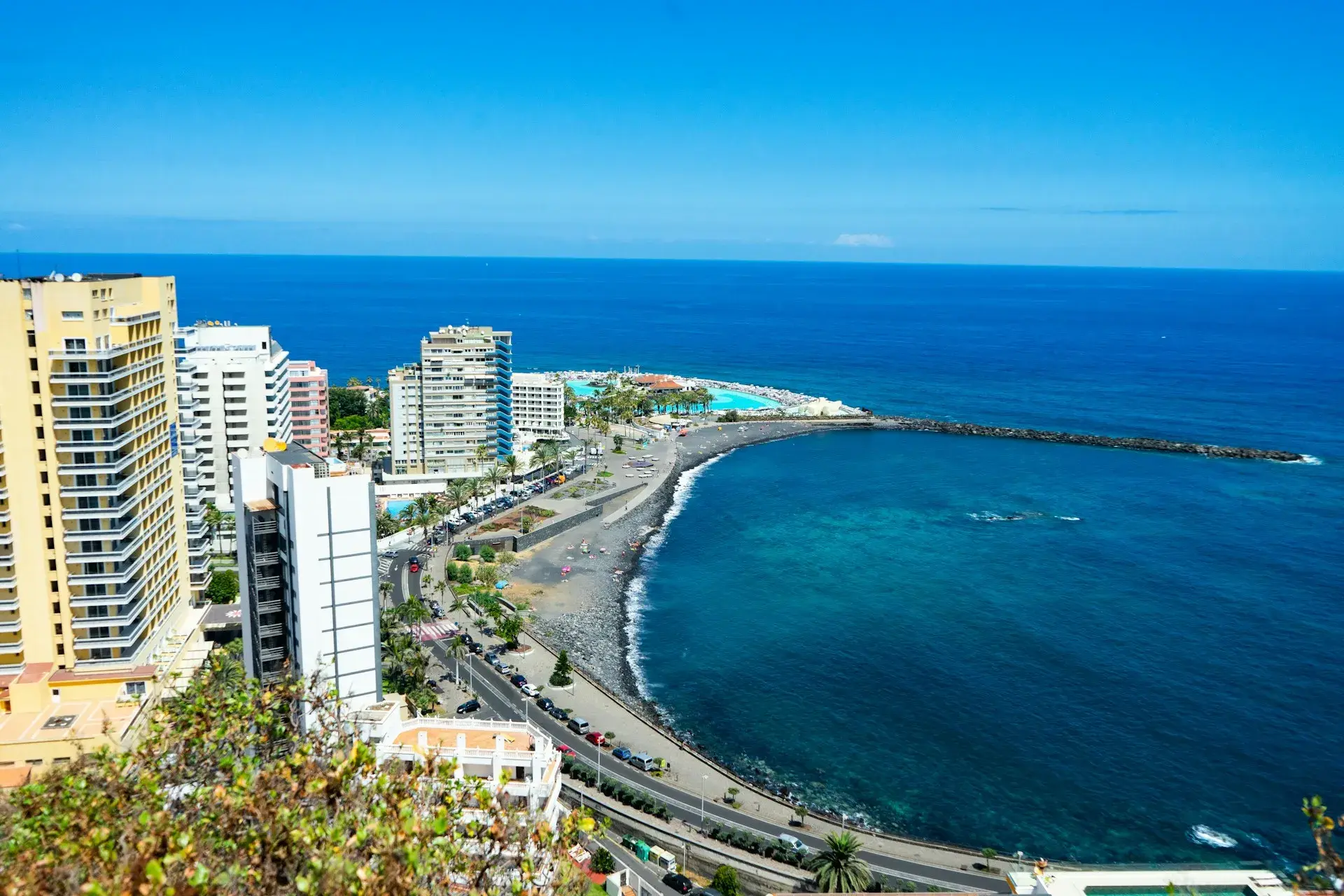
Photo by Benjamin Merkle on Unsplash
Playa Jardín, Puerto de la Cruz: swimming status and tips
Playa Jardín is the big urban beach of Puerto de la Cruz: a group of three black sand coves (Playa Jardín, Playa Chica and Punta Brava) protected by breakwaters and surrounded by gardens designed by César Manrique, at the western end of the town, next to Loro Parque. It has toilets, showers, sun loungers, children's play areas, restaurants, adapted access and more than a hundred parking spaces per cove, and it is the best-equipped beach in the Orotava Valley. Before you go, bear in mind its weak point in 2026: the Directorate-General for Public Health had swimming banned in the central cove four times between August and October because of faecal bacteria in the water, with reopenings a few days later. Check the flag and the signs when you arrive.
Fact sheet
- Area and municipality: western end of Puerto de la Cruz, between the Punta Brava neighbourhood and the Castillo de San Felipe, next to Loro Parque.
- Sand: black volcanic sand in all three coves.
- Approximate length: according to Turismo de Tenerife, about 240 metres for Playa Jardín, about 130 for Playa Chica and about 260 for Punta Brava.
- Waves and safety: softened by the breakwaters; beyond them, the northern swell is strong. Occasional swimming bans in 2026 because of water quality.
- Lifeguards: yes, in season.
- Facilities: toilets, showers and foot washes, sun lounger and parasol hire, children's and sports areas, bars and restaurants; a surf zone at Playa Jardín.
- Blue Flag 2026: not on the official 2026 list.
- Accessibility: yes, in all three coves.
- Parking: more than a hundred spaces per cove; difficult in summer and at weekends.
- TITSA bus (guagua): intercity lines near Playa Jardín and town lines at Playa Chica and Punta Brava; town line 381 stops at Punta Brava.
- Best for: a full day in town, families whose children can already swim, walks through the gardens, sunsets.
- Drawbacks: intermittent swimming bans, cooler and choppier water than in the south, a town atmosphere.
A beach designed by César Manrique
The Playa Jardín project, signed by the Lanzarote artist César Manrique, turned the western coast of Puerto de la Cruz into a seaside park: breakwaters that create sheltered coves, black sand, and behind them gardens with Canarian plants, waterfalls and volcanic rocks to stroll through before and after a swim. The result is the best-kept beach in the north and a good example of how to blend an urban beach into the landscape. The three coves share a look but not an atmosphere: Playa Jardín is the biggest and liveliest, Playa Chica the most secluded, and Punta Brava, in the old fishing quarter, the most local, with charcos (natural rock pools) among the rocks that residents use when the sea is calm.
How to get there
On foot. From the centre of Puerto de la Cruz you can walk along the coast heading west, past the Castillo de San Felipe; if you are staying in the town, you do not need a car.
By bus. Turismo de Tenerife lists intercity guagua (the local word for bus) services for Playa Jardín and town services for Playa Chica and Punta Brava; town line 381 has a stop at Punta Brava. From other municipalities, go to the Puerto de la Cruz bus station and continue on the town bus or on foot. The guide to getting around Tenerife explains fares and passes.
By car. From the northern motorway (TF-5), follow the signs to Puerto de la Cruz and Loro Parque. There are car parks next to all three coves, with more than a hundred spaces each, but in summer and at weekends they fill up from mid-morning.
The sea, safety and water quality
Inside the breakwaters, the sea behaves reasonably for the north: moderate waves and semi-enclosed swimming areas. Beyond them, the waves are strong, so do not swim past the breakwaters. There are lifeguards in season; respect the flag.
Water quality is the issue in 2026. Public Health detected faecal bacteria levels above the permitted limit in the central cove on 12 August, 3 September, 30 September and 7 October, and the City Council banned swimming each time until new tests allowed it to reopen; the latest reopening was on 9 October. The City Council maintains that its laboratory found no values outside the standard and has asked for joint sampling, and the source of the contamination has not been publicly confirmed. The beach was already closed to swimming between July 2024 and June 2025 because of similar problems. If there is a no-swimming sign, stay out of the water: the sand, the gardens and the promenade remain open.
What's nearby
- Lago Martiánez: César Manrique's seawater pool complex, at the other end of town, is the swimming alternative when the beach is closed or the sea is not cooperating; it is in the guide to the natural pools of Tenerife.
- Puerto de la Cruz old town: the harbour, the Plaza del Charco and the Paseo de San Telmo, a walk away along the coast.
- Loro Parque: right next to Punta Brava; it is the most visited attraction on the island.
- El Bollullo: the valley's wild cove, east of the town, reached on foot; read the page on El Bollullo beach.
- La Orotava and the valley: the whole north in the guide to what to see in the north of Tenerife.
Best time to go
Time of day. Mornings are usually sunnier in the north; in summer the trade winds often cover the coast from mid-afternoon. On the other hand, sunset over the Atlantic from the gardens is one of the best moments of the day in Puerto de la Cruz.
Time of year. Summer brings the calmest sea and the liveliest atmosphere and also, in 2026, the swimming bans. From October to March the northern ground swell reduces the number of swimming days, although swimming inside the breakwaters is still possible with a green flag. The water is slightly cooler than in the south all year round.
Frequently asked questions
Is Playa Jardín open for swimming?
It depends on the day. In 2026 swimming was banned four times in the central cove because of water quality, most recently from 7 to 9 October. Check the flag and the council signs when you arrive; the sand and the gardens do not close.
Is it a good beach for children?
For children who can already swim, yes, with a green flag and inside the breakwaters: it has lifeguards in season, play areas and facilities. For babies and young children, Las Teresitas or Lago Martiánez are safer.
Who designed Playa Jardín?
The artist César Manrique, who also created Lago Martiánez. The breakwaters, the black sand and the gardens with Canarian plants, waterfalls and rocks are all part of the same project.
Does it have a Blue Flag?
Not in 2026: Playa Jardín is not on the official list of awarded beaches for that year. In the north, El Socorro, San Marcos and Mesa del Mar have one, among others.
Where to park?
Next to each of the three coves there is a car park with more than a hundred spaces. In summer and at weekends, arrive before 11:00 or walk from the centre.
Keep planning
- The best beaches in the north of Tenerife: the rest of the north coast, with closures and access.
- The best natural pools in Tenerife: wave-free alternatives in the north.
- Where to stay in Tenerife: Puerto de la Cruz as a base.
- Tenerife with kids: beaches and plans by age.
You may also like
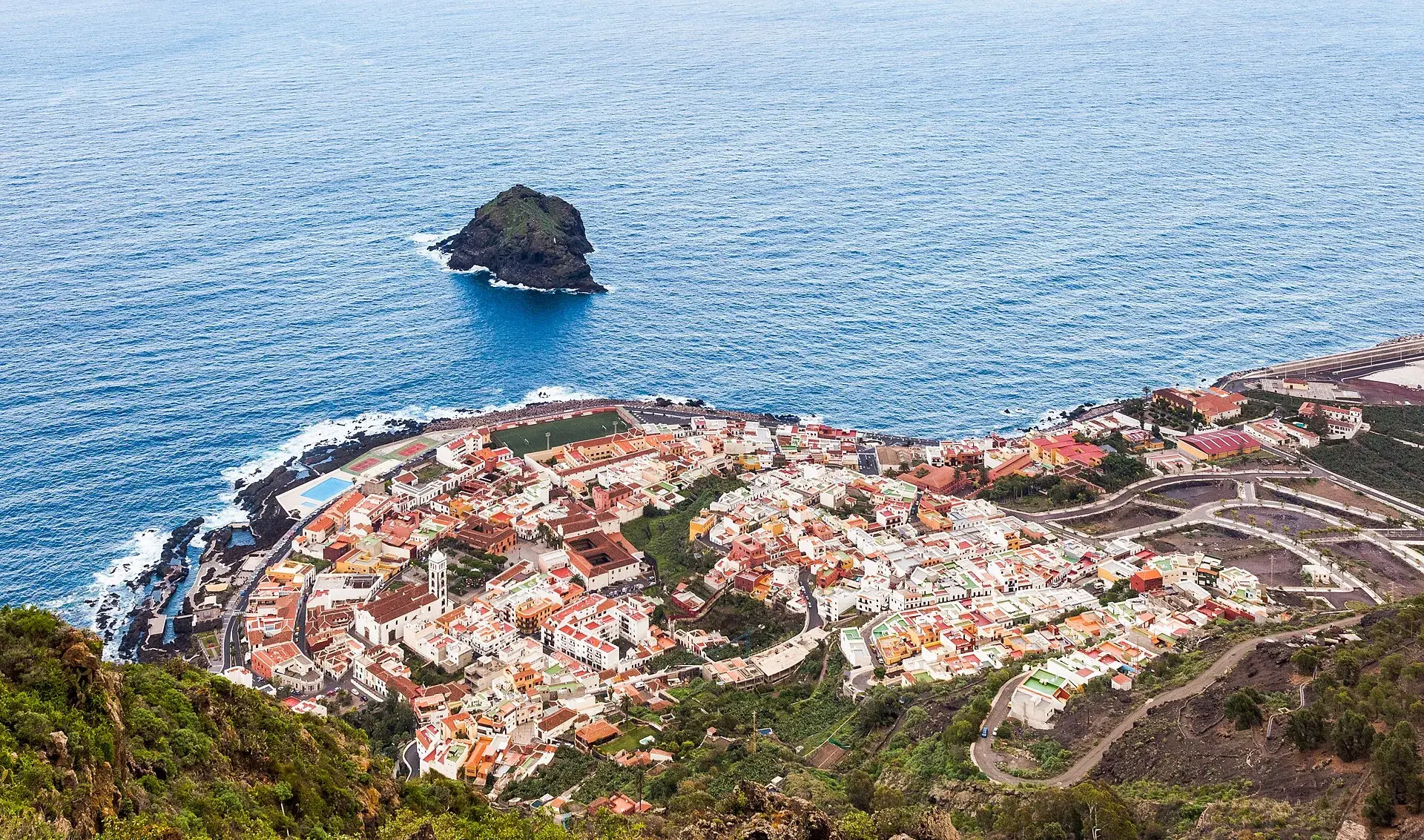
Garachico, Tenerife: old town, El Caletón and the Isla Baja
What to see in Garachico in half a day: the port buried by lava in 1706, the historic centre, El Caletón, the castle, San Roque, buses and where to park.
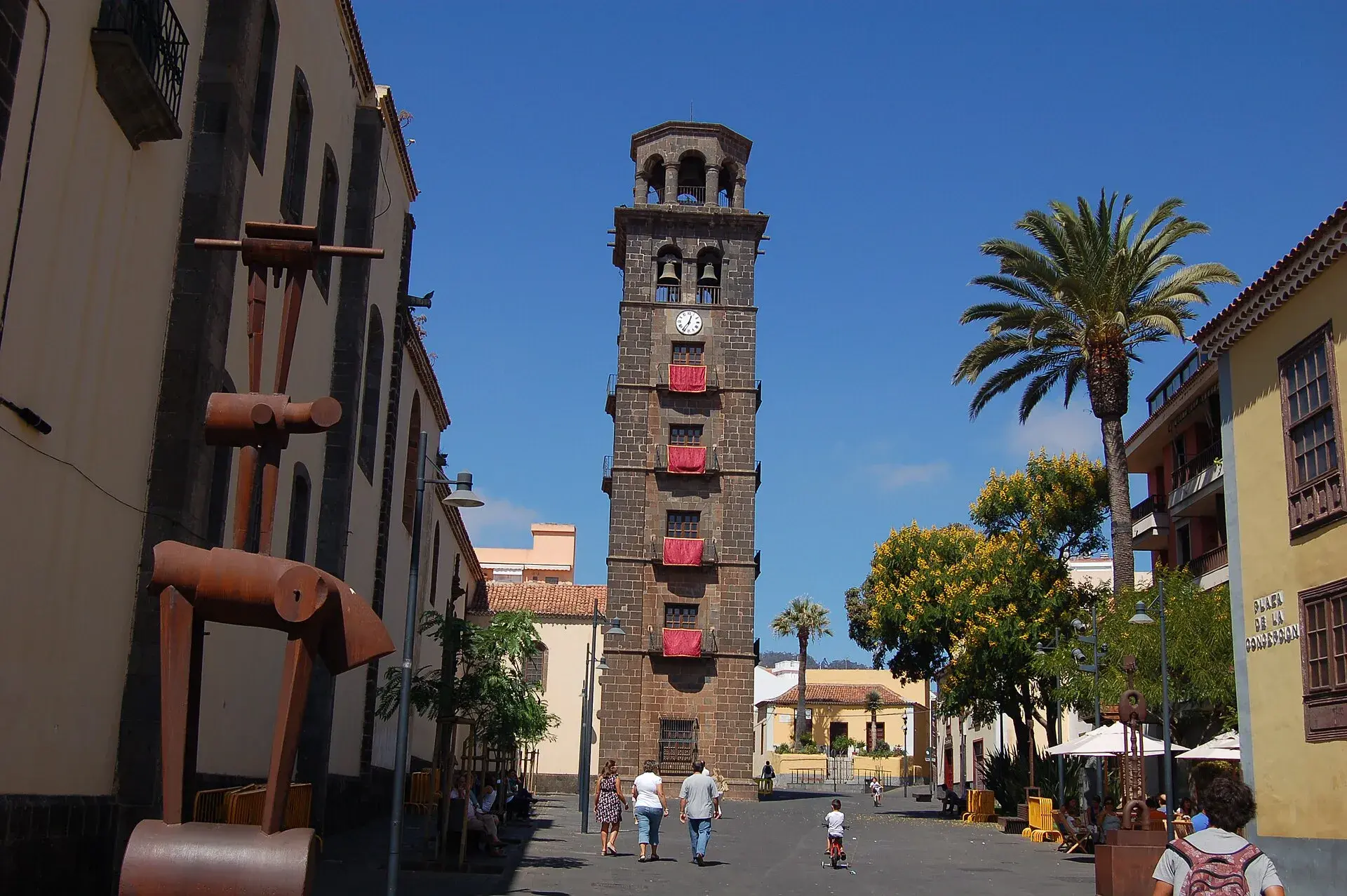
La Laguna, Tenerife: old town, museums and how to get there
What to see in La Laguna step by step: walking route through the World Heritage old town, cathedral, museums, tram, parking, festivals and a trip to Anaga.
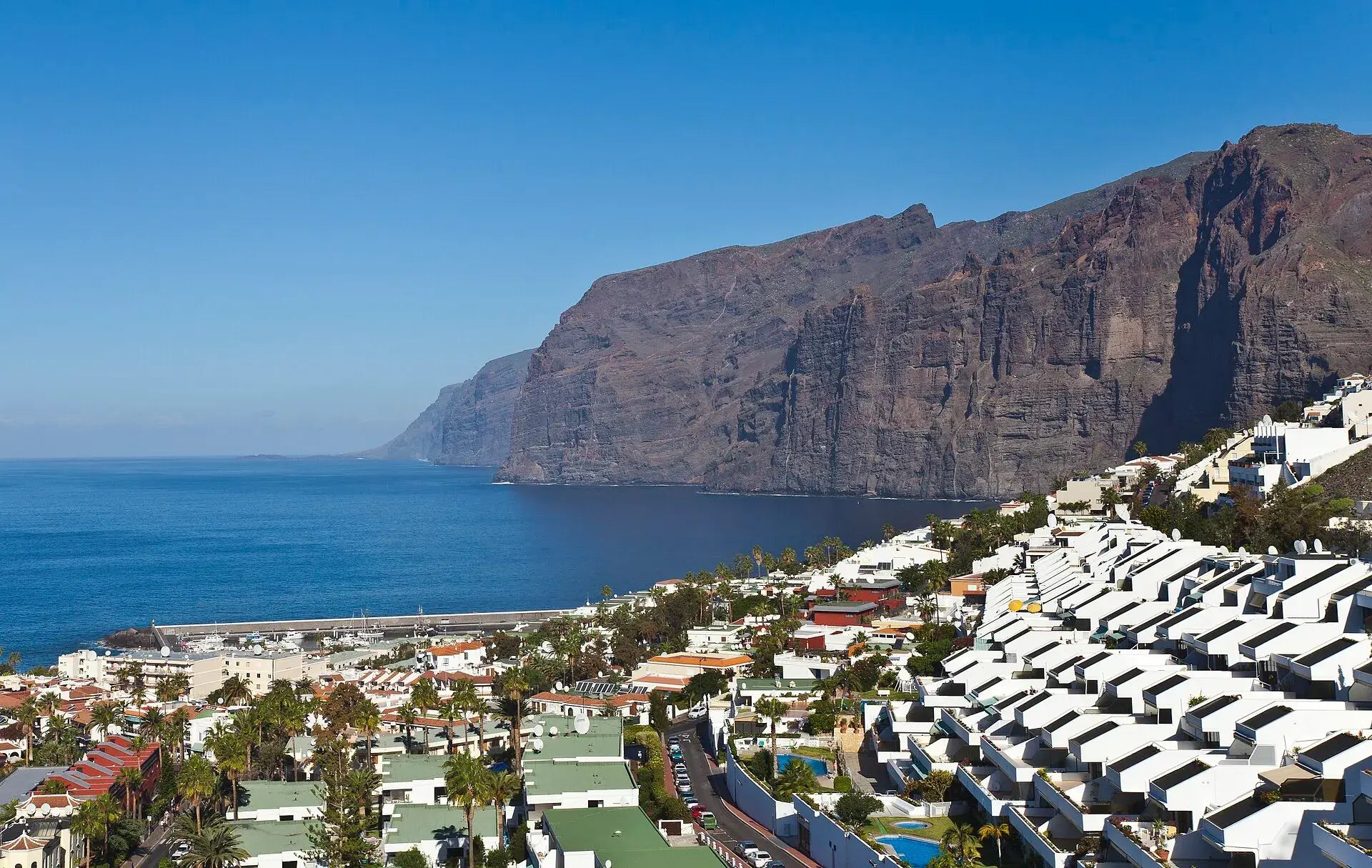
Los Gigantes Tenerife: cliffs, boat trips, beaches and access
Los Gigantes (Tenerife): cliffs up to 600 m, Archipenque viewpoint, boats from the marina, Los Guíos, rock pools, buses 473 and 477 and where to park.
Tenerife protected areas rules: trail quotas and drones
Rules for Tenerife's protected areas: trails that need booking, Teide, Masca and El Pijaral, drones, camping, wildfire alerts, dogs and fines in 2026.