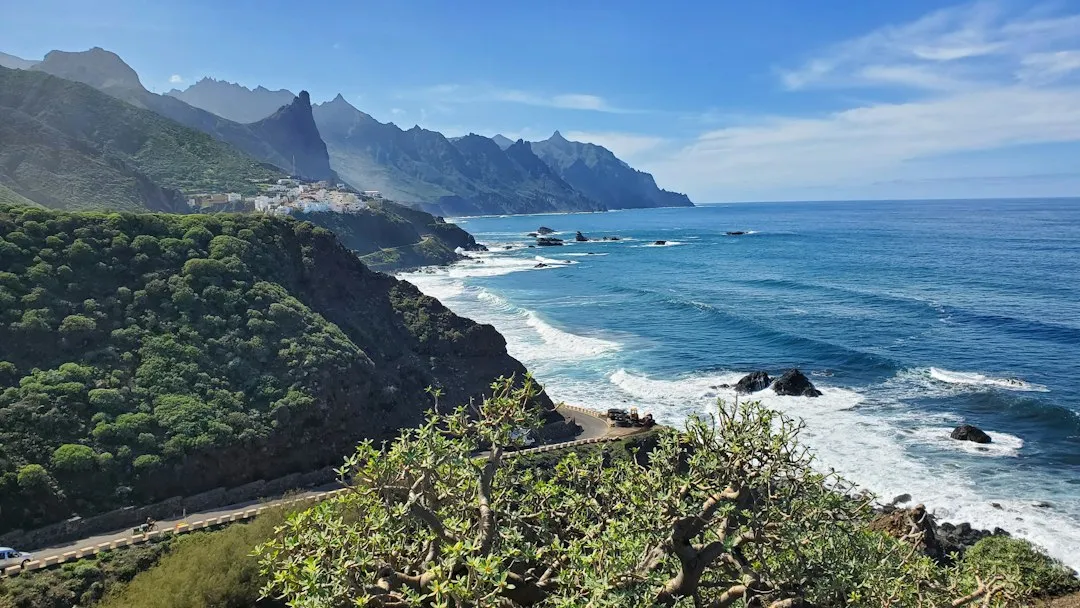
Photo by Hasmik Ghazaryan Olson on Unsplash
Playa de Benijo: Anaga's Wild Black-Sand Beach
Status in 2026: officially closed
Before planning a visit: Playa de Benijo has been closed by the Santa Cruz city council since July 2024, after rocks fell from the slope beside the access stairs. In September 2026 the council classified the stabilisation of that slope as emergency works, but no reopening date had been announced and the local police can fine anyone who goes down. The viewpoint above the beach, the restaurants and the neighbouring Almáciga beach remain open, and the view of the Roques de Anaga is the same from the top. Check the council's updates before you go; the rest of this guide describes the beach as it is when open.
Why it is worth the drive
Benijo is the picture of Anaga's coast: a cove of black sand and pebbles about 300 metres long, closed in by cliffs, with the Roques de Anaga rising from the sea in front. There are no buildings on the beach, no sunbeds and no noise beyond the surf. At low tide a wide tongue of sand appears and the rocks nearest the shore, Roque de Benijo and La Rapadura, stand on dry sand; at high tide the beach shrinks to a strip under the cliff. Tide tables matter here more than at any other beach on the island.
Getting there
From Santa Cruz, take the TF-12 up through the laurel forest to El Bailadero, then the TF-134 down to Taganana and along the coast past Roque de las Bodegas and Almáciga to the hamlet of Benijo; allow about an hour from the city. The road is narrow and winding, with buses and hire cars in both directions. By public transport, TITSA line 946 links the Santa Cruz interchange with Taganana and Almáciga, with reduced service in winter; from Almáciga it is a walk of roughly a kilometre and a half along the road. A summer-only shuttle has reached Benijo in past years; check the TITSA website.
Parking and the walk down
There is no car park. Visitors leave their cars along the road at Benijo village and in the parking areas of the two or three restaurants at the top, which fill quickly on weekends and around sunset. From the village a path with a long flight of steps drops to the sand; count on ten to fifteen minutes down and more back up, and wear proper shoes rather than flip-flops. The path is not suitable for pushchairs or for anyone with reduced mobility.
Services and safety
There are no services on the beach: no showers, toilets, lifeguards or kiosks. The restaurants at the top of the path serve fresh fish and Canarian dishes, and that is the only infrastructure. The sea is open Atlantic, with powerful surf and rip currents; bathing is for strong swimmers in calm conditions only, and never when the sea state says otherwise. Keep an eye on the tide, which can cut off the far end of the beach, and on the cliff, which is the reason for the current closure. Naturism is traditional at Benijo, as at other Anaga coves.
Sunset and the coastal walk
In the evening the sun sets over the Atlantic and the rocks on the beach stand out black against it: this is the most photographed sunset on the island and the reason the road fills from late afternoon. In summer, arrive before 18:00 to find a parking space. At low tide you can also walk the coast between Almáciga and Benijo along the shore and the PR TF 06.2 path, which continues east to El Draguillo; it includes a stretch of rocks and pebbles that is slow going, so allow more time than the distance suggests.