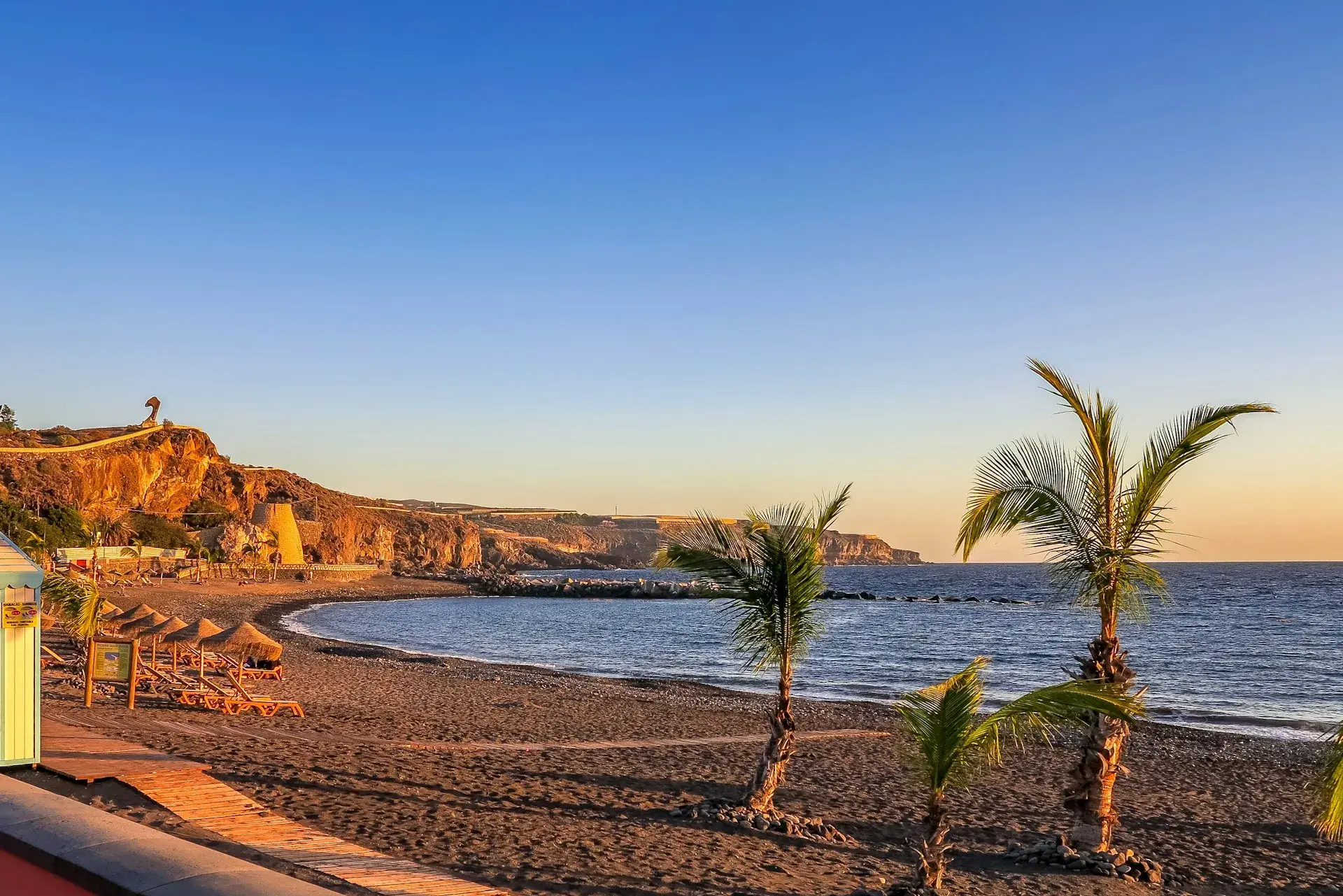
Best Beaches in the South of Tenerife: A Guide by Area
The beaches in the south of Tenerife fall into two families: the natural golden-sand beaches of the south-east, with wind almost every day (El Médano, La Tejita), and the imported-sand beaches with breakwaters in Arona and Adeje, with calm water and full facilities (Las Vistas, Fañabé, Torviscas, Playa del Duque). Further west, Guía de Isora and Santiago del Teide add quiet black-sand coves (Playa San Juan, Alcalá, Playa de la Arena) and the Los Gigantes cliffs. For a family that wants to swim without waves, Las Vistas and Playa San Juan are the safe bets; for wind sports, El Médano; to get away from the crowds, Diego Hernández on foot. This guide covers the twenty beaches worth your time, from east to west, with the 2026 Blue Flag status, accessibility and parking for each one.
Natural or imported sand, and what the Blue Flag says in 2026
Almost all the golden sand in the tourist south is artificial: Las Vistas, Los Cristianos, Troya, Fañabé, Torviscas and Playa del Duque were created or extended with imported sand and rock breakwaters, which is what keeps them calm. The natural beaches have black sand or callaos, rounded volcanic boulders (Playa San Juan, Alcalá, Playa de la Arena, Los Guíos) or golden sand shaped by the wind, like El Médano and La Tejita. The artificial ones are more comfortable for swimming with children; the natural ones have more scenery and fewer people.
The official 2026 Blue Flag list includes, in the south and west, Playa del Duque and Torviscas (Adeje), Las Vistas (Arona) and La Jaquita and Playa San Juan (Guía de Isora). Los Cristianos, which held it until 2025, is not on the list this year, and Fañabé lost it in 2025. Beaches without a flag are not worse for swimming, but it is worth knowing when choosing between two neighbours. The selection for the whole island is in the guide to the best beaches in Tenerife.
Granadilla de Abona: El Médano, La Tejita and Los Abrigos
El Médano and Playa Chica
- Area and sand: the town of El Médano, ten minutes from Tenerife South airport; natural light sand, about 750 metres on the main beach and about 100 at Playa Chica, next to the pier.
- Sea: the stretch next to the town has gentle waves and Playa Chica is a calm bay; the opposite end is the island's windsurfing and kitesurfing ground, host to world championship events.
- Facilities: toilets, showers, sun loungers, restaurants along the promenade, a windsurfing zone and, in summer, ramps and assisted bathing equipment.
- Parking and bus: more than a hundred spaces at the main beach and between fifty and a hundred next to Playa Chica; line 470 between El Médano and Los Cristianos (around an hour, via La Tejita and Los Abrigos). Guagua is the local word for bus.
- Best for / drawbacks: windsurfing, kitesurfing, a village atmosphere and families at Playa Chica; the wind, which blows almost every afternoon and whips up sand.
La Tejita and Montaña Roja
- Area and sand: at the foot of the volcanic cone of Montaña Roja, a Special Nature Reserve, between El Médano and Los Abrigos; natural golden sand, around a kilometre with no buildings above the beach.
- Sea: constant wind and moderate waves; suitable for surfing and windsurfing, but swim with care because lifeguards are only there in season.
- Facilities: showers, toilets, a café and sun loungers.
- Parking and bus: a car park by the beach that fills up by mid-morning in summer; line 470, La Tejita stop.
- Best for / drawbacks: a long, wild beach, climbing Montaña Roja at sunrise and naturism at the end nearest the volcano; wind, calima (dust haze blown in from Africa) and no shade at all.
Los Abrigos
A fishing village with a small cove of sand and callaos next to the harbour and a row of fish restaurants on the quay. It is more interesting for the food than for the beach; towards Montaña Roja the coast forms tide pools you can explore when the sea is calm. Lines 483 (Los Cristianos–Los Abrigos, 35 minutes) and 470 connect it with the tourist south.
San Miguel de Abona: Montaña Amarilla
On the Costa del Silencio, Montaña Amarilla is a Natural Monument of yellow rock carved by the sea, with a cove of callaos of about 50 metres, a sun deck with steps into the water and one of the best snorkelling spots in the south. It has no facilities and parking is under fifty spaces. It is a half-day plan for anyone looking for clear water and no crowds, not a beach for lying around.
Arona: Las Vistas, Los Cristianos and Playa de las Américas
Las Vistas
- Area and sand: between Los Cristianos and Playa de las Américas, with a shopping avenue behind it; fine, light imported sand, about 850 metres.
- Sea: calm, protected by rock breakwaters; Blue Flag in 2026.
- Facilities: lifeguard team, showers, toilets, sun loungers, restaurants and assisted bathing with a hoist, an adapted area and specialist staff, which has made it one of the most accessible beaches in Spain.
- Parking and bus: on the street and in paid car parks, difficult in high season; the 111 (Santa Cruz–Costa Adeje via the TF-1) stops in Los Cristianos.
- Best for / drawbacks: families with young children, people with reduced mobility and swimming without waves; crowds and an urban feel.
Los Cristianos
- Area and sand: the town beach, next to the port for the ferries to La Gomera; golden sand, about 345 metres.
- Sea: calm, with small boats at anchor.
- Facilities: showers, sun loungers, restaurants, ramps and boardwalks, sailing and diving schools a few minutes away.
- Parking and bus: spaces reserved for people with reduced mobility and paid car parks; bus station five minutes' walk away.
- Best for / drawbacks: a swim before or after the ferry and a walk to Las Vistas; it loses its Blue Flag in 2026 and is smaller than its neighbour.
Playa de las Américas (Troya)
The Troya I and II beaches, about 650 metres of light sand in front of the hotels and shopping centres of Las Américas, are the most urban in the south: calm water, showers, foot washes, sun loungers, accessible entry and every kind of entertainment right behind. They are practical if you are staying on the doorstep; for a full day out, Las Vistas and Playa del Duque are more pleasant.
Costa Adeje: from Fañabé to Diego Hernández
Fañabé
- Area and sand: the centre of Costa Adeje's tourist seafront; light imported sand, about 600 metres.
- Sea: calm behind the breakwater.
- Facilities: showers, toilets, changing rooms, sun loungers, children's area, water sports, restaurants with direct access and lifeguards in season.
- Parking and bus: paid, at the shopping centres; Costa Adeje bus station is a short walk away.
- Best for / drawbacks: families staying in Costa Adeje, parasailing and jet skis; the busiest in the south in summer and without a Blue Flag since 2025.
Torviscas
- Area and sand: the continuation of Fañabé along the seafront promenade; light sand, about 290 metres.
- Sea: calm thanks to the breakwater; Blue Flag in 2026.
- Facilities: toilets, showers, sun loungers, restaurants, lifeguard and rescue points; ramps, boardwalks and parking reserved for people with reduced mobility.
- Parking: fewer than fifty spaces; the rest is paid.
- Best for / drawbacks: families, accessibility and water sports; the same crowds as Fañabé.
Playa del Duque
- Area and sand: in front of the luxury hotels in the north of Costa Adeje; light sand, about 390 metres, with colourful beach huts.
- Sea: calm; Blue Flag in 2026.
- Facilities: toilets, showers, changing rooms, sun loungers, restaurants and accessible entry.
- Parking and bus: more than a hundred spaces in the area; intercity buses stop nearby.
- Best for / drawbacks: a comfortable, well-kept day out, couples and a sunset drink; prices above the rest of the south.
La Enramada and La Caleta
At the end of the Costa Adeje promenade, La Caleta is a former fishing village with fish and seafood restaurants facing the sea, and La Enramada is its natural dark-sand beach, a contrast with the imported-sand beaches next door, with calm water most of the year and limited parking. It is the option if you want something less artificial without leaving Costa Adeje.
Diego Hernández
- Area and sand: the unspoilt coast between La Caleta and El Puertito de Adeje; a natural golden-sand cove of around 80 metres that almost disappears at high tide.
- Sea: generally calm, unsupervised.
- Facilities: none; bring water and shade.
- Access: on foot only: from the Costa Adeje golf course area, a dirt trail takes about fifteen or twenty minutes down; from La Caleta, the coastal path passes the callaos cove of Los Morteros and gets there in around half an hour.
- Best for / drawbacks: peace and quiet, naturism and swimming at low tide; the walk in the sun and the lack of facilities.
Playa Paraíso and Las Galgas
In the Playa Paraíso resort, Las Galgas is a small cove of sand and callaos with no facilities, useful mainly if you are staying there. It is not worth a trip from other areas.
Guía de Isora: Abama, Playa San Juan and Alcalá
Abama
A light-sand cove of about 100 metres at the foot of a cliff covered in banana plantations, with calm water and sunset over La Gomera. It is open to the public, but you reach it from the Ritz-Carlton Abama hotel car park along a stepped path of about ten minutes; the sun loungers and additional services are run by the hotel. There is no accessible entry.
Playa San Juan
- Area and sand: the town of Playa San Juan, on the TF-47; dark sand with callaos, about 300 metres.
- Sea: calm, sheltered from wind and waves by the fishing harbour and the breakwater; Blue Flag since 2012 and in 2026.
- Facilities: toilets, showers, sun loungers, accessible entry, a tourist office and restaurants on the promenade.
- Parking and bus: next to the promenade, full on Sundays; lines 473 (Los Cristianos–Los Gigantes) and 477 (Costa Adeje–Los Gigantes, direct).
- Best for / drawbacks: families, swimming in calm water and fish lunches; callaos at the water's edge, so bring water shoes.
Alcalá and La Jaquita
- Area and sand: the village of Alcalá, with the seafront promenade behind the Palacio de Isora hotel; black sand in three small coves with rock pools in between, about 700 metres in total.
- Sea: calm; Blue Flag in 2026.
- Facilities: showers, changing rooms, accessible toilets, lifeguard posts, children's area and a kiosk.
- Parking and bus: in the village and next to the promenade; 473 and 477, Alcalá stop.
- Best for / drawbacks: families, sunset on the promenade and combining beach and rock pool; small coves that fill up in summer.
Santiago del Teide: Playa de la Arena and Los Guíos
Playa de la Arena
- Area and sand: Puerto de Santiago, five minutes from Los Gigantes; fine black sand, about 140 metres.
- Sea: calm most of the year; it held a Blue Flag for many years, although it is not on the official 2026 list.
- Facilities: toilets, showers, sun loungers, Canarian restaurants, a diving zone and accessible entry.
- Parking and bus: around the beach, tight in high season; line 473, La Arena stop.
- Best for / drawbacks: families, diving and sunsets with La Gomera opposite; small, and the black sand burns in the afternoon.
Los Guíos (Los Gigantes)
- Area and sand: at the foot of the Los Gigantes cliffs, next to the marina; black sand with rocks, a small urban beach.
- Sea: supervised in season, with currents that can be strong.
- Facilities: showers, toilets, sun loungers, an access ramp and a restaurant opening onto the sand; paddle boarding and diving trips.
- Parking and bus: the paid car park at the marina; 473 and 477 to Los Gigantes and about fifteen minutes on foot.
- Best for / drawbacks: seeing the cliffs from below and boarding a whale and dolphin watching trip; the slope, held in place with netting, has forced partial closures because of the risk of rockfalls, so check its status on the day.
What to know before you choose
The wind in El Médano
The south-east gets the trade winds almost constantly, which is why El Médano is one of Europe's great windsurfing and kitesurfing centres. For sunbathing, that same wind is a drawback: it whips up sand and cools you down. If you want El Médano without the wind, go in the morning or to Playa Chica, sheltered by the pier; if you want guaranteed calm water, choose Arona or Adeje, in the lee of the island.
Accessibility
The south is the best-equipped part of the island. Las Vistas offers assisted bathing with a hoist, an adapted area and specialist staff; Torviscas, Los Cristianos and Playa del Duque have ramps, boardwalks and reserved parking; El Médano has ramps and assisted bathing equipment in summer; Playa San Juan, Alcalá and Playa de la Arena have accessible entry. The hours of the assisted bathing services change every season: confirm them with the relevant municipality before you go.
Parking and buses
This is the weak point of the tourist south. In Costa Adeje and Los Cristianos the streets fill up by mid-morning and the alternative is the paid car parks at the shopping centres and the port; at La Tejita, the car park fills up in summer; in Los Gigantes, there is the marina car park. The beaches of Guía de Isora and El Médano are somewhat easier on weekdays. By bus, the 111 along the TF-1, the 470 through the south-east and the 473 and 477 through the west cover almost every beach in this guide, and the guide on where to stay in Tenerife helps you choose a base according to the beaches you want within walking distance.
Which one to choose for your trip
- With young children: Las Vistas, Playa San Juan, Alcalá and Playa Chica in El Médano.
- Windsurfing and kitesurfing: El Médano and La Tejita.
- Peace and quiet: Diego Hernández, La Tejita on weekdays, Abama and Montaña Amarilla.
- Naturism: the end of La Tejita next to Montaña Roja, and Diego Hernández.
- Accessibility: Las Vistas, Torviscas, Playa del Duque and El Médano.
- Sunset: Playa de la Arena, Los Guíos, Alcalá and Playa del Duque.
- Diving and snorkelling: Montaña Amarilla, Playa de la Arena and Los Guíos.
- Without a car: Costa Adeje and Los Cristianos (111), El Médano and La Tejita (470), Playa San Juan, Alcalá, Playa de la Arena and Los Gigantes (473 and 477).
Beach-by-beach guides
Each of these beaches has its own page, with access, parking, bus, facilities and sea conditions:
- El Médano beach, Tenerife
- La Tejita beach, Tenerife
- Playa del Duque, Tenerife
- Playa de Las Vistas, Tenerife
- Fañabé beach, Tenerife
- Diego Hernández beach, Tenerife
- Playa de la Arena, Tenerife
- Los Guíos beach, Tenerife
Frequently asked questions
What is the best beach in the south of Tenerife?
It depends on your plans. For families, Las Vistas (Blue Flag 2026, calm water, assisted bathing) and Playa San Juan; for scenery, La Tejita with Montaña Roja; for wind sports, El Médano; to see no one at all, Diego Hernández. Playa del Duque is the best kept of the tourist beaches.
Which beaches in the south have a Blue Flag in 2026?
Playa del Duque and Torviscas (Adeje), Las Vistas (Arona) and La Jaquita and Playa San Juan (Guía de Isora). Los Cristianos did not renew it this year and Fañabé lost it in 2025. Playa de la Arena, which held it for many years, is not on the 2026 list either.
Do the southern beaches have natural sand?
Those in Arona and Adeje mostly have imported sand protected by breakwaters. The natural ones are El Médano and La Tejita (golden sand shaped by the wind), Diego Hernández and Abama (small golden coves) and the black-sand or callao beaches of the west: Playa San Juan, Alcalá, Playa de la Arena and Los Guíos.
Is El Médano too windy for a beach day?
It is windy almost every afternoon; that is what makes it the centre of windsurfing and kitesurfing. It is usually calmer in the morning, and Playa Chica, next to the pier, is sheltered. If the wind bothers you, Arona and Adeje are in the lee of the island.
Can you get to the southern beaches by bus?
Yes. The 111 runs along the TF-1 from Santa Cruz to Costa Adeje and stops in Los Cristianos; the 470 links El Médano, La Tejita, Los Abrigos and Los Cristianos in an hour; and the 473 and 477 reach Playa San Juan, Alcalá, Playa de la Arena and Los Gigantes. Diego Hernández, Abama and Montaña Amarilla require walking or driving.
Keep planning
- What to see in the south of Tenerife: villages, viewpoints and excursions to combine with the beach.
- The best beaches in the north of Tenerife: black sand, surf and wild coves.
- The best beaches in Tenerife: the selection for the whole island by type of trip.
You may also like
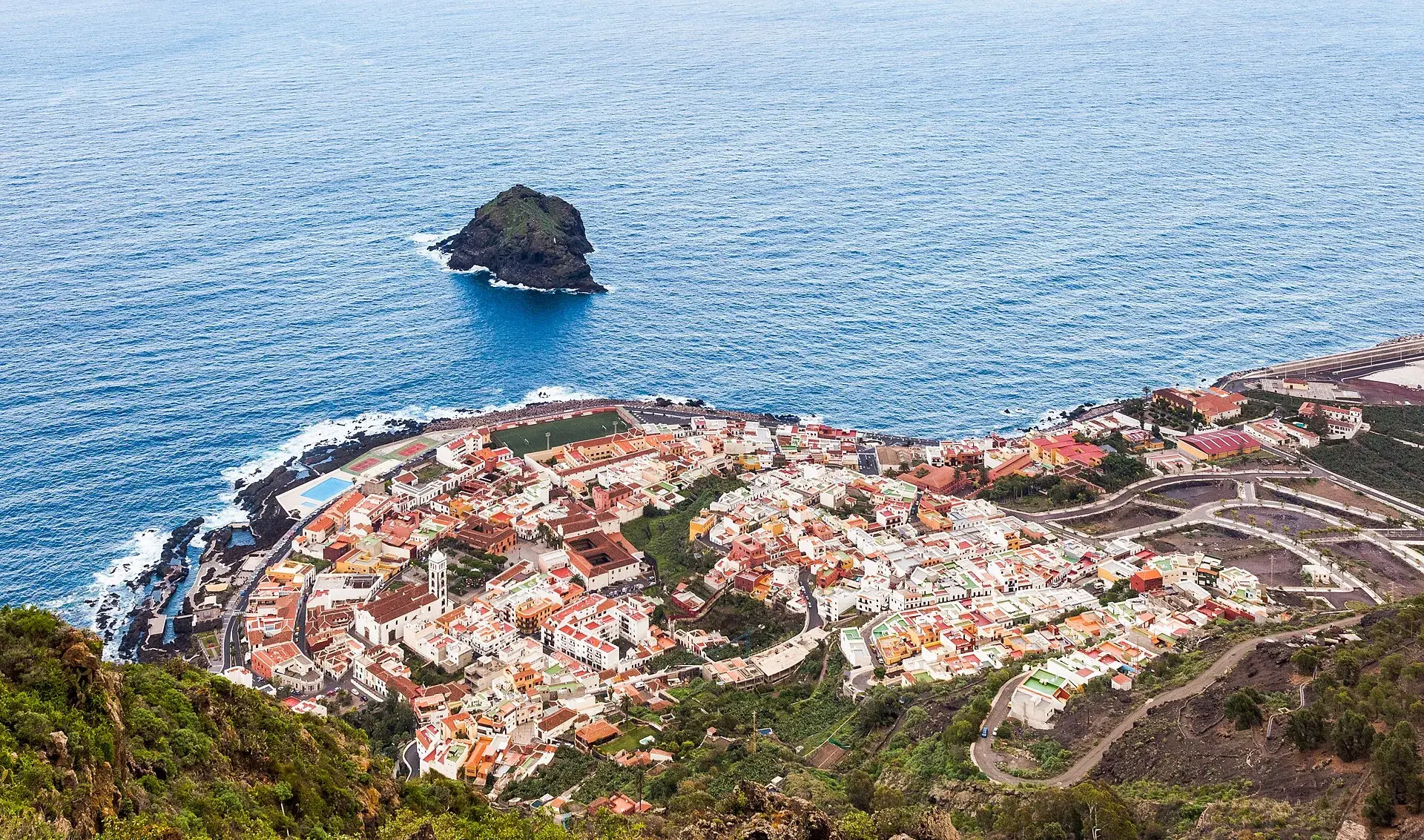
Garachico, Tenerife: old town, El Caletón and the Isla Baja
What to see in Garachico in half a day: the port buried by lava in 1706, the historic centre, El Caletón, the castle, San Roque, buses and where to park.
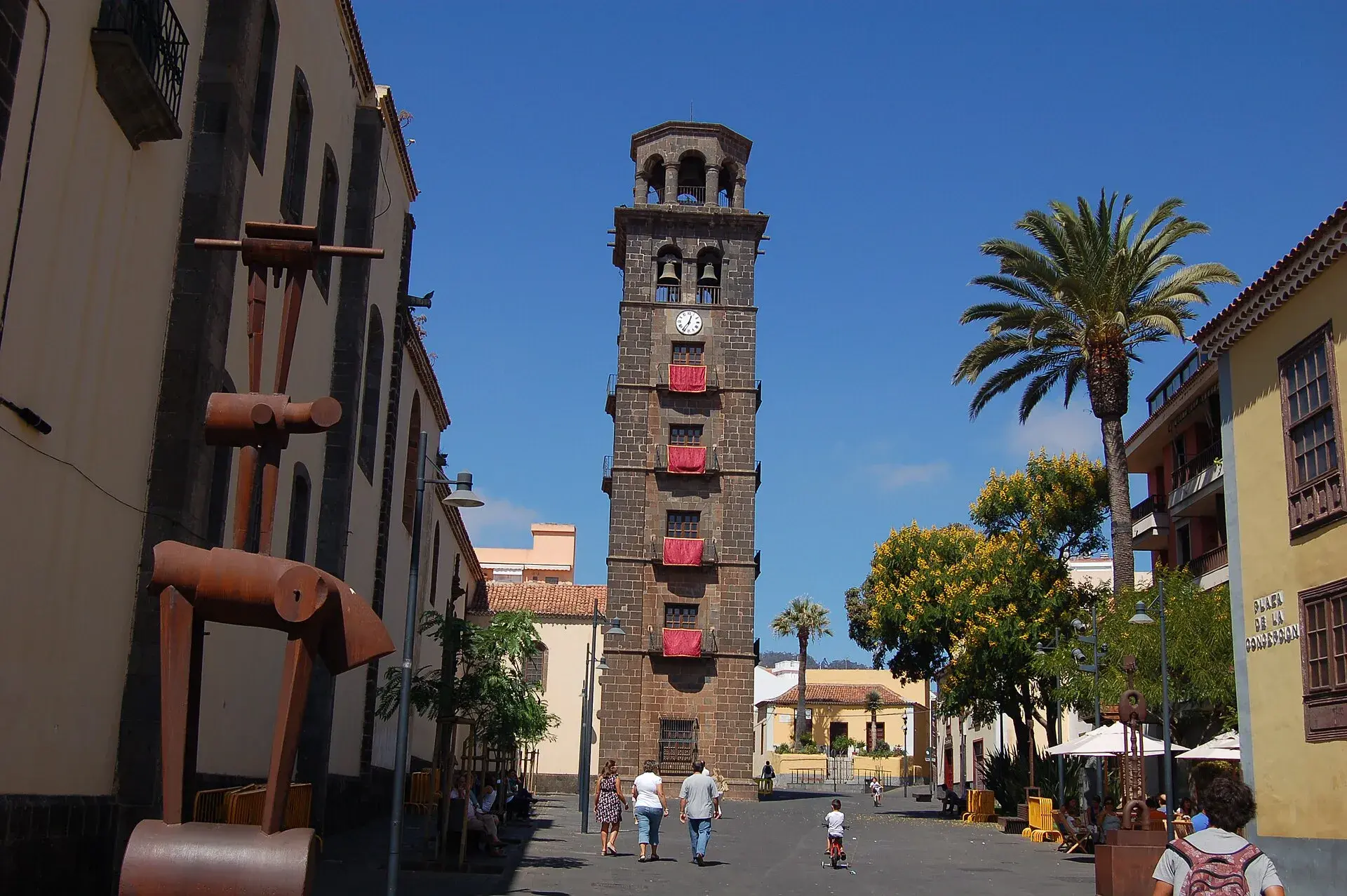
La Laguna, Tenerife: old town, museums and how to get there
What to see in La Laguna step by step: walking route through the World Heritage old town, cathedral, museums, tram, parking, festivals and a trip to Anaga.
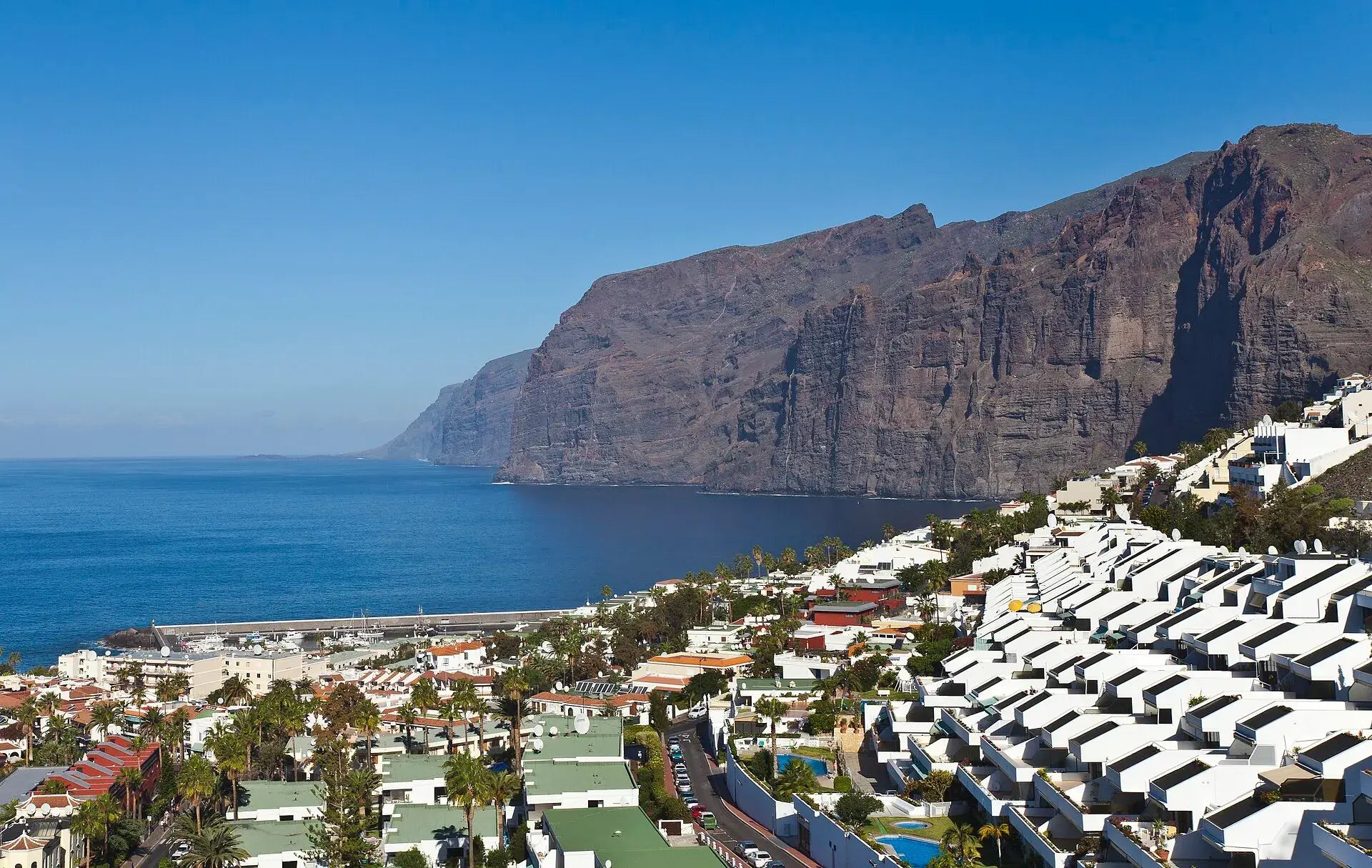
Los Gigantes Tenerife: cliffs, boat trips, beaches and access
Los Gigantes (Tenerife): cliffs up to 600 m, Archipenque viewpoint, boats from the marina, Los Guíos, rock pools, buses 473 and 477 and where to park.
Tenerife protected areas rules: trail quotas and drones
Rules for Tenerife's protected areas: trails that need booking, Teide, Masca and El Pijaral, drones, camping, wildfire alerts, dogs and fines in 2026.