Photo by Winahwaru, CC BY-SA 4.0, via Wikimedia Commons
Roque de las Bodegas Beach, Tenerife: getting there and food
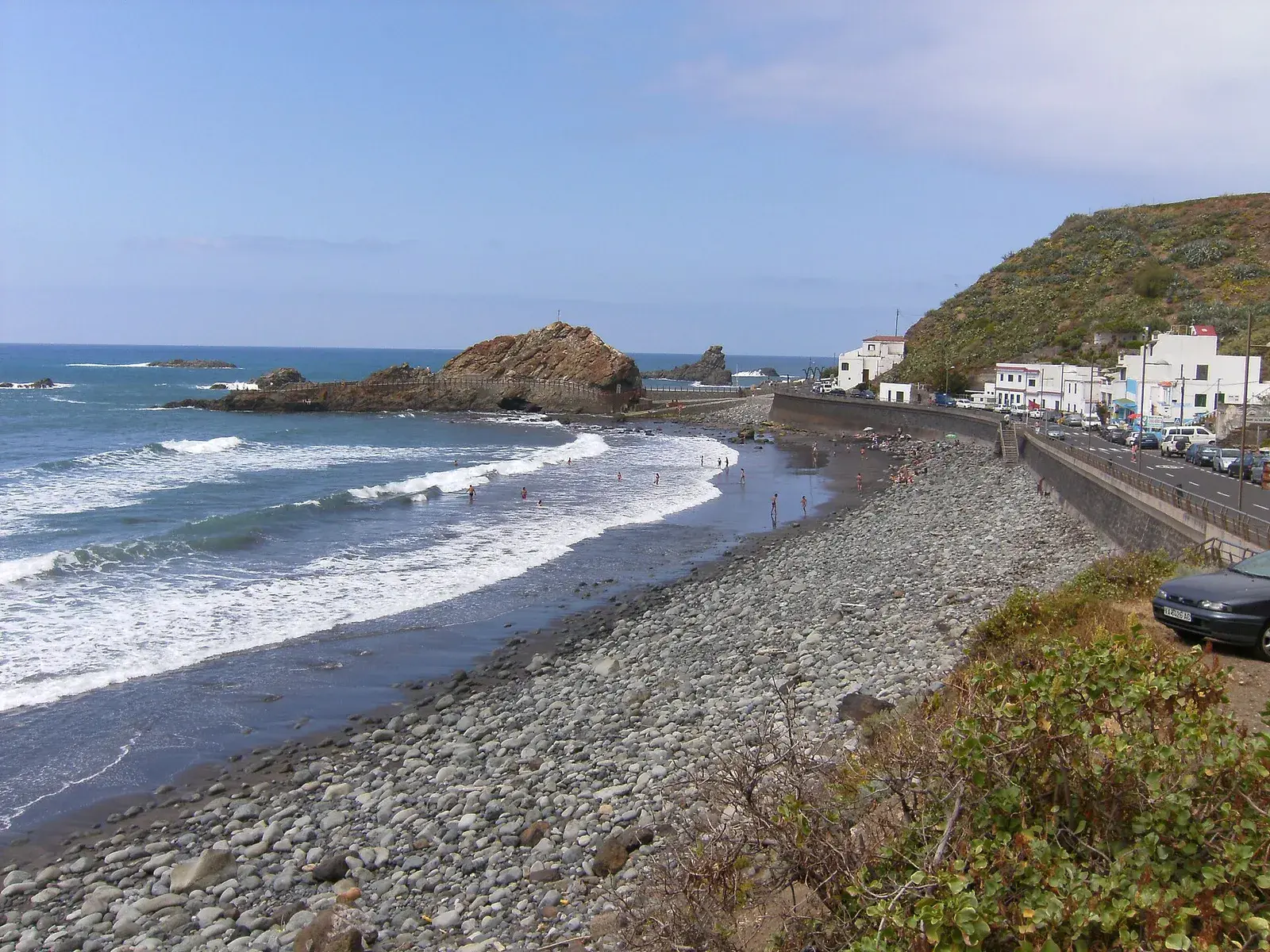
Playa de Roque de las Bodegas is the big beach of Taganana, on the north coast of the Parque Rural de Anaga: about 380 metres of black sand, callaos (rounded boulders) and rocks at the foot of the cliffs, with a sea stack off the shore and a row of fish restaurants right on the beach. It is the busiest and most family-friendly of the three beaches on this coast, because the waves arrive slightly gentler than at Almáciga and Benijo, and the only one with restaurants next to the sand. There are no permanent lifeguards and the currents are strong, so swimming calls for caution; as a combination of beach, lunch and scenery in Anaga, it is hard to beat. You get there by car on the TF-12 and TF-134 or on guagua (the local word for bus) 946 from Santa Cruz.
Fact sheet
- Area and municipality: Taganana coast, Santa Cruz de Tenerife, inside the Parque Rural de Anaga; the first beach on the coastal road after the village.
- Sand: black, mixed with callaos, pebbles and rocks.
- Approximate length: about 380 metres long and about 45 wide, according to Turismo de Tenerife.
- Waves and safety: gentler waves than at Almáciga and Benijo, but with strong currents and sets that come in without warning.
- Lifeguards: no permanent lifeguard service.
- Facilities: restaurants and bars next to the sand, bins and municipal cleaning; no showers or sun loungers.
- Blue Flag 2026: no.
- Accessibility: not adapted.
- Parking: fewer than fifty spaces along the roadside; at weekends it fills up early.
- TITSA bus (guagua): line 946 (Intercambiador in Santa Cruz–Taganana–Almáciga), with a stop next to the beach.
- Best for: families who want beach and restaurant in the same place, eating fish with a view, starting the Anaga coastal path.
- Drawbacks: boulders at the water's edge, scarce parking and swimming only when the sea is calm.
Beach and table on the Taganana coast
What sets Roque de las Bodegas apart from its neighbours is not the sand but what lies behind it: the restaurants serving fresh fish, papas arrugadas (wrinkled potatoes) and mojo that look out over the beach are the only ones right on the sand along the Taganana coast. A morning at Almáciga, one kilometre away, goes well with lunch here. The beach is bigger than its neighbour and gets slightly softer waves. Even so, this is the open Atlantic: Turismo de Tenerife presents it as the most suitable beach for families in the area and, in the same listing, urges extreme caution because of the currents.
How to get there
By car. From Santa Cruz or La Laguna, climb on the TF-12 to El Bailadero and take the TF-134 there, which descends to Taganana. Past the village, the road reaches the coast and Roque de las Bodegas is the first beach you come to. From the capital, allow around an hour: the road is narrow, with tight bends and buses in both directions. The spaces are along the edges of the road; if they are full, do not park on bends or on the carriageway, and try Almáciga instead.
By bus. TITSA line 946 leaves from the Intercambiador in Santa Cruz, runs through San Andrés and El Bailadero, descends to Taganana and ends in Almáciga, with a stop at Roque de las Bodegas. The journey takes about an hour and there are around eight trips on weekdays and six at weekends, less frequent in winter. Plan your return with the timetable in hand. The guide to getting around Tenerife explains passes and cards.
The sea and safety
The waves are somewhat kinder than along the rest of this coast, but the currents are strong and big waves can appear suddenly. There are no lifeguards, so only swim when the sea is calm, close to the shore and with company, and never when the red flag is up or there is a ground swell, which is common from October to March. The boulders at the water's edge are slippery and hurt your feet: water shoes make getting in easier. With children, the shoreline is for playing, not for swimming; if you are looking for calm water, the alternative is Las Teresitas, on the other side of the massif.
What's nearby
- PR-TF 06.2 trail: it starts from the beach itself and follows the coast east to El Draguillo; check its official listing on Tenerife ON, the Cabildo's trail portal. Bring hiking boots, water and the weather forecast.
- Almáciga and Benijo: Almáciga, one kilometre away, is the surf beach; Benijo, a little further on, has been closed since July 2024, although its viewpoint and restaurants are open.
- Taganana: the oldest village in Anaga, founded in 1501, a few minutes away by car; it is one of the prettiest villages in Tenerife.
- Mirador de Amogoje: at kilometre 2 of the TF-134, on the way down to Taganana, with a view of Roque de las Bodegas and Almáciga from above; it appears in the guide to the best viewpoints in Tenerife.
Best time to go
Time of day. Arrive before midday to park and pick your spot; lunchtime and weekends are the busiest periods, both on the sand and in the restaurants. In the late afternoon the sun sets over the Atlantic, but drive back in daylight if you do not know the road.
Time of year. From May to September the sea is usually calmer and there are more swimming days. In winter the northern ground swell and the Anaga clouds make the visit more about walking and eating than the beach. Any weekday outside August is quieter.
Frequently asked questions
Is Roque de las Bodegas a good beach for children?
It is the most family-friendly on the Taganana coast because it has slightly gentler waves and restaurants next to it, but there are no lifeguards and the currents are strong. With young children, stay at the water's edge; for a calm swim, Las Teresitas is safer.
Where to eat at Roque de las Bodegas?
At the restaurants next to the beach, which specialise in fresh fish, papas arrugadas and mojo. At weekends they fill up at midday: arrive early or eat late.
Is there a bus to the beach?
Yes. TITSA line 946, which links the Intercambiador in Santa Cruz with Taganana and Almáciga, stops at Roque de las Bodegas. The journey takes about an hour and there are few departures.
What is the difference between Roque de las Bodegas and Almáciga?
Roque de las Bodegas is bigger, slightly more sheltered and has restaurants; Almáciga gets more swell, is the surfers' beach and has no facilities. They are one kilometre apart and combine well in the same visit.
Keep planning
- Anaga Rural Park: a visitor's guide: roads, trails and viewpoints in the massif.
- The best beaches in the north of Tenerife: the Anaga coves alongside the rest of the north.
- The best hikes in Tenerife: the Anaga trails by difficulty.
- Guachinches in Tenerife: more Canarian food for the rest of your trip.
You may also like
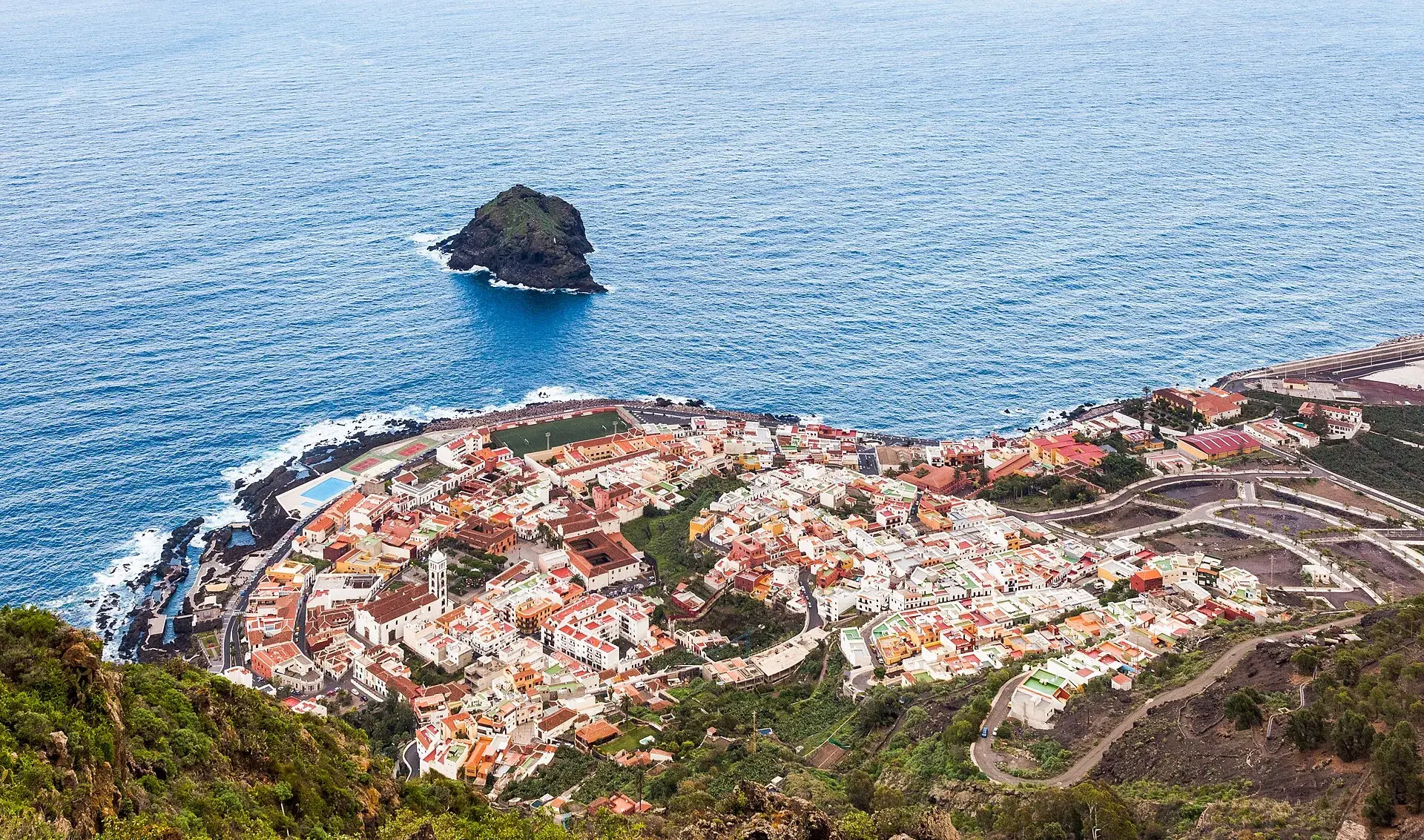
Garachico, Tenerife: old town, El Caletón and the Isla Baja
What to see in Garachico in half a day: the port buried by lava in 1706, the historic centre, El Caletón, the castle, San Roque, buses and where to park.
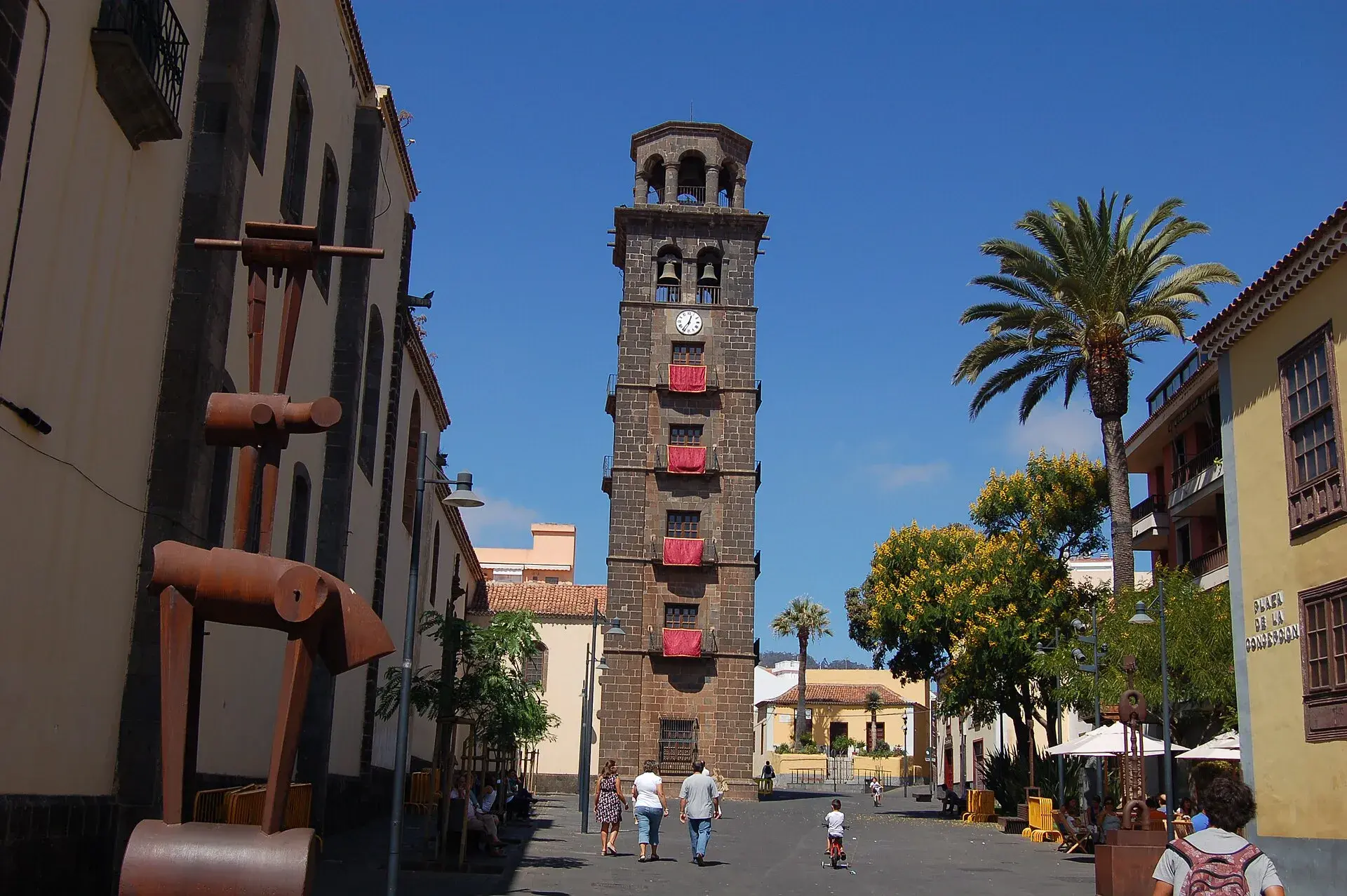
La Laguna, Tenerife: old town, museums and how to get there
What to see in La Laguna step by step: walking route through the World Heritage old town, cathedral, museums, tram, parking, festivals and a trip to Anaga.
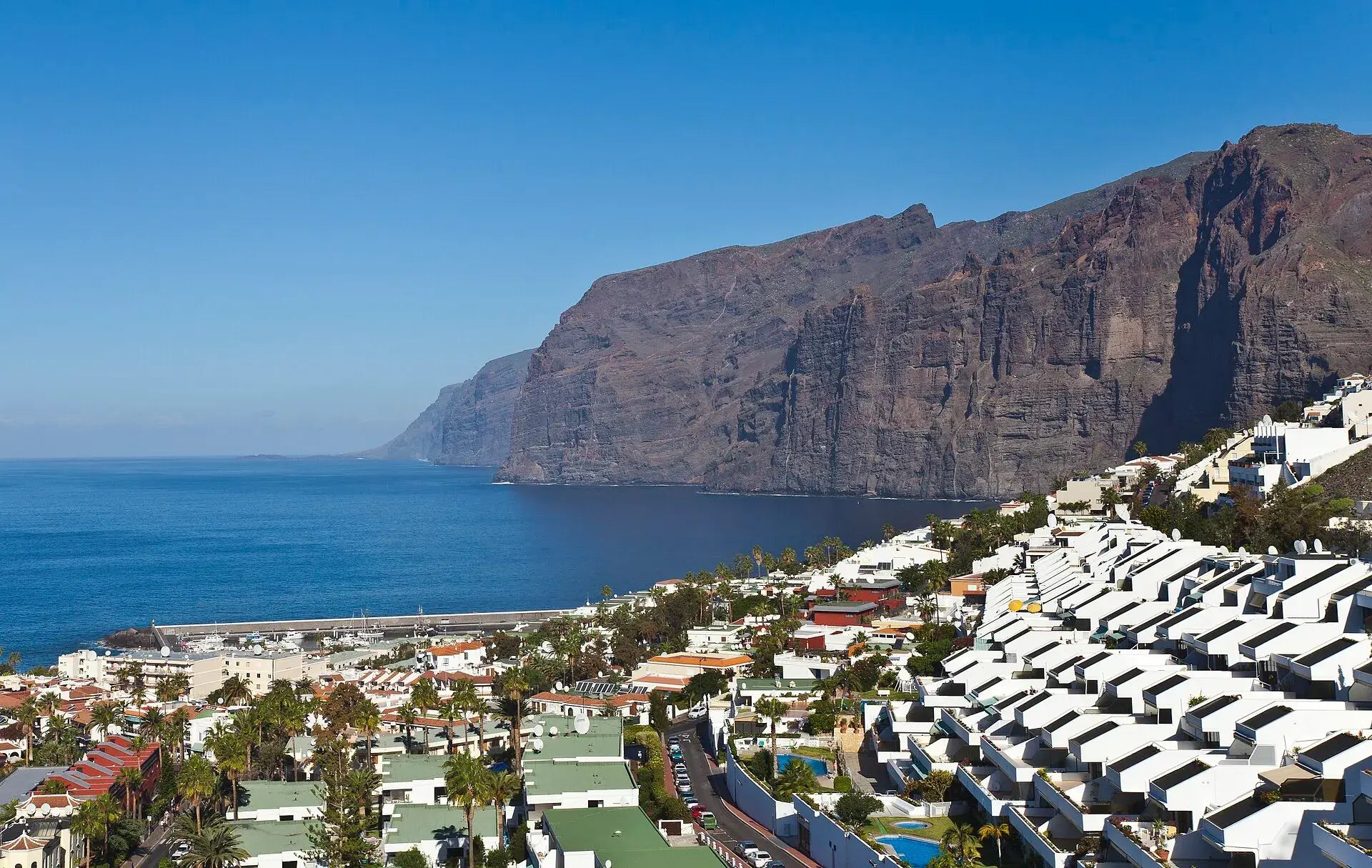
Los Gigantes Tenerife: cliffs, boat trips, beaches and access
Los Gigantes (Tenerife): cliffs up to 600 m, Archipenque viewpoint, boats from the marina, Los Guíos, rock pools, buses 473 and 477 and where to park.
Tenerife protected areas rules: trail quotas and drones
Rules for Tenerife's protected areas: trails that need booking, Teide, Masca and El Pijaral, drones, camping, wildfire alerts, dogs and fines in 2026.