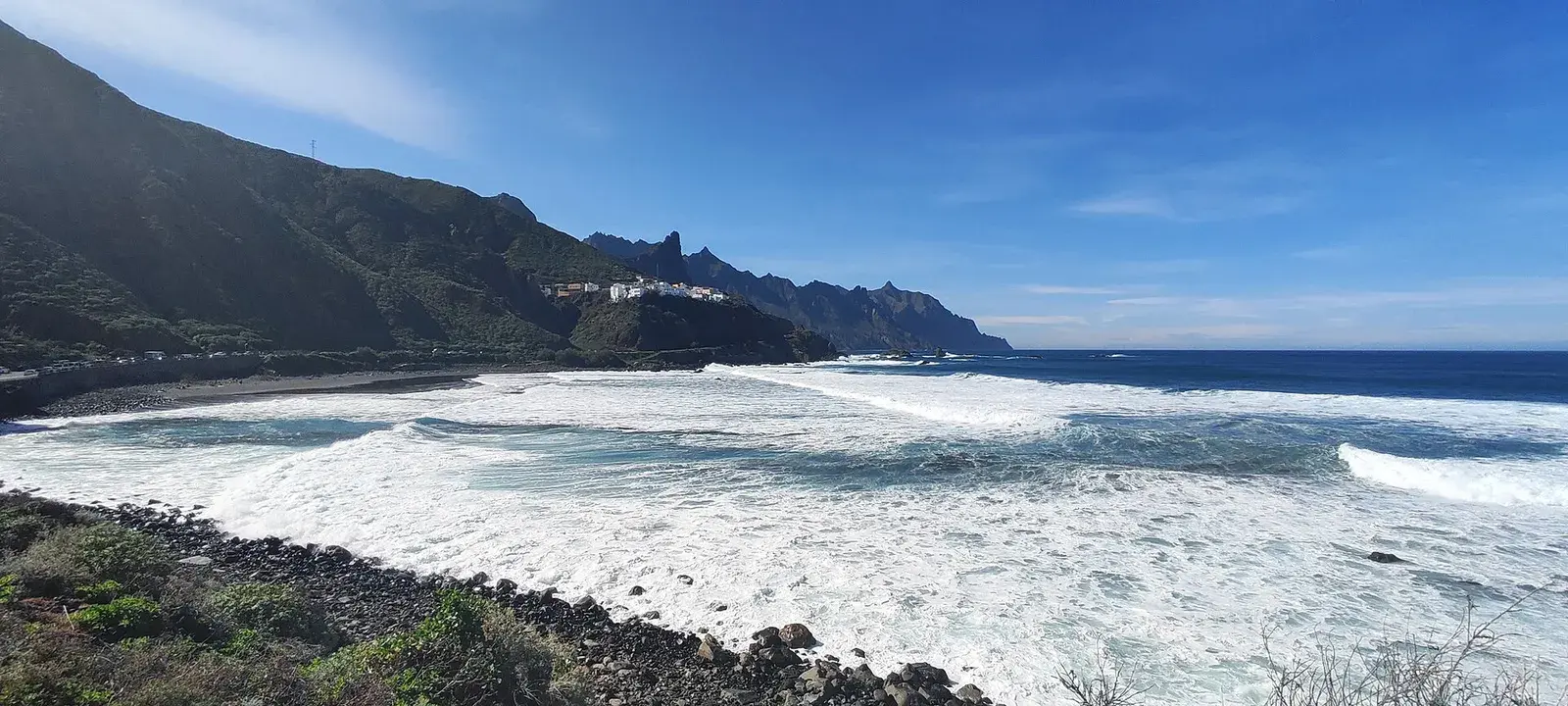
Photo by Mentxuwiki, CC0, via Wikimedia Commons
Almáciga Beach, Tenerife: how to get there, surf and tips
Playa de Almáciga is the black sand cove below the hamlet of the same name, on the Taganana coast inside the Parque Rural de Anaga: about 300 metres of volcanic sand and rocks facing a sea that breaks hard almost all year round. It is Anaga's surf beach, the last stop of guagua (the local word for bus) 946 from Santa Cruz and, while Benijo remains closed, the alternative if you want to set foot on the sand along this stretch of coast. There are no lifeguards and no facilities on the beach, so swimming only makes sense when the sea is calm and close to the shore; for everything else (watching, surfing, walking and seeing the sunset) it is one of the most beautiful beaches on the island.
Fact sheet
- Area and municipality: hamlet of Almáciga, Taganana coast, Santa Cruz de Tenerife, inside the Parque Rural de Anaga.
- Sand: black volcanic, with rocks along the shore.
- Approximate length: about 300 metres long and about 35 wide, according to Turismo de Tenerife.
- Waves and safety: strong all year round, with currents; open sea with no breakwaters.
- Lifeguards: no.
- Facilities: none on the sand beyond bins and municipal cleaning; the nearest restaurants are in Roque de las Bodegas, one kilometre away.
- Blue Flag 2026: no.
- Accessibility: not adapted.
- Parking: fewer than fifty spaces on the roadside and next to the hamlet.
- TITSA bus (guagua): line 946 from the Intercambiador in Santa Cruz, via San Andrés and Taganana, about an hour.
- Best for: surfing and bodyboarding, photography, sunset, walking along the shore.
- Drawbacks: swimming only when the sea is calm, a slow mountain road and scarce parking at weekends.
Anaga's surf beach
The Taganana coast has three beaches in barely two kilometres, each with its own character. Roque de las Bodegas is the family one, with restaurants and slightly gentler waves; Benijo, the one with the postcard sea stacks, has been closed since July 2024; and Almáciga, in between, takes the swell head-on. That is why several of the island's surf schools bring their students here and local surfers consider it one of the best breaks in the north-east. From the sand you can see the green cliffs of Anaga, the sea stacks rising off Benijo and, at sunset, the sun dropping into the Atlantic.
How to get there
By car. From Santa Cruz or La Laguna you have to climb into the massif on the TF-12 to El Bailadero and then descend on the TF-134 towards Taganana. The road continues along the coast, passes Roque de las Bodegas and reaches Almáciga one kilometre further on. Allow around an hour from the capital: there are tight bends, narrow sections and buses going up and down, so plan for more time than your sat nav suggests. Park on the roadside or next to the hamlet, never on a bend or blocking driveways, and walk down to the sand.
By bus. TITSA line 946 links the Intercambiador in Santa Cruz with San Andrés, the El Bailadero junction, Taganana and Almáciga, where the route ends, in about sixty minutes. There are around eight trips on weekdays and six at weekends, less frequent in winter, so check the return timetable before you set off. The guide to getting around Tenerife explains how to pay and which pass suits you.
The sea and safety
Almáciga faces north-east, straight into the trade winds and the winter ground swell. The waves are strong most of the year and rip currents are the main risk: even if the water looks calm at the shore, sets come in suddenly. There is no lifeguard, so the rules are simple: do not swim alone, do not go far from the shore, do not swim when the red flag is up or there is a ground swell, and do not enter the water from the rocks. If you want to surf without experience, do it with a school.
At low tide more sand appears and you can walk along the shore towards Benijo, but the coastal path has slow sections of rocks and callaos (rounded boulders), and Benijo beach remains closed because of the risk of rockfalls: do not go down to it.
What's nearby
- Roque de las Bodegas: one kilometre away, the beach with fish restaurants right on the sand, the place to eat after a morning in Almáciga.
- Benijo: the viewpoint and the restaurants on the upper part are still open even though the beach is closed; from up there you can watch the sunset over the Roques de Anaga.
- Taganana: the oldest village in Anaga, founded in 1501 among rocks and terraced vineyards; it is one of the prettiest villages in Tenerife.
- Anaga trails and viewpoints: Cruz del Carmen, Pico del Inglés and the Sendero de los Sentidos are on the way to the coast. The Anaga Rural Park guide helps you combine them.
Best time to go
Time of day. In the morning you will find parking and, often, a more orderly sea for surfing. The afternoon is for the sunset: the sun sets over the Atlantic and the road gets busy from mid-afternoon, especially at weekends. Drive back in daylight if you do not know the road.
Time of year. From May to September the waves are usually more moderate and there are more days suitable for swimming. From October to March the northern ground swell arrives: better for experienced surfers and worse for swimmers. The weather in Anaga is cloudier and cooler than in Santa Cruz; check the sea forecast before you set off.
Frequently asked questions
Can you swim at Almáciga beach?
Yes, but only when the sea is calm, close to the shore and never alone, because there are no lifeguards and the currents are strong. If you want a quiet swim in Anaga, Roque de las Bodegas has slightly gentler waves; for guaranteed calm water, go to Las Teresitas.
Is it a good beach to learn to surf?
It is Anaga's surf beach and several schools give lessons here, but the waves are powerful. Learn with a school, not on your own, and avoid ground swell days.
How do you get to Almáciga by bus?
On TITSA line 946 from the Intercambiador in Santa Cruz, which ends in Almáciga after passing through Taganana; the journey takes about an hour. Check the return timetable, because there are few departures, and even fewer at weekends.
Is Benijo beach, next door, open?
No. Benijo has been officially closed since July 2024 because of rockfalls onto the access staircase, with no reopening date as of autumn 2026. The viewpoint and the restaurants above are still open, and Almáciga is the alternative for a swim.
Are there facilities on the beach?
There are no showers, toilets, sun loungers or lifeguards. The nearest restaurants are in Roque de las Bodegas and on the upper part of Benijo; bring water and sun protection.
Keep planning
- The best beaches in the north of Tenerife: the Anaga coves compared with the rest of the north.
- Anaga Rural Park: a visitor's guide: roads, trails and viewpoints.
- The best outdoor activities in Tenerife: surfing, diving and other sports done safely.
- The best beaches in Tenerife: the island's selection by type of plan.
You may also like
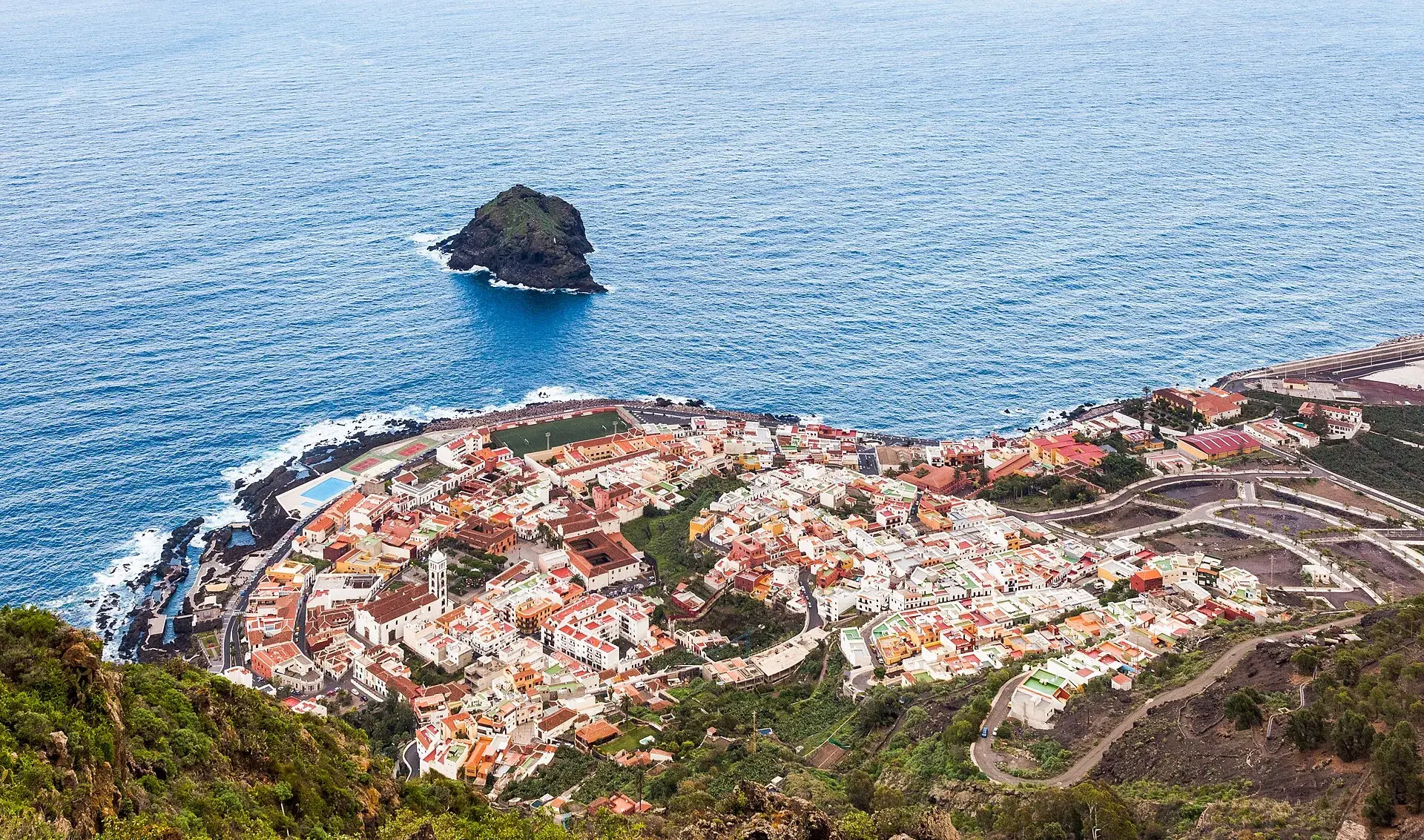
Garachico, Tenerife: old town, El Caletón and the Isla Baja
What to see in Garachico in half a day: the port buried by lava in 1706, the historic centre, El Caletón, the castle, San Roque, buses and where to park.
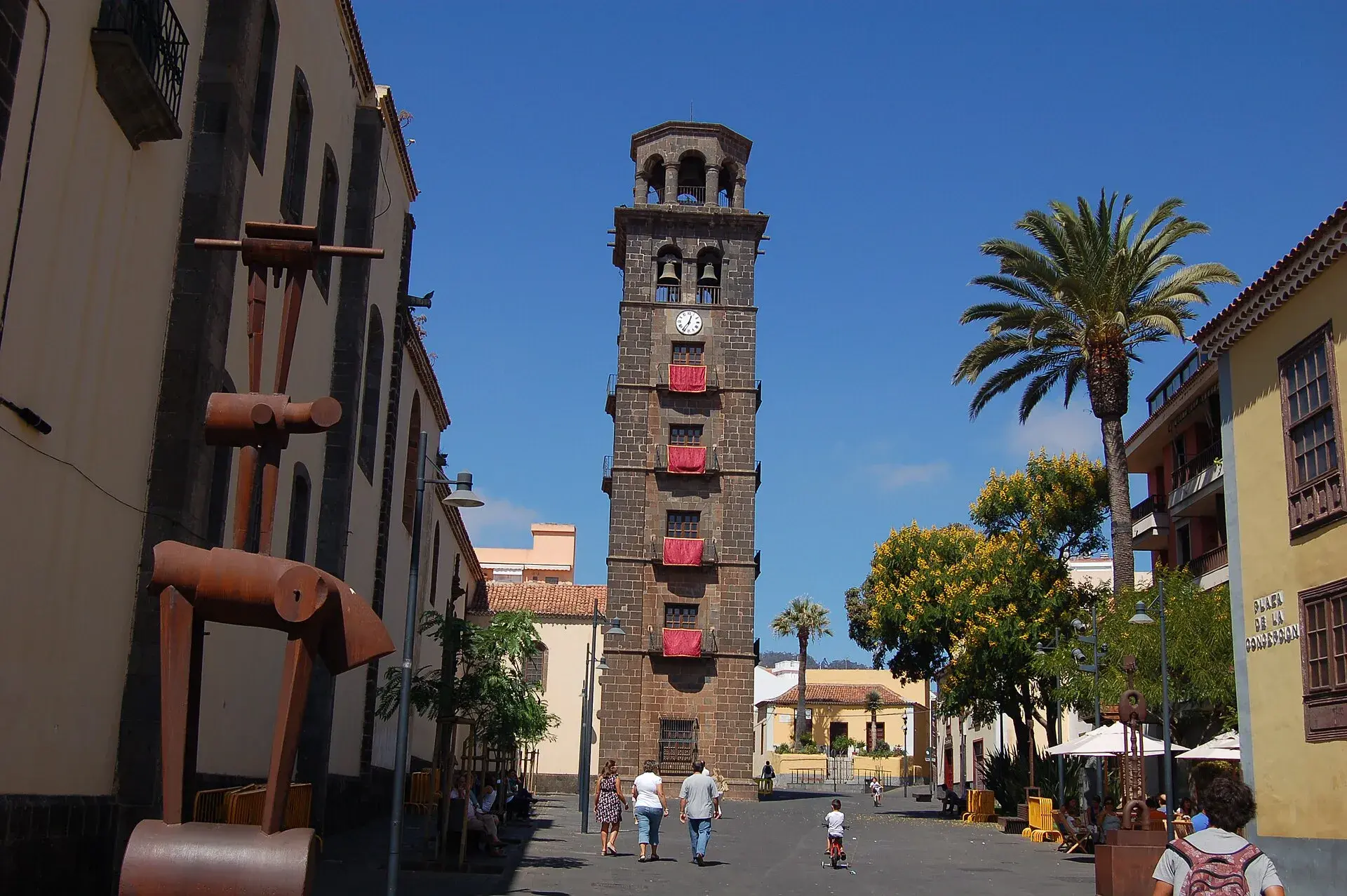
La Laguna, Tenerife: old town, museums and how to get there
What to see in La Laguna step by step: walking route through the World Heritage old town, cathedral, museums, tram, parking, festivals and a trip to Anaga.
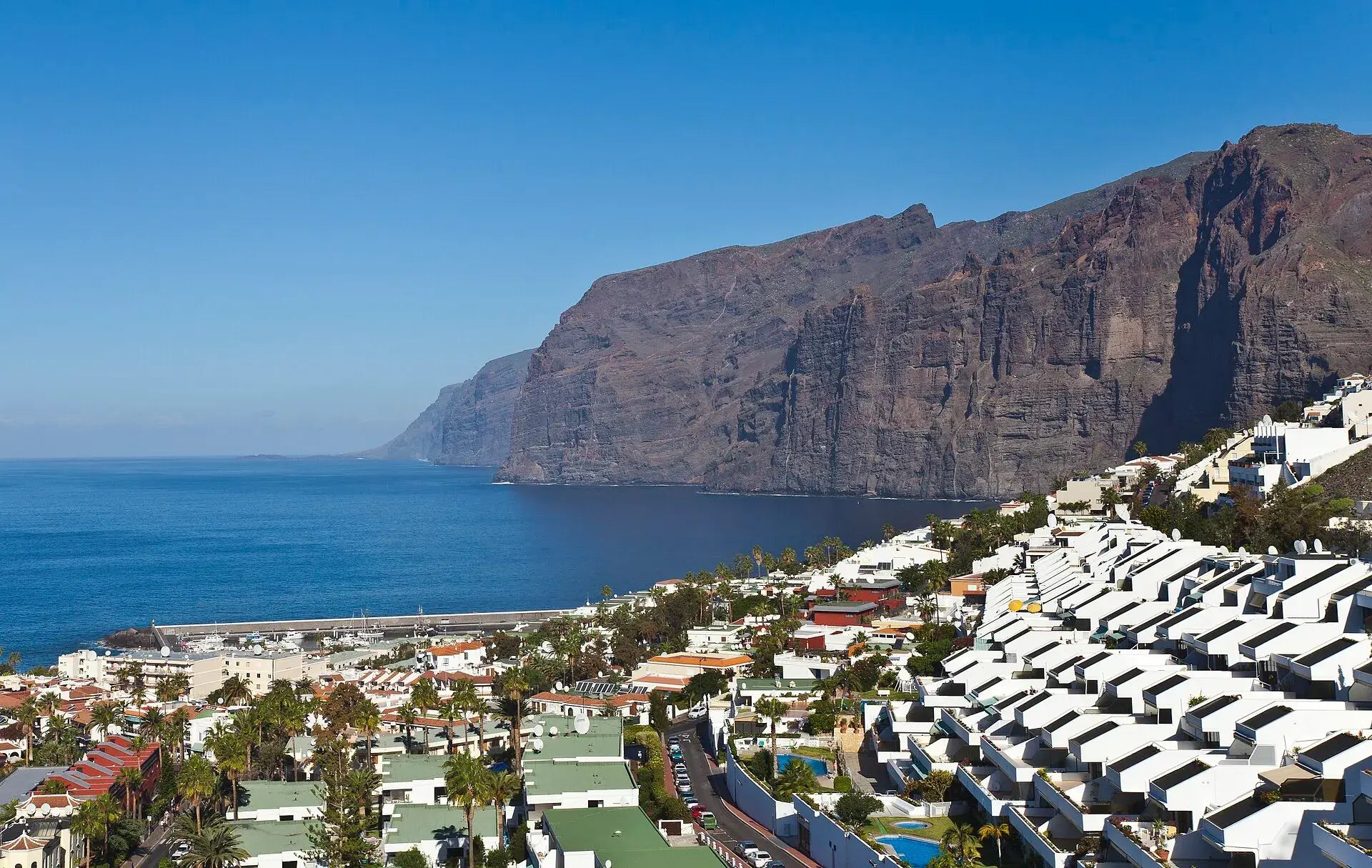
Los Gigantes Tenerife: cliffs, boat trips, beaches and access
Los Gigantes (Tenerife): cliffs up to 600 m, Archipenque viewpoint, boats from the marina, Los Guíos, rock pools, buses 473 and 477 and where to park.
Tenerife protected areas rules: trail quotas and drones
Rules for Tenerife's protected areas: trails that need booking, Teide, Masca and El Pijaral, drones, camping, wildfire alerts, dogs and fines in 2026.