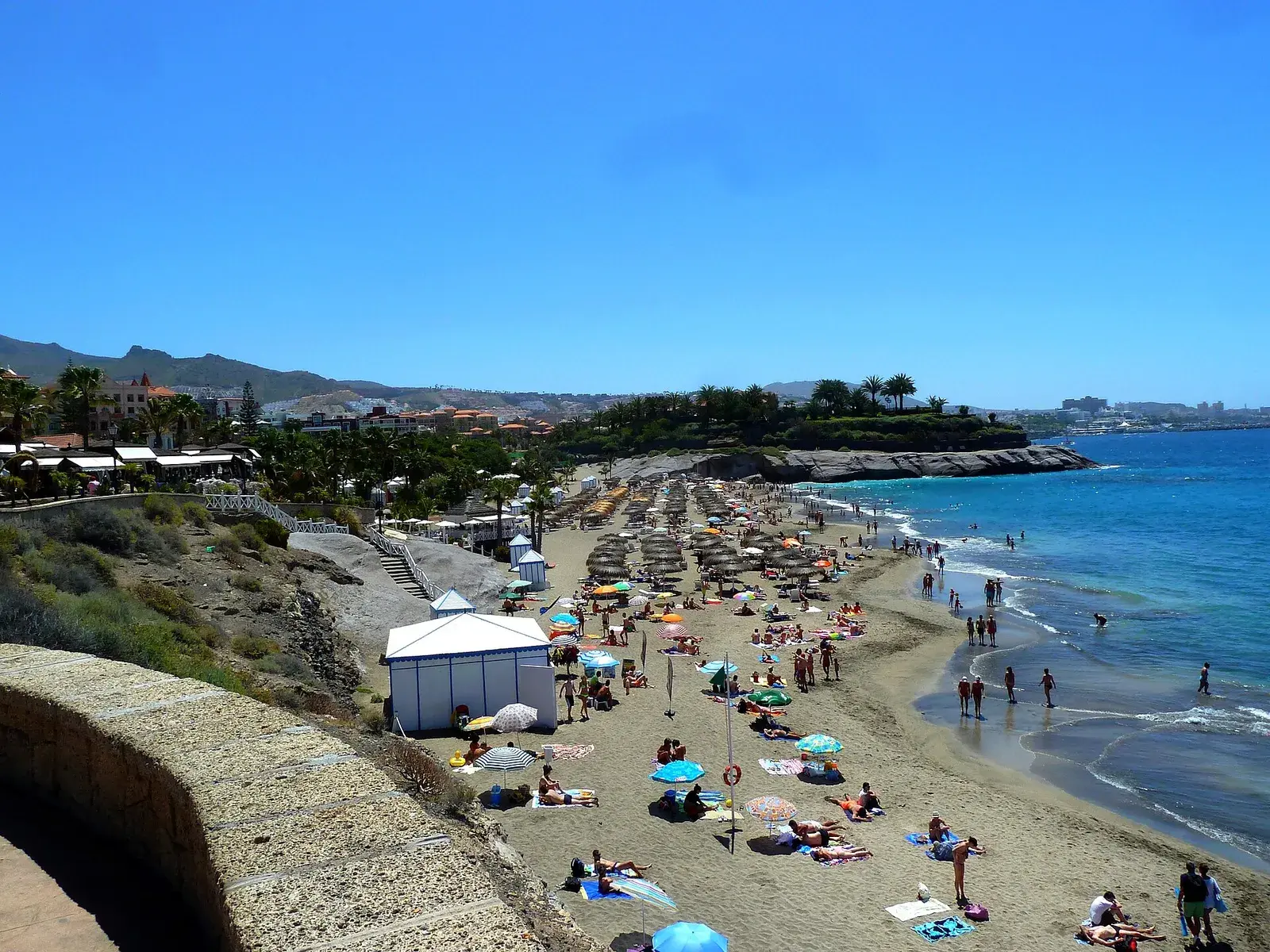
Photo by giggel, CC BY 3.0, via Wikimedia Commons
Playa del Duque, Tenerife: Blue Flag, facilities and access
Playa del Duque is the best-kept beach in Costa Adeje, in south Tenerife: about 390 metres of light sand in front of the area's most upmarket hotels, with a calm sea, every facility and a Blue Flag in 2026. It is an urban beach of imported sand, designed for a comfortable day out, on the northern stretch of the promenade that links the Costa Adeje beaches, close to La Caleta. It suits you if you want to swim without waves, eat well without moving and watch the sunset with La Gomera opposite; if you are after unspoilt scenery or moderate prices, the rest of the south has better options.
At a glance
- Area and municipality: Costa Adeje, municipality of Adeje, north of Fañabé and Torviscas and before La Caleta.
- Sand: light and fine, imported, like the other resort beaches in Adeje.
- Approximate length: about 390 metres.
- Waves and wind: calm water most of the year; Costa Adeje lies on the leeward side of the trade winds.
- Lifeguards: the Blue Flag requires lifeguard and first-aid services during the bathing season; check the flag when you arrive.
- Facilities: showers, toilets, changing rooms, sunbed and parasol hire, bars, restaurants and shops nearby.
- Blue Flag 2026: yes, on the official 2026 list.
- Accessibility: adapted access for people with reduced mobility.
- Parking: more than a hundred spaces nearby, on the street and in paid car parks, which fill by mid-morning in high season.
- TITSA bus: guagua (the local word for bus) lines 110 and 111 from Santa Cruz end at Costa Adeje bus station, and the intercity network has stops in the area.
- Best for: a comfortable day, couples, families, swimming without waves and sunsets.
- Drawbacks: sunbed and food prices above the southern average, a very touristy feel and difficult parking in high season.
How to get there
By car, leave the TF-1 motorway at the Costa Adeje exit and follow signs to the northern hotel zone, towards La Caleta. There are spaces on the street and paid car parks at the nearby shopping centres, but in high season they fill by mid-morning; if you are staying in Costa Adeje, walk along the promenade.
By bus, lines 110 (direct via the TF-1, around 55 minutes) and 111 (via Candelaria, Güímar and the airport, an hour and a half) link Santa Cruz with Costa Adeje bus station, from where the TITSA intercity network reaches the hotel zone. Check the nearest stop and the day's timetable on the TITSA website. The guide on how to get around Tenerife explains travel cards and fares.
The sea and safety
Like the other resort beaches in Adeje, Playa del Duque was built with imported sand and protective structures that keep the water calm, so swimming is easy for children and less confident swimmers. Even so, this is the Atlantic: with a swell from the south or west there can be undertow at the water's edge, and then the yellow or red flag is your guide. Pets are not allowed on most of the island's beaches, and soap is not permitted in the showers at the access points.
What is nearby
Playa del Duque is part of the Costa Adeje seafront promenade, which you can walk and which connects more than eight beaches. To the south are Torviscas and Fañabé beach, bigger and livelier; to the north, the promenade ends at La Caleta, a former fishing village with fish restaurants by the sea. From there the coastal path leads to Diego Hernández beach, a natural cove with no facilities that is its exact opposite.
A few minutes away, Puerto Colón is the base for catamarans and sailing boats on whale and dolphin watching trips, and Adeje old town and the Barranco del Infierno are ten minutes up the road; the guide to what to see in south Tenerife organises them into days. If you are looking for accommodation here, the guide on where to stay in Tenerife explains what Costa Adeje offers compared with Los Cristianos or Las Américas.
Best time of day and year
To get a front-row sunbed and a parking space, arrive before ten. The afternoon is best if you want to avoid strong sun: the beach faces west, and the sunset, with La Gomera on the horizon, is one of its draws, with the promenade terraces full at that hour.
As for the year, Costa Adeje is the sunniest part of the island, and swimming is pleasant in any month. Winter brings mild temperatures and many visitors from northern Europe; summer brings more families and more heat. The guide to the best time to visit Tenerife compares the seasons by weather and price.
Frequently asked questions
Does Playa del Duque have a Blue Flag?
Yes. It is on the official 2026 list of Blue Flag beaches, together with Torviscas in the same municipality and Las Vistas in Arona.
Do you have to pay to use Playa del Duque?
No. Access to the beach is public and free, as on every beach in Spain. You pay for sunbeds and parasols, which cost more here than on other southern beaches.
Is it good for children?
Yes. The sea is usually calm, the sand is fine and there are showers, toilets and restaurants right there. For families on a tighter budget, Fañabé and Torviscas, on the same promenade, offer the same with more atmosphere.
Is the sand natural?
No. It is imported light sand, as on the other resort beaches in Adeje and Arona. The nearest natural-sand beaches are Diego Hernández, reached on foot from La Caleta, and La Enramada, with dark sand.
How do you get there without a car?
On TITSA lines 110 and 111 from Santa Cruz to Costa Adeje bus station and, from there, on the intercity network or on foot along the promenade. If you are staying in Costa Adeje, the promenade connects it on foot with Fañabé and Torviscas.
Keep planning
- The best beaches in south Tenerife: every beach in and around Costa Adeje.
- Fañabé beach: the livelier neighbour on the promenade.
- The best beaches in Tenerife: the island-wide selection.
- Tenerife as a couple: ideas to round off a beach day.
You may also like
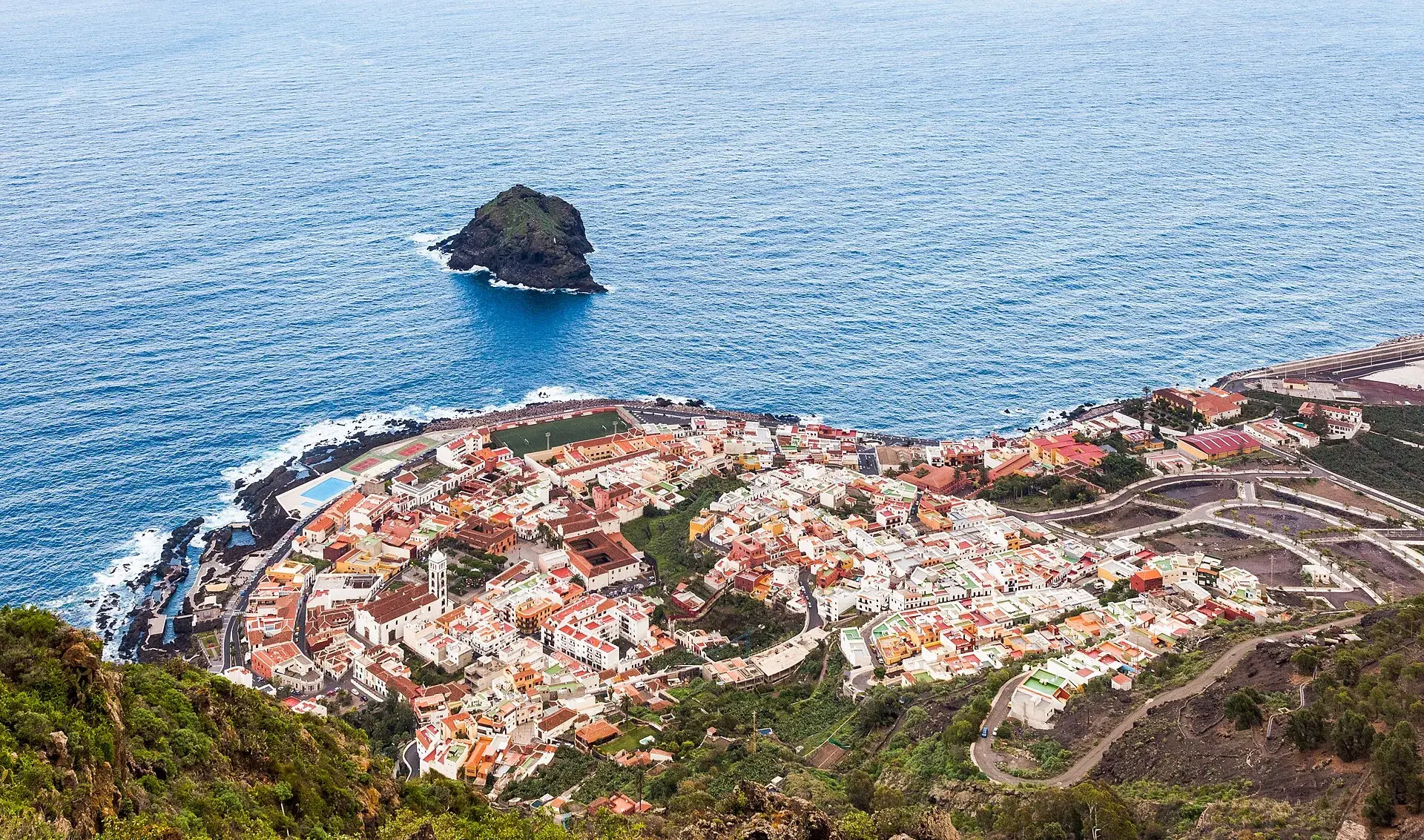
Garachico, Tenerife: old town, El Caletón and the Isla Baja
What to see in Garachico in half a day: the port buried by lava in 1706, the historic centre, El Caletón, the castle, San Roque, buses and where to park.
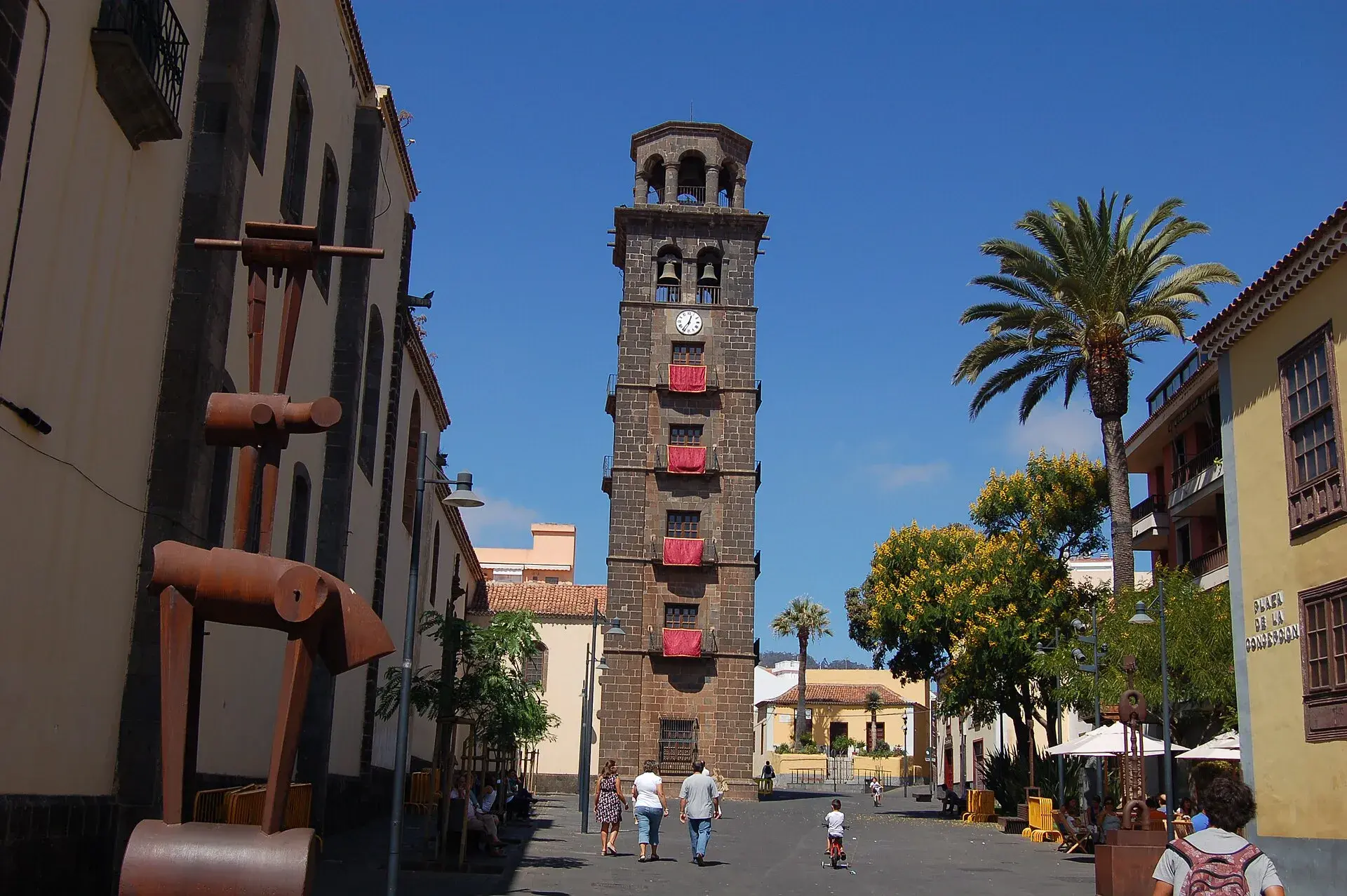
La Laguna, Tenerife: old town, museums and how to get there
What to see in La Laguna step by step: walking route through the World Heritage old town, cathedral, museums, tram, parking, festivals and a trip to Anaga.
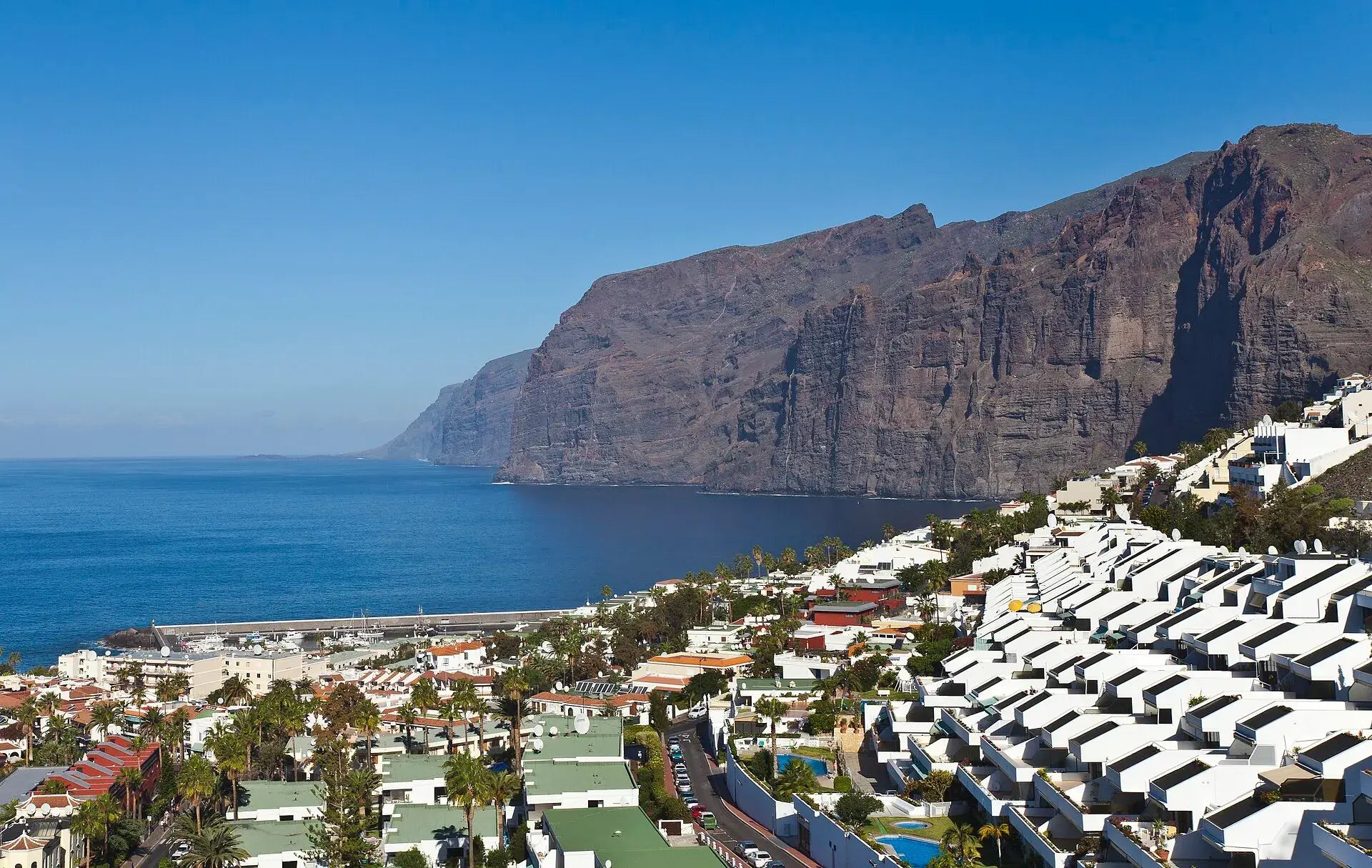
Los Gigantes Tenerife: cliffs, boat trips, beaches and access
Los Gigantes (Tenerife): cliffs up to 600 m, Archipenque viewpoint, boats from the marina, Los Guíos, rock pools, buses 473 and 477 and where to park.
Tenerife protected areas rules: trail quotas and drones
Rules for Tenerife's protected areas: trails that need booking, Teide, Masca and El Pijaral, drones, camping, wildfire alerts, dogs and fines in 2026.