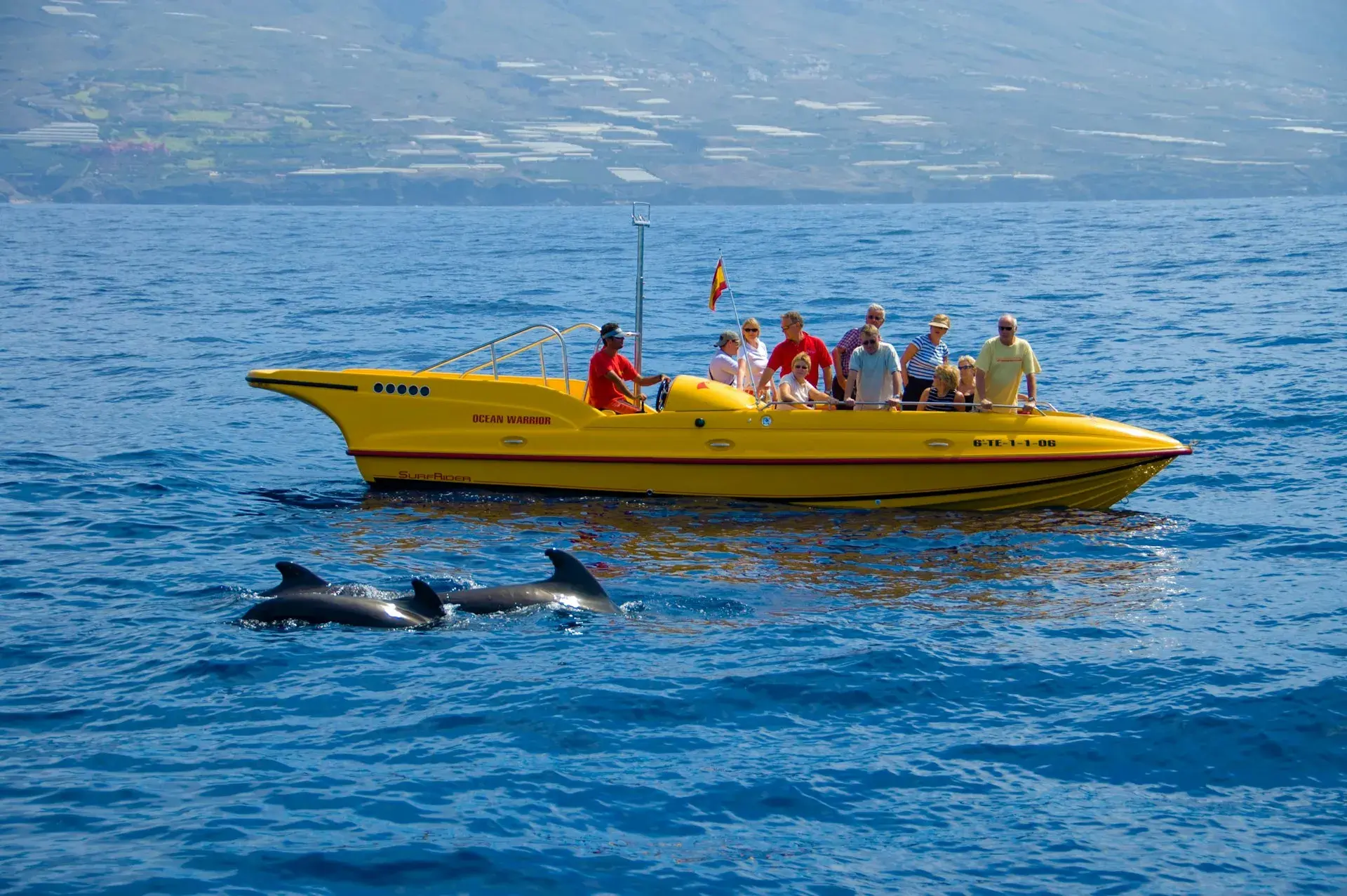
Photo by Gustavo A. Pérez on Unsplash
Whale watching in Tenerife: a practical guide to dolphin trips
Whale watching in Tenerife works all year round because its two main species do not migrate: a resident population of short-finned pilot whales, a member of the dolphin family that grows to more than four metres, lives off the south-west coast, alongside another of bottlenose dolphins. Depending on the season, around twenty passing species join them, from rorquals to sperm whales. Trips leave daily from Los Cristianos, Puerto Colón, Los Gigantes and Las Galletas, last two to five hours and, according to Turismo de Tenerife, find cetaceans on the vast majority of days. This guide explains what you will see, where to sail from, what changes with each type of boat, what the regulations require and how to recognise a responsible trip.
What you will see: residents and visitors
The short-finned pilot whale is the animal that all but guarantees the trip: it lives in family groups of several dozen individuals, rests at the surface during the day and dives deep at night to feed on squid, so during excursion hours it is usually still or moving slowly. You can recognise it by its rounded head, dark colour and broad, curved dorsal fin. The bottlenose dolphin, the large grey dolphin of the documentaries, forms smaller groups and often comes up to the bow of the boats.
Turismo de Tenerife counts up to 21 passing species in these waters. The most common are the Atlantic spotted dolphin and the common dolphin; in spring the chances of seeing rorquals increase, and sperm whales, humpbacks and orcas appear occasionally. May and June bring the greatest variety; a trip without pilot whales is rare.
The Teno-Rasca strip: why here
The Teno-Rasca marine strip, between Punta de Teno (Buenavista del Norte) and Punta de Rasca (Arona), is a Special Area of Conservation within the Natura 2000 network. Two factors explain the concentration of cetaceans: the seabed drops to hundreds of metres very close to the shore, and the south-west side of the island lies in the lee of the trade winds (the north-easterlies that dominate the Canary Islands), so the sea is calm on most days.
In January 2021 the World Cetacean Alliance designated the Tenerife-La Gomera marine area as Europe's first Whale Heritage Area (the programme was then called Whale Heritage Site). The recognition covers some 2,000 square kilometres, mostly at sea, from about two kilometres off the coast between Las Galletas and Buenavista to a strip off La Gomera, and it rewards respectful coexistence with cetaceans, research and the sustainability of the activity, not just the presence of animals.
Where to sail from
- Los Cristianos (Arona): the port with the most departures and the widest choice of boats, well served by guagua (the local word for bus) from across the south. The watching areas are only a few miles out, so the sailing time to the first animals is short.
- Puerto Colón (Costa Adeje): within walking distance of the Adeje hotels. Large catamarans and sailing boats are based here; many trips add a swimming stop off the Adeje coast.
- Los Gigantes (Santiago del Teide): smaller trips that combine the pilot whales with the cliffs and the Masca inlet. Closer to Teno, with a backdrop no other port can match.
- Las Galletas (Arona): a small fishing port with small boats and some science-focused trips that carry a hydrophone so you can listen to the animals.
To fit the ports into an itinerary of the area, what to see in the south of Tenerife covers the coast from Los Cristianos to Los Gigantes.
Boat types and what changes
- Large catamaran: dozens of passengers, a wide deck, shade, toilets and food on board on the three-to-five-hour trips, with a swimming stop in a cove. It is the most stable, the best with children and with people prone to seasickness, and the least suited to watching in silence.
- Sailing boat: few places, sailing when the wind allows and the engine kept to a minimum near the animals. More expensive per person, calmer and the usual choice for sunset trips; it features among the plans in Tenerife for couples.
- Speedboat or RIB: eight to twelve passengers, two hours, it reaches the area sooner and focuses on the sighting alone. It is the option closest to the water and the least comfortable: spray, jolts from the waves and, with many operators, a minimum age and no pregnant women or people with back problems.
- Mid-sized boat: the middle ground, three hours, with a swim and a simple meal. It usually offers the best balance of price, comfort and time with the animals.
The number of passengers matters more than the photo of the boat: with 20 people you can see from any side; with 100, you cannot.
The Barco Azul flag and the watching rules
Cetacean watching in Spain is regulated by Royal Decree 1727/2007, which sets a moving protection zone around the animals: a 60-metre exclusion zone that no vessel may enter, a restricted zone between 60 and 300 metres where only two boats may be present at a time, and an approach zone between 300 and 500 metres. Within that space the maximum speed is four knots, and it is forbidden to circle the group, reverse except in an emergency, make loud noises, feed or touch the animals, or swim or dive in the exclusion zone. If the cetaceans approach of their own accord to within 60 metres, the boat must put its engine in neutral. The rule applies to every vessel, including jet skis and kayaks.
Operators need authorisation from the Ministry for the Ecological Transition to run commercial whale watching, and in the Canary Islands authorised boats display the Barco Azul (Blue Boat) badge, a yellow flag with pilot whale silhouettes that must be visible on the mast. Without that flag the boat may not approach cetaceans. Operators in the local association that promoted the Whale Heritage Area bid also follow their own code: a guide on board, limited time with each group and a radio warning to anyone breaking the rules. Visitors need no permit; your part is to choose well and not ask the skipper for what the law does not allow.
Best time of day and best season
Pilot whales and bottlenose dolphins are present all year, so the season is decided by the sea, not the animals. From May to June there are more passing species; in summer the south-west sea is usually calm in the morning and the wind picks up towards midday; in winter Atlantic storms cancel trips for one or several days, especially with southerly or westerly winds, which hit this coast head-on. As a rule, the first morning departure offers the calmest sea and the best light for photos; sunset trips are worth it on a sailing boat for the scenery, although the low light makes it harder to spot the animals in the water.
Before booking, check the AEMET marine forecast for the Tenerife coast and ask the operator what happens if they cancel because of the sea: the norm is to change the day or refund the price. With calima (Saharan dust hanging in the air) visibility is shorter, but the sea is usually calm.
Seasickness and what to bring
Seasickness is the main cause of a bad experience, and it can be avoided. If you know you suffer from it, take a motion-sickness medicine as far in advance as the leaflet says (ask at the pharmacy, especially for children), have a light breakfast, sit in the middle of the boat and on the lower deck, look at the horizon and stay off your phone. The catamaran and the mid-sized boat move less than the speedboat.
Bring sun cream, a cap, sunglasses and a windproof jacket even if it is hot on land, because it feels several degrees cooler at sea. Add water, binoculars, swimwear and a towel if there is a swimming stop, flat shoes with a grippy sole and a camera strap. For photos, ask the skipper to stop the boat and go easy on the zoom: the pilot whales surface just a few metres away.
With children
It is one of the activities that works best with children, on three conditions. Choose a stable boat (a catamaran or mid-sized boat) and a short trip of two or three hours, because interest fades after that; check that there are children's life jackets and shade on deck; and ask about the minimum age, which on speedboats and RIBs usually rules out the youngest. A swimming stop in a cove turns the trip into a full morning. More ideas by age in Tenerife with kids.
Sustainability: what to avoid
- Swimming with dolphins or pilot whales: it is prohibited by Royal Decree 1727/2007 and no serious operator offers it. If you see it advertised, do not book.
- Boats without the badge: without the Barco Azul flag the boat is not authorised to approach; private hire boats and jet skis must stay more than 500 metres from any group.
- Harassment: if the skipper chases the animals, cuts across their path or comes between mothers and calves, they are breaking the rules. You can report it to the Guardia Civil (SEPRONA) with the boat's name and the time.
- Feeding or touching: never, not even turtles or fish at the swimming stops.
- Plastics: bring a reusable bottle; many operators no longer serve single-use cups or straws.
Trips with a biologist or certified guide on board, a hydrophone and photo-identification catalogues contribute to monitoring the population and usually explain best what you are seeing.
How to choose your trip
- Authorisation and flag: ask about it and check it at the port.
- Port: the one closest to where you are staying, unless you want the Los Gigantes cliffs or the small trips from Las Galletas.
- Duration: two hours to see the animals; three to add a swim; five only if you fancy a full day on a boat with a meal.
- Passengers: the fewer, the better the view; with children or seasickness, the bigger the boat, the better the ride.
- Guide: commentary in your language makes the difference between seeing animals and understanding what you see.
- Cancellation: if it is because of the sea, a free change or refund; if it is your decision, read the deadline.
- What is included: food, drinks, hotel pick-up and snorkelling gear, if there is a swimming stop.
If you want to fit the boat trip into a wider plan, the best excursions in Tenerife sorts the day trips by area and length, and the best outdoor activities in Tenerife includes kayaking and diving, which share part of this coast.
Frequently asked questions
What time of year can you see whales in Tenerife?
All year round: the short-finned pilot whale and the bottlenose dolphin are residents and can be seen in any month. Between May and June the variety of passing species increases, and in winter there are more cancellations because of the sea, although the animals are still there. The best time is usually the first departure of the morning.
Which port should you sail from?
The one closest to where you are staying: Los Cristianos and Puerto Colón if you are in the south, Los Gigantes if you are in the west or want the cliffs and Masca as scenery. The animals are the same; what changes is the sailing time, the size of the boats and the setting.
Are sightings guaranteed?
No operator can guarantee them, by law or by nature, but the success rate with pilot whales is very high because the population is resident. Some operators offer a free repeat trip if no animals were seen; ask before booking.
Can you swim with dolphins in Tenerife?
No. Royal Decree 1727/2007 prohibits swimming or diving in the 60-metre exclusion zone around cetaceans, and authorised operators do not offer it. Swimming stops take place in coves, away from the animals. An advert promising swimming with dolphins is a reason to rule out that operator.
Which boat is best for someone who gets seasick?
The large catamaran or the mid-sized boat, on the first morning departure and with medication taken in advance. The RIB is the worst option if you get seasick, and five-hour trips drag the problem out. Sit in the middle, on the lower deck and looking at the horizon.
Keep planning
You may also like
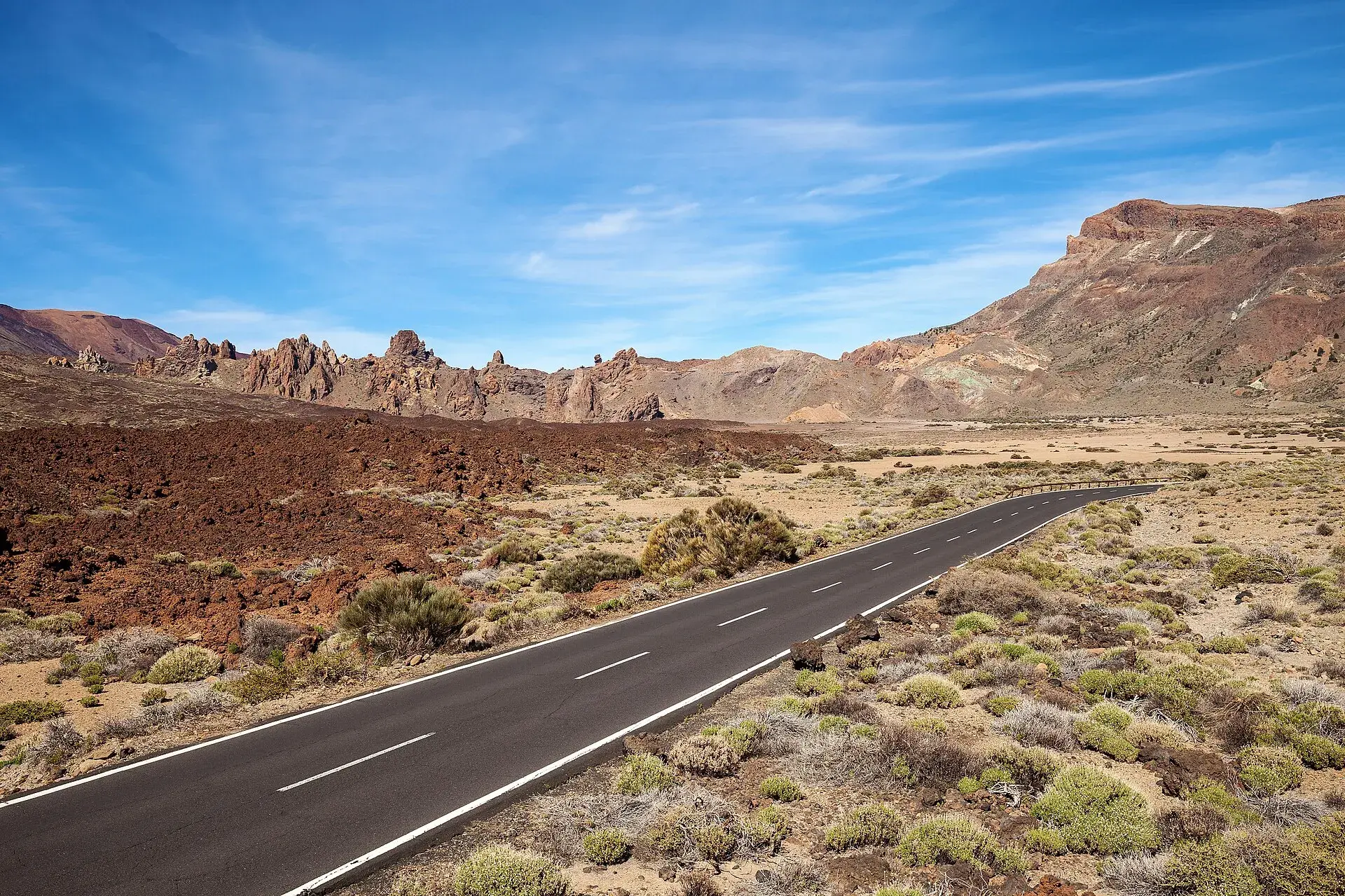
Cycling in Tenerife: riding up Teide and the key routes
Cycling in Tenerife: how to ride up Teide via Vilaflor, La Orotava, La Esperanza and Chío, with distances, elevation gain, best season, rules and bike hire.
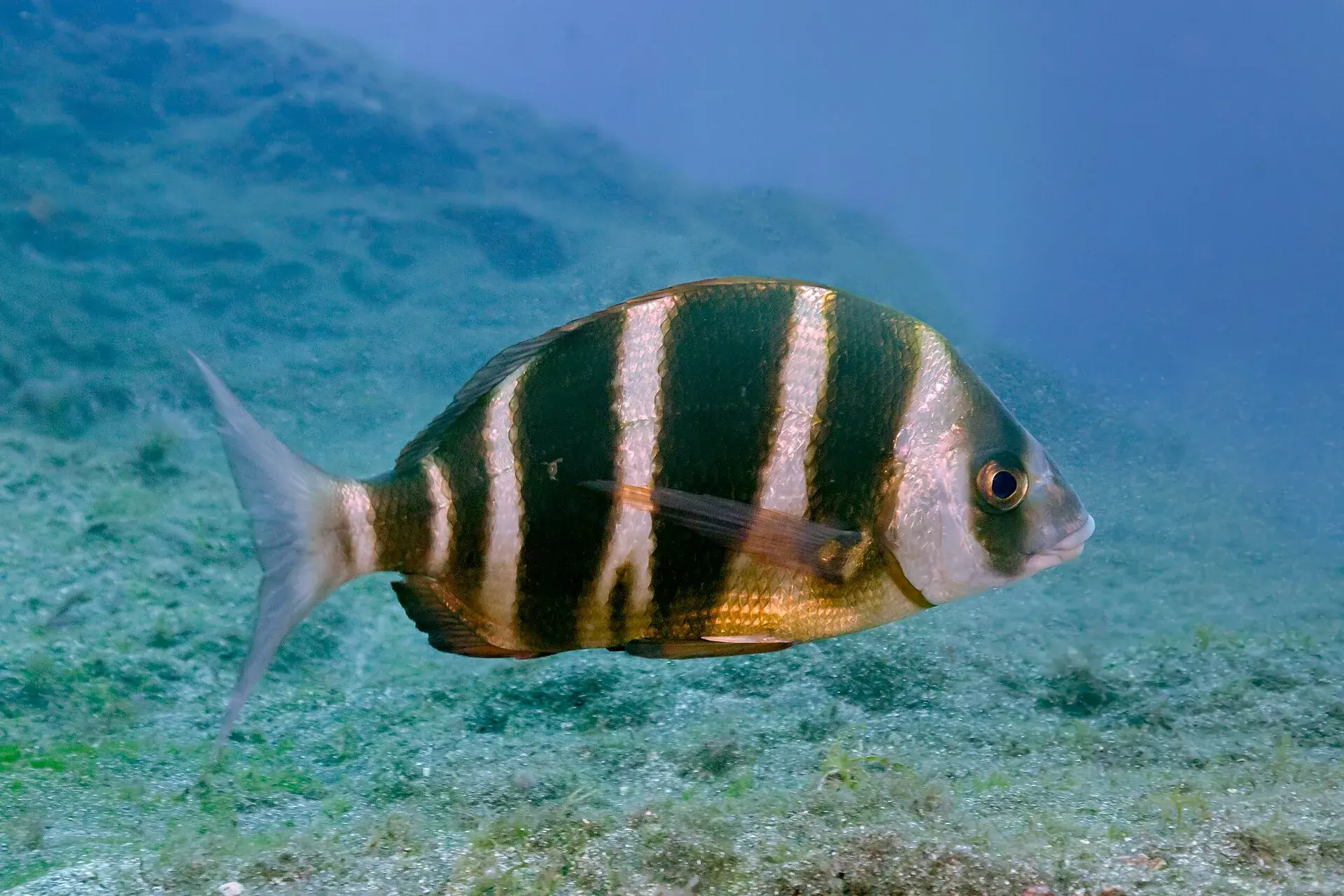
Diving in Tenerife: best spots, snorkelling, try dives and rules
Diving and snorkelling in Tenerife by area: Abades, El Puertito, Las Galletas, Radazul, Los Gigantes and Garachico, with depth, wildlife, try dives and safety.
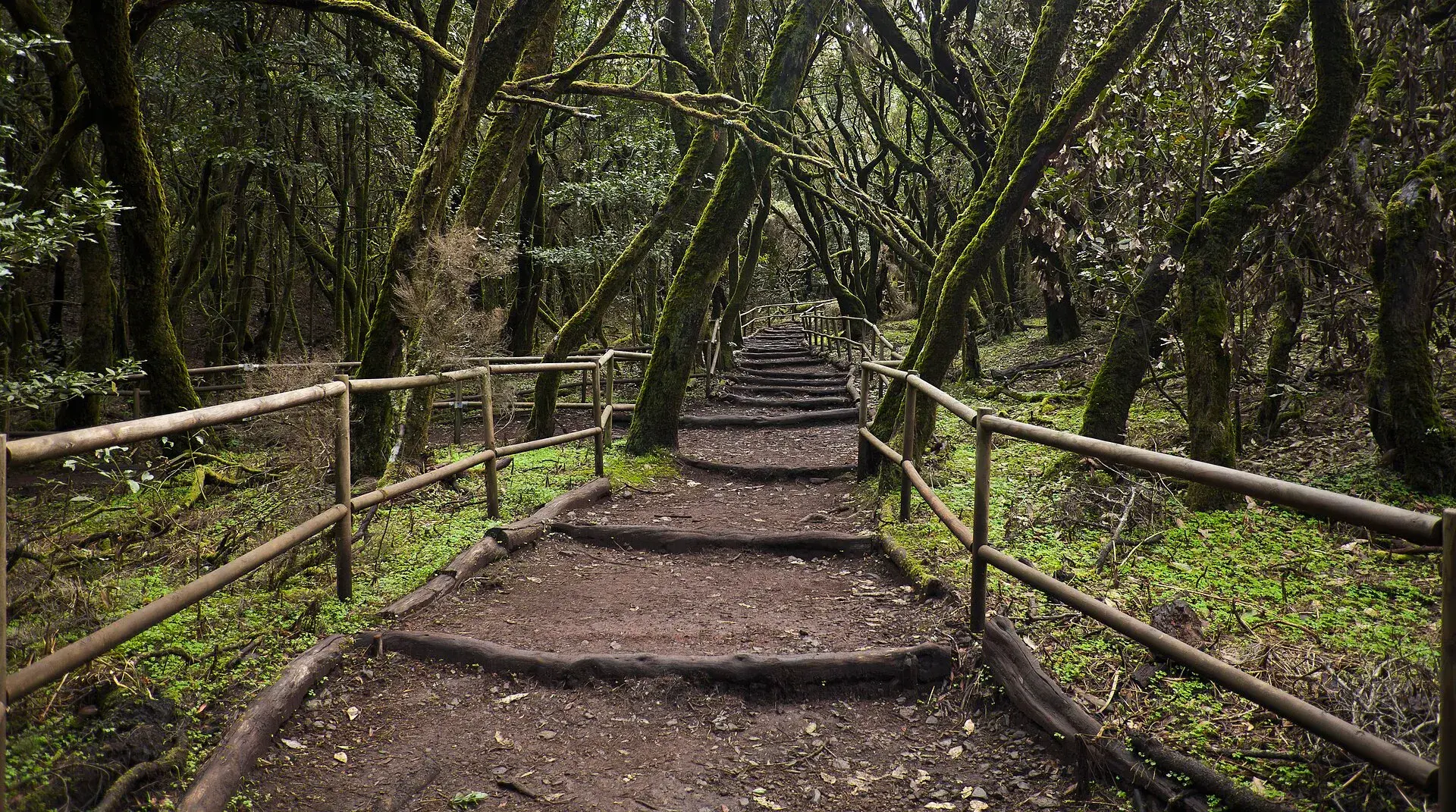
La Gomera day trip from Tenerife: ferry, route and timings
La Gomera day trip from Tenerife: ferries from Los Cristianos, car or tour, a route through Garajonay, Hermigua and Agulo, and how not to miss the last boat.
 Featured
Loro Parque or Siam Park: which to choose, prices and Twin Ticket
Loro Parque or Siam Park: differences, prices and Twin Ticket in 2026, opening hours, free buses, minimum heights, food, queues and who each park suits best.