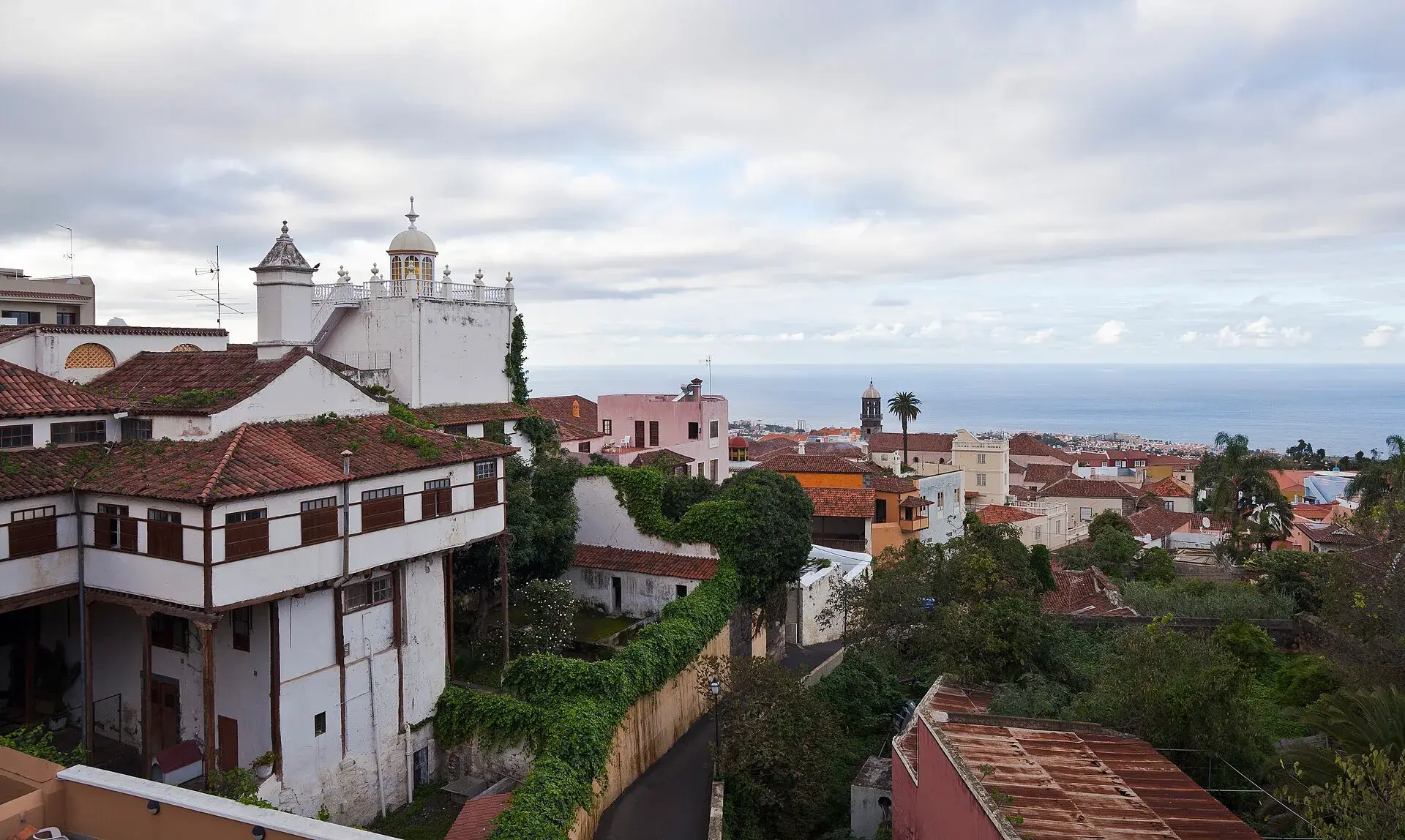
Photo by Diego Delso, CC BY-SA 3.0, via Wikimedia Commons
Things to do in La Orotava: old town, gardens and carpets
The things to do in La Orotava fit into a half-day walk around its hilly, largely pedestrian old town: plaza de la Constitución with the Liceo de Taoro, the Jardines Victoria and their mausoleum, the Iglesia de la Concepción, plaza del Ayuntamiento with the Hijuela del Botánico, and calle San Francisco, home to the Casa de los Balcones, the Casa Lercaro and the centre devoted to the Corpus Christi carpets. From the top of the gardens you see the whole valley, from the sea to Mount Teide. The town lies about five kilometres uphill from Puerto de la Cruz, with several guaguas (buses) from its bus station, and about 30 kilometres from Santa Cruz on the northern motorway. If you drive, leave the car in the lower part of town: the streets of the old centre are narrow and steep.
Why La Orotava deserves a visit of its own
La Orotava grew from the 16th century as the town of the valley's landowning families, and its old centre preserves the most complete collection of Canarian manor-house architecture on the island: mansions with inner courtyards, balconies of tea (the resinous heartwood of the Canary pine), carved stone doorways, convents and Baroque churches. Our guide to the prettiest villages in Tenerife ranks it among the essentials; this page gives you the detailed walk.
Bear two things in mind before you go. First, the old town sits on a slope: between the lower streets and the Liceo de Taoro there are steep cobbled lanes and steps. Second, the climate is that of the northern hills, cooler and cloudier than the coast, so bring a light layer even if the sun is out in Puerto de la Cruz.
Walking route through the old town
The town council offers a numbered route through the historic centre, with an audio guide and a free map you can download from its tourism website or pick up at the Municipal Tourist Office, under the arcades of plaza de la Constitución. This order starts at the top and works downhill, to save you climbing.
1. Plaza de la Constitución and the Liceo de Taoro
The old Llano de San Roque is the most open square in town, known locally as the bandstand square for its neo-Mudéjar kiosk from the early 20th century, built for the municipal band. The Iglesia de San Agustín stands at the far end. Above it, crowning terraced gardens, is the Liceo de Taoro: an eclectic mansion from 1928, home since 1975 of the Liceo de Taoro cultural society, which hosts exhibitions, concerts and talks.
2. Jardines Victoria and the Masonic Mausoleum
A few steps away, the Jardines Victoria (also called the gardens of the Marquesado de la Quinta Roja) descend in seven terraces linked by winding paths. At the top stands a mausoleum that the marchioness commissioned for her son, Diego Ponte del Castillo, who had been refused a church burial for being a Freemason; it was designed by the French architect Adolph Coquet and was never used. The garden is often read as a symbolic ascent towards knowledge, and the top terrace gives the best view of the town and the valley, from the coast up to Teide. Entry is free, according to the town council.
3. Iglesia de la Concepción
Walking down towards the centre you reach the main parish church, rebuilt in the 18th century after the Güímar earthquakes and declared a National Monument. Its curved Baroque façade, with gargoyles and the bell and clock towers behind it, is one of the most interesting in the Canary Islands; inside, look for the dome on its drum, the carved wooden altarpieces and the Italian-school marble tabernacle. The church houses the El Tesoro de la Concepción sacred art museum. Please respect service times.
4. Plaza del Ayuntamiento and the Hijuela del Botánico
The town hall presides over the square where the great sand tapestry of Corpus Christi is laid every year. Behind it is the Hijuela del Botánico, a small, peaceful garden created in the last third of the 19th century on the former kitchen garden of the Poor Clares' convent, as a nursery for the Botanical Garden in Puerto de la Cruz. Many of the plants stayed here: tropical species from Africa and the Americas, a Himalayan fig and one of the most impressive dragon trees in town. Check at the tourist office whether it is open on the day of your visit.
5. Calle San Francisco: Casa de los Balcones and Casa Lercaro
La Orotava's most photographed street brings together three manor houses visited as a single complex:
- Casa de los Balcones (Casa Fonseca): its Canarian courtyard, with carved wooden balconies on the two upper floors and tropical plants, is the town's best-known image. It is also a workshop and shop for calados (traditional drawn-thread embroidery) and a house museum of Canarian life and customs, reached by a spiral staircase from the courtyard entrance.
- Casa Lercaro: a 17th-century palace listed as a Bien de Interés Cultural (a protected heritage site), with a large garden courtyard and, on the lower level, the water mill and gofio mill once fed by the channel from the town's springs. It has a restaurant.
- Casa Eladia Machado: a craft house where you can watch sand carpets, ceramics, calados and embroidery being made.
According to the town council, the complex opens every day of the year except the day of the romería (pilgrimage festival); check current hours on the Casa de los Balcones website. Next door, the Centro de Arte Efímero "Alfombras de La Orotava" displays sketches, paintings and objects from the history of the carpets.
6. Calle Colegio and the rest of the old town
Calle Colegio and the streets running down towards calle Carrera are lined with 17th- and 18th-century mansions, and the Corpus procession passes along them. If you have time, the council signposts a route of the old water mills, a reminder of how the town ran on spring water, and next to the Iglesia de Santo Domingo, in the former convent of San Benito Abad, is the Cabildo's Museo de Artesanía Iberoamericana de Tenerife (MAIT); check its opening hours before you go.
Corpus Christi: flower carpets and the sand tapestry
Corpus Christi is La Orotava's great festival and the island's best-known tradition. The town's patron saint festivities run over a long weekend from Thursday to Sunday and combine Corpus Christi with the romería of San Isidro Labrador. Since 1700 the procession has been held a week after the liturgical Corpus Christi, so the so-called Jueves de las Alfombras (Carpet Thursday) falls between late May and late June depending on the year; the romería is on the following Sunday. The council publishes each year's dates with the programme; they also appear in the Tenerife festivals calendar.
How the tradition began
According to the town council, the first flower carpet was laid in 1847 by Leonor del Castillo in front of her house on calle Colegio: a geometric pattern of petals on the cobbles. The idea caught on among the town's families, and in 1882 a farm worker named Valladares invented the corrido, filling a barrel hoop with petals to create continuous bands. Today the route (plaza Patricio García, calle Colegio, Carrera, Tomás Pérez and Inocencio García) covers about 1,200 square metres, with 34 flower carpets mixing tapestries and corridos.
The tapestry in plaza del Ayuntamiento
Since 1919 a huge tapestry of coloured volcanic sands from Teide National Park has been laid in plaza del Ayuntamiento, the only carpet made with those earths. It began with flowers, but the size of the square led the carpet maker Felipe Machado to replace them gradually with sand. The designs are prepared months in advance, and in 2007 it entered Guinness World Records as the largest natural sand painting in the world, at 859.42 square metres.
How to see it
The carpets are ephemeral: they last only until the procession passes over them, so go in the morning. Do not step on them, follow the organisers' directions for crossing, and expect streets closed to traffic and almost no parking: on the day of the romería in particular, arrive by bus. If your dates do not match, the Centro de Arte Efímero on calle San Francisco and the Casa Eladia Machado show the technique all year round.
The valley viewpoint
The classic view of the Orotava valley, with the banana plantations, Puerto de la Cruz and Teide behind, is from the Mirador de Humboldt on the TF-21, just outside La Orotava on the road to Teide. Parking is limited and in 2023 the Cabildo banned stopping on the verges there because of rockfalls: if it is full, drive on. Without a car, the top terrace of the Jardines Victoria is the alternative on foot. More northern viewpoints, with access and the best time of day, are in the best viewpoints in Tenerife.
Where to eat in and around La Orotava
The old town has casas de comida (traditional eateries) and restaurants serving Canarian food (stews, goat, rabbit in salmorejo sauce, papas arrugadas with mojo), cafés on the squares and the restaurant at the Casa Lercaro. At weekend lunchtimes it is worth arriving before 13:30.
The municipality's hillsides belong to the Valle de La Orotava wine denomination and have guachinches, seasonal eateries where wine growers sell their own wine with a few home-cooked dishes. They open for a few months a year and often have no website: how they work and how to find them is in the guachinches guide. To taste the valley's wine at a winery, ask at the tourist office or see wineries to visit in Tenerife. On Saturday mornings the La Orotava farmers' market opens in the La Torrita building on calle Educadora Lucía Mesa, from 8:00 to 13:30, according to the town council.
Getting there and parking
By bus
- From Puerto de la Cruz: TITSA routes 345, 351, 352 and 353 link Puerto's bus station with La Orotava, and route 348, the Teide bus, stops at La Orotava bus station on its way to the national park.
- From La Laguna and Santa Cruz: route 101 takes an hour through the Acentejo villages to La Orotava on the old main road, and route 108 links Santa Cruz and Icod de los Vinos with a stop in the town.
- From the south: there is no direct route; change in Puerto de la Cruz.
Check timetables on the TITSA website the day before, especially on Sundays.
By car
From Santa Cruz and La Laguna, on the northern motorway (TF-5), about 30 kilometres. Do not drive into the old town: the streets are narrow, steep and partly pedestrianised. Use the public car parks in the lower part of town and walk up; in the centre, on-street spaces are paid and scarce. On Corpus Christi and romería days the old town is closed to traffic.
How long to spend and what to combine it with
- Half a day: the old town walk with the Casa de los Balcones, the Jardines Victoria and the Concepción.
- A full day: La Orotava in the morning, lunch at a guachinche or in town and the afternoon in Puerto de la Cruz, with its seafront and Botanical Garden. Our guide to Puerto de la Cruz has the details.
- On the way to Teide: the TF-21 leaves La Orotava for the national park via the Mirador de Humboldt and Aguamansa. Seeing the old town first thing and then driving up is a common combination.
- The whole valley: the Rambla de Castro, Los Realejos and the valley's beaches are in what to see in the north of Tenerife.
Should you stay in La Orotava? It suits you if you want a rural hotel or a manor house in a quiet town and plan to explore the north. If you want the sea on your doorstep and more choice, Puerto de la Cruz is next door.
Common mistakes
- Driving up to the square. The old town's streets were not built for traffic: park lower down and walk.
- Wearing smooth-soled shoes. The cobbled slopes are slippery, especially in the northern damp.
- Leaving the carpets until late in the day. They last only until the procession passes: see them in the morning.
- Expecting coastal sunshine. The town is higher up and usually cloudier than Puerto de la Cruz.
Frequently asked questions
What can I see in La Orotava in two hours?
Calle San Francisco with the Casa de los Balcones, plaza del Ayuntamiento, the Iglesia de la Concepción and the Jardines Victoria, all a few minutes' walk from each other. If you have time left, climb to the Liceo de Taoro and walk down calle Colegio.
How much does it cost to visit the Jardines Victoria?
Nothing: entry is free, according to the town council. It is the best viewpoint in the old town on foot, with the valley and Teide from the top terrace.
When are the La Orotava flower carpets?
On the Jueves de las Alfombras, a week after the liturgical Corpus Christi Thursday: between late May and late June depending on the year. The romería of San Isidro is on the following Sunday. The council publishes the exact dates with the festival programme.
How do I get to La Orotava without a car?
From Puerto de la Cruz, on TITSA routes 345, 351, 352 and 353, or on route 348 on its way to Teide. From La Laguna, on route 101, and from Santa Cruz, on route 108. There is no direct route from the south: change in Puerto de la Cruz.
La Orotava or Puerto de la Cruz?
They do not compete: they are five kilometres apart and easy to see on the same day. La Orotava is the historic town and gardens; Puerto de la Cruz is the sea, the promenade and the hotels. To stay, Puerto de la Cruz has more choice and better connections.
Keep planning
You may also like
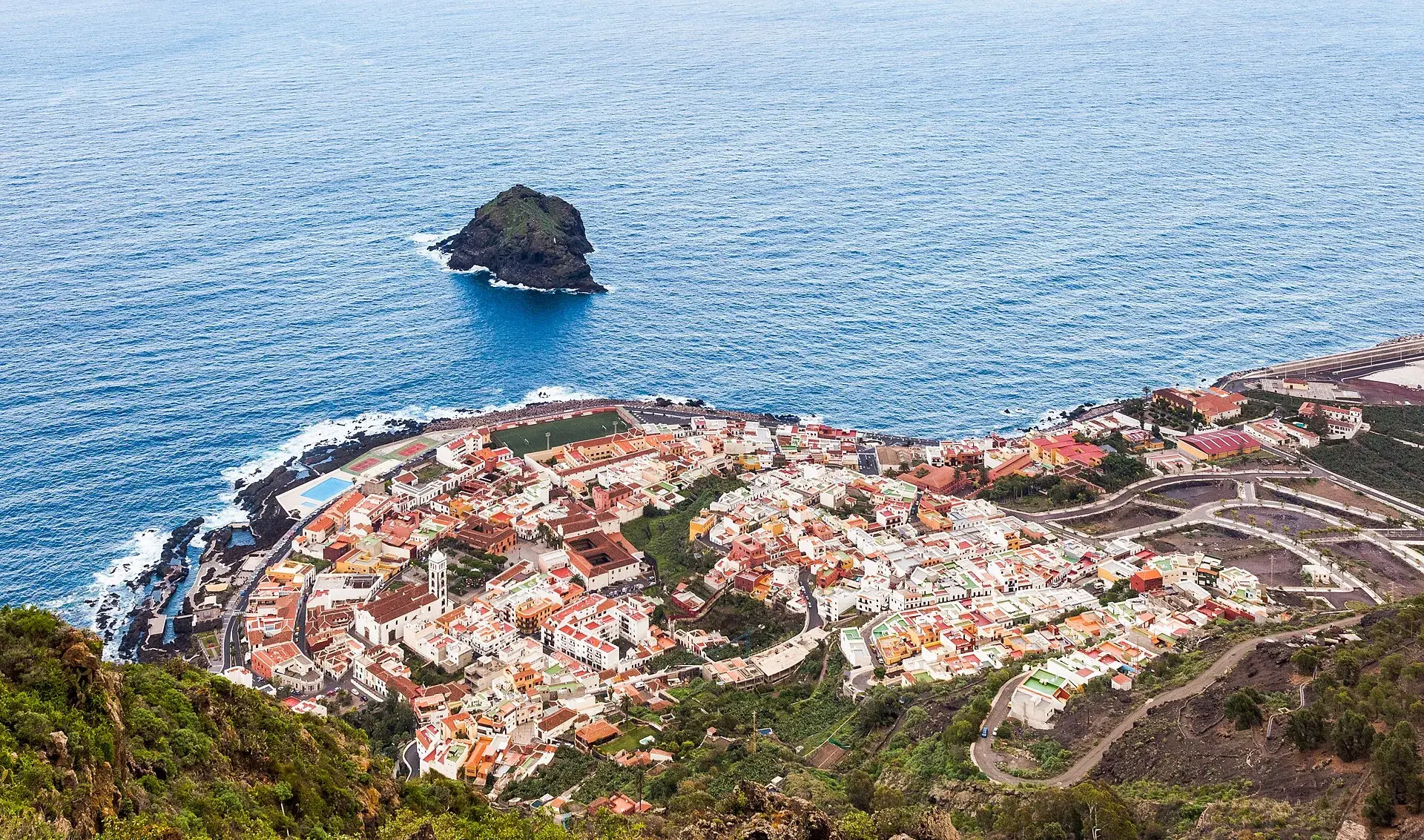
Garachico, Tenerife: old town, El Caletón and the Isla Baja
What to see in Garachico in half a day: the port buried by lava in 1706, the historic centre, El Caletón, the castle, San Roque, buses and where to park.
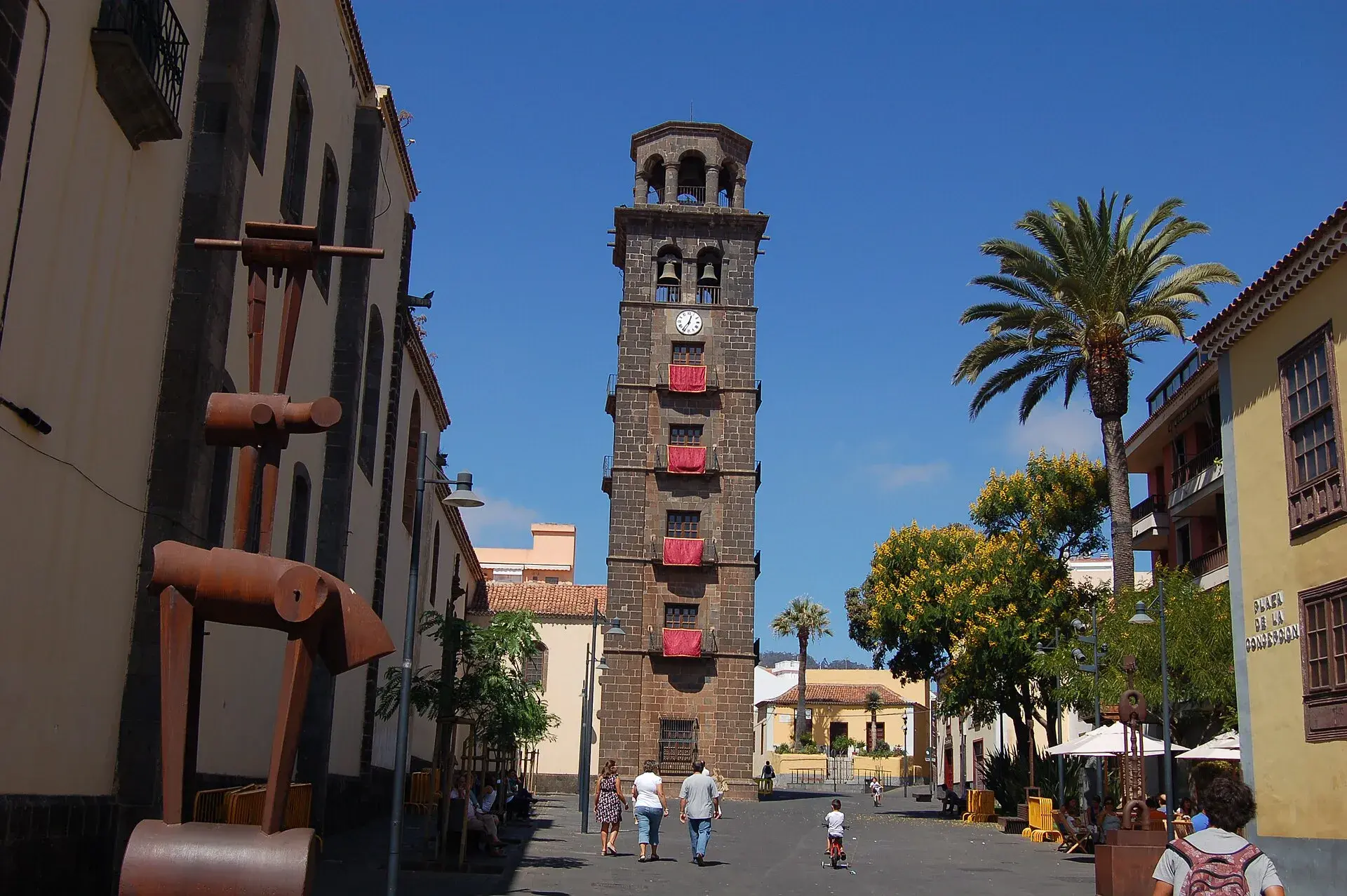
La Laguna, Tenerife: old town, museums and how to get there
What to see in La Laguna step by step: walking route through the World Heritage old town, cathedral, museums, tram, parking, festivals and a trip to Anaga.
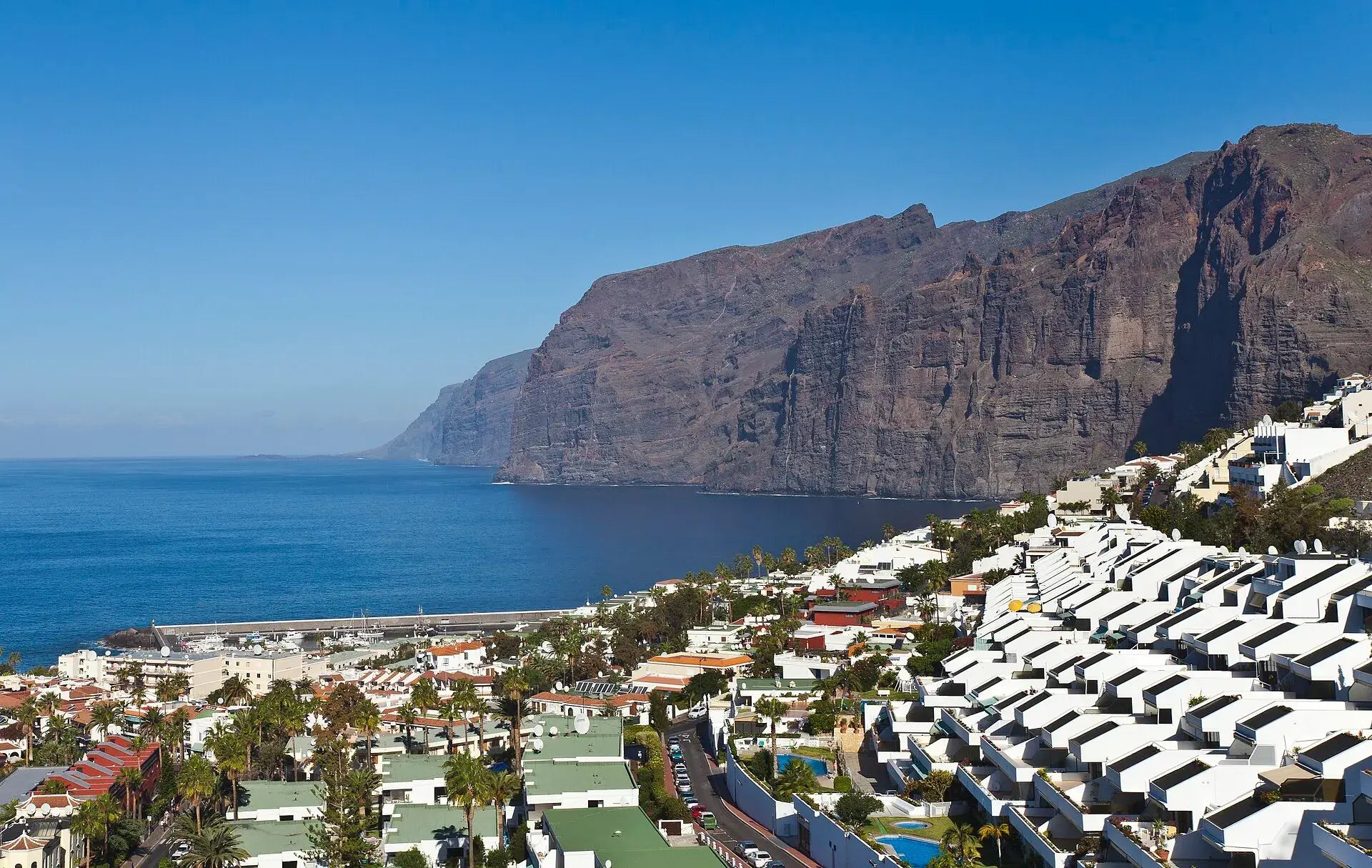
Los Gigantes Tenerife: cliffs, boat trips, beaches and access
Los Gigantes (Tenerife): cliffs up to 600 m, Archipenque viewpoint, boats from the marina, Los Guíos, rock pools, buses 473 and 477 and where to park.
Tenerife protected areas rules: trail quotas and drones
Rules for Tenerife's protected areas: trails that need booking, Teide, Masca and El Pijaral, drones, camping, wildfire alerts, dogs and fines in 2026.