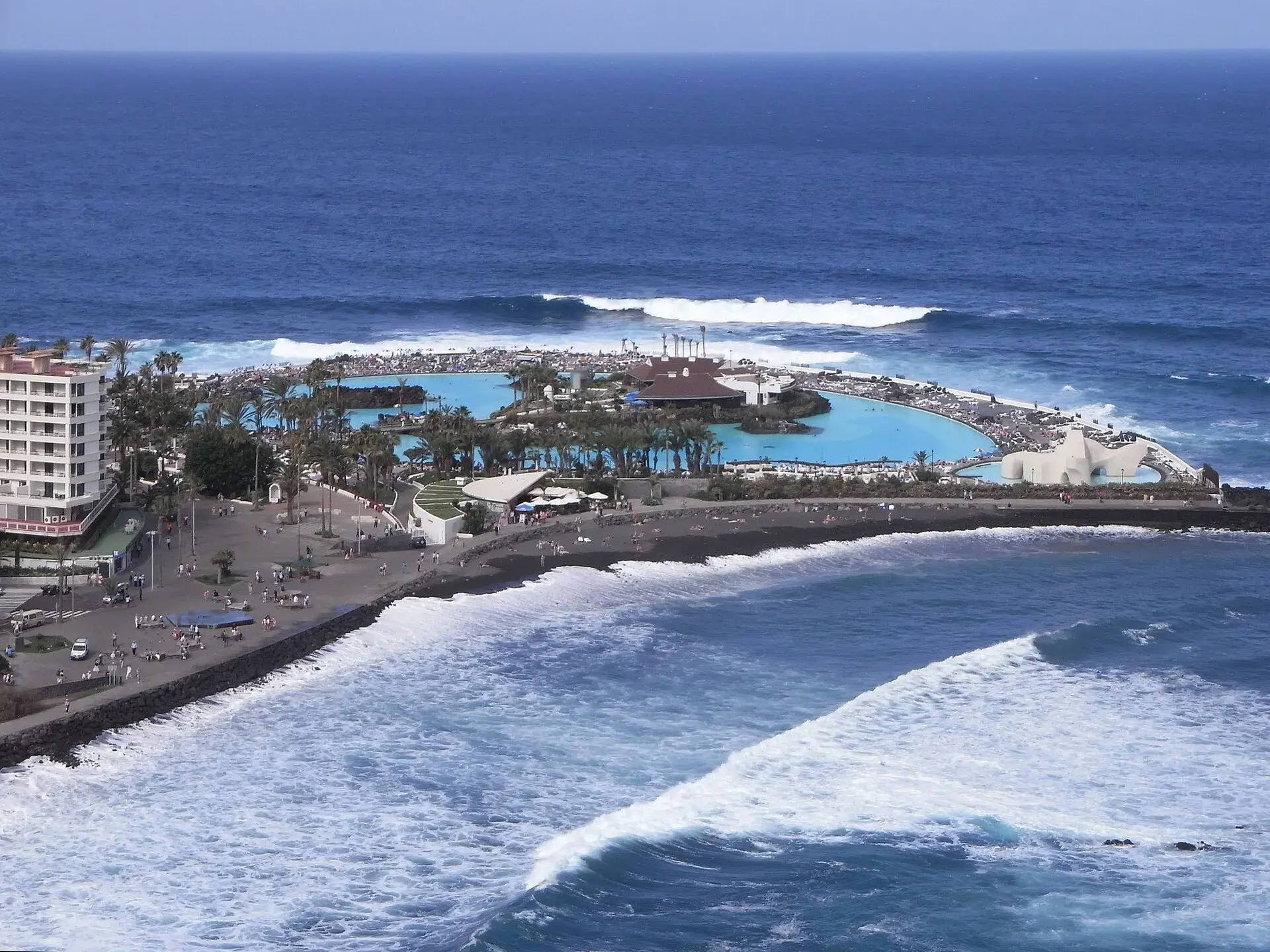
Photo by Aisano, CC BY-SA 3.0, via Wikimedia Commons
Puerto de la Cruz: Lago Martiánez, old town and gardens
The sights of Puerto de la Cruz are spread along its seafront promenade: César Manrique's Lago Martiánez at the eastern end, Playa de Martiánez and the paseo de San Telmo, the old town with Plaza del Charco, the fishing harbour and the La Ranilla quarter, the Castillo de San Felipe and Playa Jardín at the western end. Up the hillside are two historic gardens, the Botanical Garden and Sitio Litre, and on the outskirts is Loro Parque. You can see the centre in a day on foot; with Loro Parque, two. It is also the best car-free base for the north: La Orotava is about ten minutes away and there is a direct guagua (the Canary word for bus) to Mount Teide.
A little context: the north's resort town
Puerto de la Cruz began as the port of the La Orotava valley, through which the area's wines and other produce were shipped. In the late 19th century the first British visitors arrived, drawn by the climate and spending the winter here for their health; from that era remain the former Hotel Taoro, on the hill above the town, and an English imprint on some buildings and gardens. From the mid-20th century, mass tourism, with a strong German presence, filled the seafront with hotels. Today that resort town, somewhat dated in places, coexists with a Canarian old town that keeps the feel of a fishing village.
Walking route from east to west
The seafront promenade links the two ends of the town in about two kilometres. This order lets you start with a swim in the morning and finish watching the sunset in the west.
Lago Martiánez
This is the signature image of Puerto de la Cruz: a complex of seawater pools designed by César Manrique in the 1970s, with a large central lake, smaller pools, islets of volcanic rock, palm trees, sculptures and sun terraces over the ocean. Entry is paid, with sun loungers and parasols for hire, lifeguards and food outlets. The town council reopened it after a refurbishment of about ten months and later renewed the furniture. Prices and opening hours change by season, with longer hours in summer: check the council's information before you go. It is the safe alternative to swimming in the sea when the northern swell makes it unwise, and it features in the guide to natural pools in Tenerife.
Playa de Martiánez
Right next to the Lago, a beach of dark sand and callaos (rounded boulders) exposed to the swell. It is where the town's surf and bodyboard schools operate, because its wave is usually forgiving for beginners, but currents and rocks make it a poor choice for swimming when the sea is rough. In 2026 the council carried out work to remove rocks and make getting into the water easier. Check the flag when you arrive.
Paseo de San Telmo
From Martiánez towards the centre, the paseo de San Telmo runs along the sea with terraces, benches and views of the waves breaking against the sea wall. Halfway along is the Ermita de San Telmo, a small white chapel dedicated to the patron saint of sailors. It is the liveliest stretch at sunset.
Plaza del Charco
The heart of the old town: a spacious square with large Indian laurel trees giving shade, terraces, kiosks and children playing. Its name comes from a charco (in the Canaries, a natural pool or seawater rock pool) that formed here with the tide. A few steps away are the Iglesia de Nuestra Señora de la Peña de Francia, the town's main church, and the pedestrian shopping streets of the centre.
Fishing harbour and La Ranilla
Next to Plaza del Charco, the small harbour is still used by fishing boats and has a small black-sand beach where locals swim. Opposite stands the Casa de la Aduana (old customs house), one of the oldest buildings in town. To the west begins La Ranilla, the old fishermen's quarter: narrow streets of low houses, facades with street-art murals painted during various festival editions and a more local atmosphere than the promenade. It is the area with the most bars and fish eateries.
Castillo de San Felipe
Following the coast west, the Castillo de San Felipe is a small 17th-century fortress that defended the port. Today it is a municipal cultural space with temporary exhibitions and concerts; it usually opens Tuesday to Saturday, with hours that change with each exhibition, and entry is usually free. Even if it is closed, the exterior and the view over the sea are worth the stop.
Playa Jardín
The western end is taken up by Playa Jardín, three black-sand coves protected by breakwaters and surrounded by gardens bearing César Manrique's stamp, with full facilities and parking. It is the most convenient town beach in the north, but in 2026 it had several temporary swimming bans because of water quality, with reopenings a few days later; check its status before you go on the Playa Jardín page. The other options on this coast are in the best beaches in the north of Tenerife.
Historic gardens
Botanical Garden (Jardín de Aclimatación de La Orotava)
Although it bears the valley's name, it is in Puerto de la Cruz, in the upper part of town. It was created in the late 18th century by royal order to acclimatise tropical plants brought from the Americas and Asia before taking them to mainland Spain, and today it is run by the Canary Islands Institute of Agricultural Research. It is a compact, dense garden with centuries-old trees, palms and a large fig tree with aerial roots as its star piece. It opens every day from 9:00 to 18:00 and closes on 1 January, Good Friday and 25 December; confirm the fee on the official website, because visitor management has been put out to tender and the published prices do not match. Allow an hour.
Sitio Litre
Very close to the Botanical Garden, Sitio Litre is a private garden open to the public around a house from 1730, the oldest garden in Tenerife according to the official Canary Islands tourism information. It has the island's largest orchid collection, the largest and oldest dragon tree in Puerto de la Cruz and an exhibition of paintings loaned by the Royal Botanic Gardens, Kew. Alexander von Humboldt and Agatha Christie both visited. It has a café. Entry is paid; check opening hours and prices on its website.
Loro Parque
The best-known zoo in the Canary Islands is in Punta Brava, next to Playa Jardín. It is a separate full day, with marine animal shows, a penguin enclosure and a large parrot collection. The park runs a free shuttle train from the town centre: confirm the stop and times on its official website. Prices, timings and the comparison with Siam Park are in Loro Parque or Siam Park.
July festivities and the Virgen del Carmen
July is Puerto de la Cruz's festival month. The central event is the embarcación (boat procession) of the Virgen del Carmen, patron saint of sailors, in the middle of the month (14 July in 2026, according to Tenerife Tourism): the statue leaves the church and is carried in procession by sea, escorted by decorated boats, with thousands of people on the harbour and fireworks. Before that, on the eve of San Juan (June), the harbour hosts the traditional bathing of the goats. On those dates the town fills up; book accommodation well in advance. Carnival, in February or March, is another highlight. Each year's dates appear in the events calendar.
Getting there and around
By bus
Puerto de la Cruz bus station connects with almost the whole island. TITSA lines 102 and 103 link the town with La Laguna and Santa Cruz via the northern motorway (the 103 is more direct); the 363 heads west via Icod, Garachico and Buenavista; the 348 climbs to Teide National Park; and Aeroexpress line 30 arrives from Tenerife North airport. There are frequent buses on the short run to La Orotava. Check timetables and fares on the TITSA website or in getting around Tenerife.
By car and where to park
The centre and the promenade get congested, especially at weekends and in July. On-street pay-and-display parking (zona azul) is limited; the practical options are the paid car parks around Martiánez and in the centre, and the Playa Jardín car park if you are heading to the western end. Many streets in the old town are pedestrianised or one-way: leave the car and walk.
A base for exploring the north
Puerto de la Cruz is the most convenient base in the north if you do not want to drive every day. From here:
- La Orotava: about ten minutes uphill by car, with its old town of mansions with wooden balconies, the Casa de los Balcones and the Victoria gardens.
- Icod and Garachico: just over half an hour to the west, with the Drago Milenario (the thousand-year-old dragon tree) and the village rebuilt after the 1706 eruption.
- Teide: the road from La Orotava climbs to the national park in about an hour; bus 348 makes the trip on a limited daily timetable.
- Beaches with character: El Bollullo and El Socorro, with black sand and waves, a few kilometres away.
All these visits, with timings and parking, are in what to see in the north of Tenerife.
Climate and best time to go
The town is on the north coast, the side that catches the trade winds: more cloud and slightly more humidity than the south, mild temperatures all year and none of the strong heat of the southern summer. Autumn and winter mornings can start overcast and clear by midday. The northern swell is the factor that most affects beach plans; when it rises, Lago Martiánez is the safe option.
Where to eat
La Ranilla and the streets near the harbour are where you will find fish restaurants and casas de comidas (simple eateries) serving Canarian food; the promenade and Plaza del Charco have more visitor-oriented terraces with higher prices. To eat at a guachinche (a seasonal eatery linked to the wine harvest), you need to head up to the hillside areas of La Orotava and Los Realejos, a few minutes away by car.
Staying in Puerto de la Cruz: yes or no?
Yes, if you want an urban base by the sea, with plenty of hotels at prices often lower than in the south, buses to almost the whole island and the green north on your doorstep. No, if your priority is guaranteed sunshine, light-sand beaches and calm sea: the south works better for that. The comparison is in where to stay in Tenerife.
Frequently asked questions
How much time do you need to see Puerto de la Cruz?
One day for the promenade, the old town, La Ranilla and a garden, with a swim at Lago Martiánez. If you add Loro Parque, two days.
Can you swim in the sea in Puerto de la Cruz?
Yes, with caution. Playa Jardín, protected by breakwaters, is the calmest, although in 2026 it had temporary closures because of water quality. Playa de Martiánez has waves and currents; Lago Martiánez is the safest option.
How do you get to Puerto de la Cruz without a car?
From Santa Cruz and La Laguna, on buses 102 and 103 via the motorway. From Tenerife North airport, on the Aeroexpress 30. From the south you need to change or combine lines: use the TITSA journey planner.
What is the difference between the Botanical Garden and Sitio Litre?
The Botanical Garden is an 18th-century scientific garden, public and dedicated to acclimatising tropical species. Sitio Litre is a private garden around a historic house, known for its orchids and its dragon tree. They are very close together and can be seen in the same morning.
When is the Carmen festival in Puerto de la Cruz?
In July. The embarcación of the Virgen del Carmen, the main event, takes place in the middle of the month; in 2026 it was on 14 July. Confirm each year's date in the town council's programme.
Keep planning
You may also like
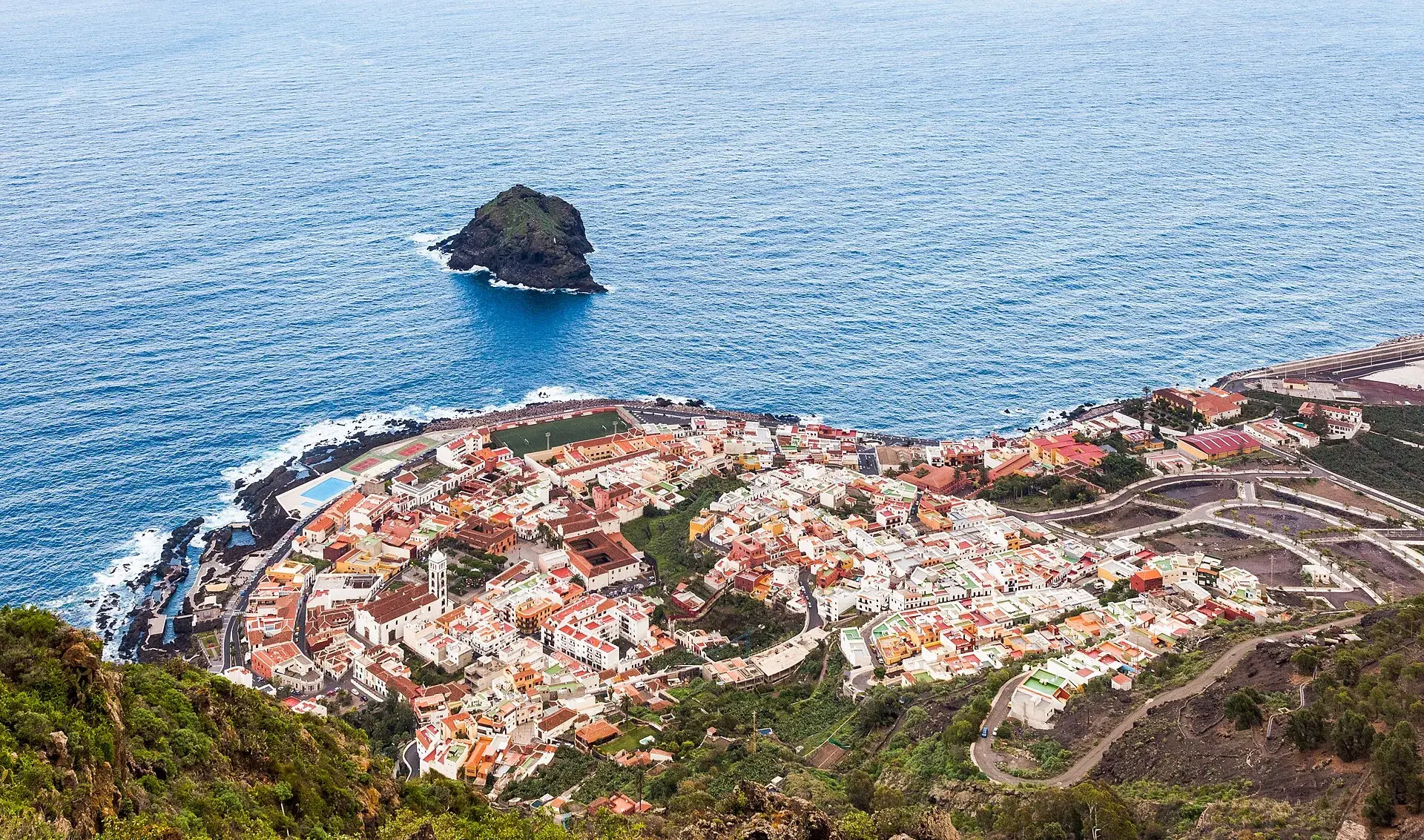
Garachico, Tenerife: old town, El Caletón and the Isla Baja
What to see in Garachico in half a day: the port buried by lava in 1706, the historic centre, El Caletón, the castle, San Roque, buses and where to park.
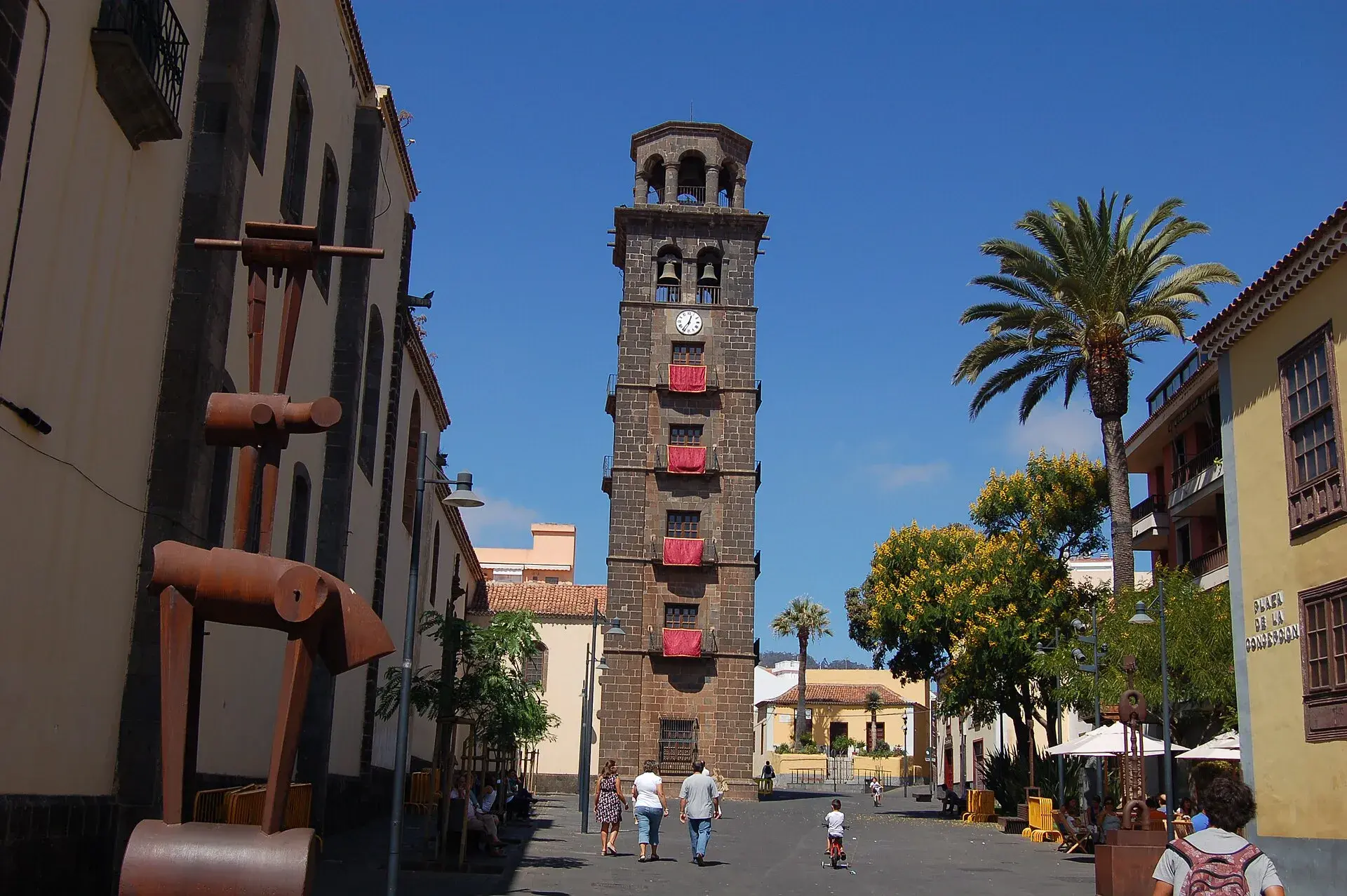
La Laguna, Tenerife: old town, museums and how to get there
What to see in La Laguna step by step: walking route through the World Heritage old town, cathedral, museums, tram, parking, festivals and a trip to Anaga.
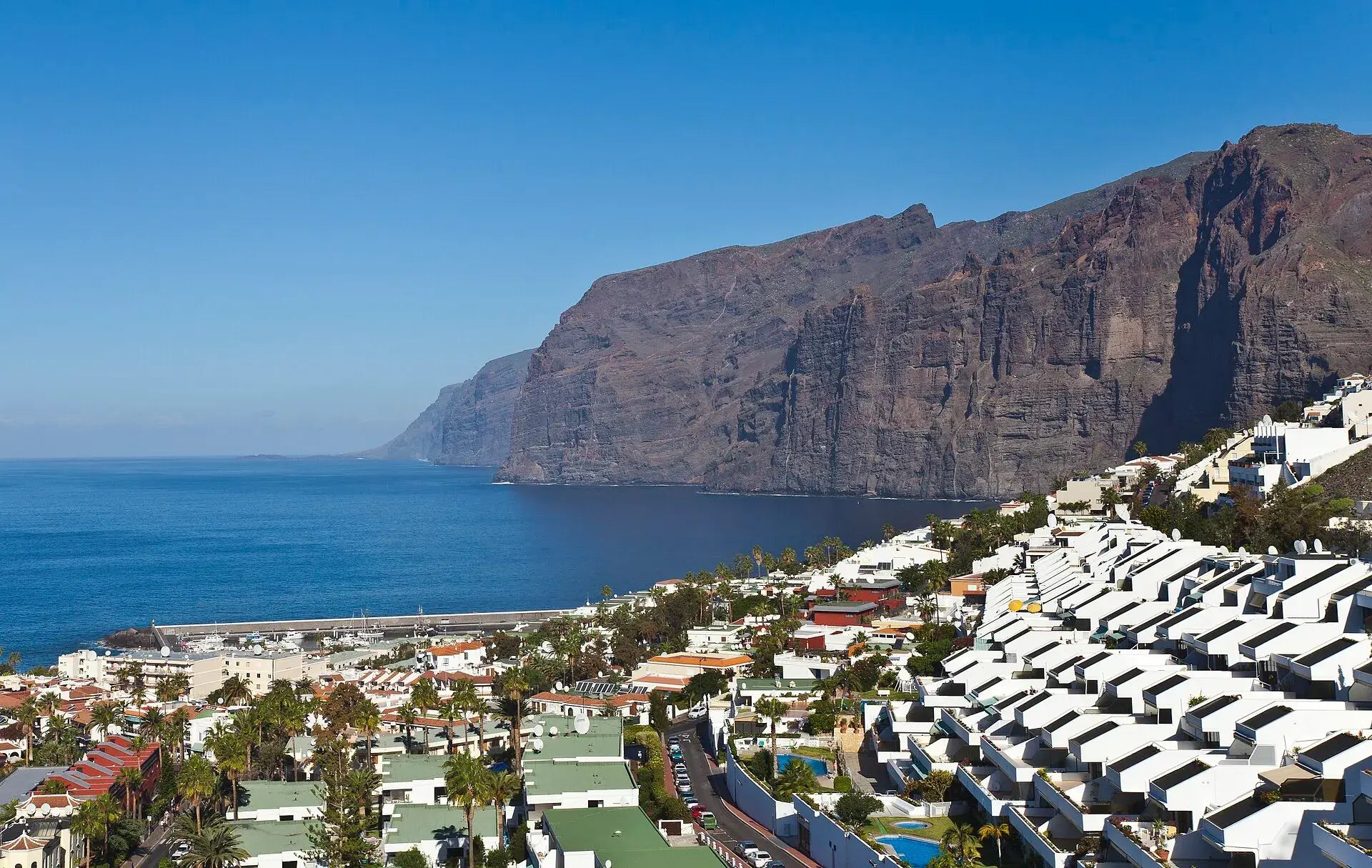
Los Gigantes Tenerife: cliffs, boat trips, beaches and access
Los Gigantes (Tenerife): cliffs up to 600 m, Archipenque viewpoint, boats from the marina, Los Guíos, rock pools, buses 473 and 477 and where to park.
Tenerife protected areas rules: trail quotas and drones
Rules for Tenerife's protected areas: trails that need booking, Teide, Masca and El Pijaral, drones, camping, wildfire alerts, dogs and fines in 2026.