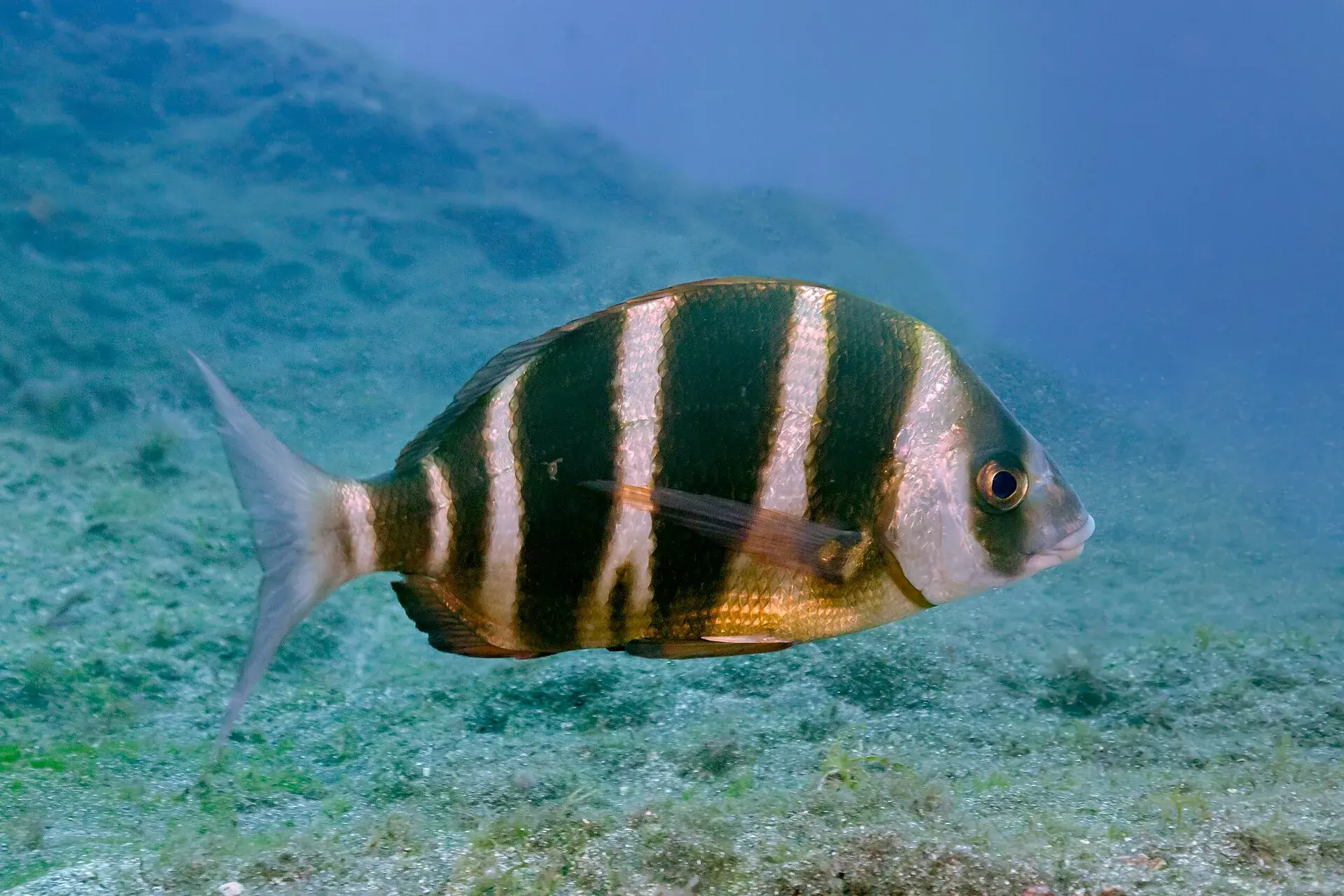
Photo by Diego Delso, CC BY-SA 4.0, via Wikimedia Commons
Diving in Tenerife: best spots, snorkelling, try dives and rules
Diving in Tenerife is possible all twelve months of the year: the water ranges from roughly 19 °C in February and March to 24 °C in September and October, visibility is usually 10 to 30 metres, and Turismo de Tenerife (the island's tourist board) counts more than sixty dive sites. For a first taste or for family snorkelling, the safe bets are Abades, El Puertito de Armeñime, Montaña Amarilla and La Arena beach; for certified divers, the walls of Los Gigantes, the caves of Radazul and the wrecks of Palm-Mar. Below you will find each site with its depth, access and level, plus certifications, protected wildlife and safety.
What to know before choosing an area
The activity overview is in the best outdoor activities in Tenerife; here each site is covered in detail. Three criteria decide almost everything:
- The coast and the swell. The south and south-west (from Los Cristianos to Los Gigantes) are sheltered from the trade winds, the north-easterlies that blow almost every day, and from the winter swell in the north: they are the default choice. The east (Abades, Radazul) catches the wind but has sheltered bays. The north (Garachico, Puerto de la Cruz) offers spectacular seabeds when the sea is calm, which is more likely in summer.
- From the shore or by boat. Abades, El Puertito, Radazul and Garachico let you walk in; the wrecks and the walls of Los Gigantes are usually dived from a boat.
- Depth. The figures are the maximums published by Turismo de Tenerife; the guide adapts the route to the group's certification.
South: the sites with the most departures
Las Galletas and Montaña Amarilla (Arona)
- Area: Costa del Silencio, southern Arona · Access: from the shore at Montaña Amarilla; by boat from Las Galletas harbour · Maximum depth: Montaña Amarilla 25 m, Los Chuchos 25 m · Level: all, with shallow routes for try dives · What you see: yellow tuff walls with cracks and small caves, rays on the sand, octopus, moray eels and lobsters.
Montaña Amarilla is a Natural Monument, a cone of pale tuff sculpted by the sea; the steps from the sunbathing terrace lead straight into the water. At Los Chuchos you often see rays, called chuchos in the Canary Islands, over the sandy bottom. Las Galletas, the village with the most dive centres in the south, is the natural base for chaining several dives.
Los Cristianos and Palm-Mar (Arona)
- Area: between Los Cristianos and the Palm-Mar development · Access: by boat · Maximum depth: El Condesito wreck 20 m, Meridian wreck 27 m, Cueva de las Morenas 30 m · Level: certified divers, with El Condesito suitable for Open Water · What you see: structures colonised by algae and fish, moray eels in the cracks of the cave, passing shoals of pelagic fish.
El Condesito is the island's classic wreck dive: a sunken ship off Palm-Mar, now a shallow reef.
El Puertito de Armeñime (Adeje) and the turtles
- Area: cove west of La Caleta, Costa Adeje · Access: from El Puertito beach or by boat · Depth: around 6 m on average and about 15 m at most · Level: easy, suitable for families and snorkelling · What you see: green turtles, some of up to about 20 kilos, used to human presence.
This is where turtles are easiest to see, and for that reason it is the most sensitive spot. The green turtle is a protected species, and this group became habituated after years of visitors feeding them; the University of Las Palmas de Gran Canaria has documented that this feeding alters their behaviour and diet. The rules that always apply:
- Do not feed them, neither bread nor fish scraps.
- Do not touch or chase them, and let them come up to breathe without blocking their way to the surface.
- Do not position yourself above them or surround them with several swimmers for a photo.
- With boats anchored in the cove, swim close to the shore and carry a visible buoy.
Early in the morning, before the excursion boats arrive, the cove is quieter.
East: waters near Santa Cruz
Abades (Arico)
- Area: east coast, municipality of Arico, north of Tenerife South airport, with its own exit on the TF-1 · Access: from the shore, in the village bay · Maximum depth: 25 m at Abades and 30 m at Las Eras, a short distance away · Level: all; one of the best areas on the island for shore try dives · What you see: sandy bottoms with seagrass meadows and rock, rays, sand fish and, with luck, angel sharks.
Abades is the quiet alternative to the southern harbours: a small village, a gentle entry from the sand and gradually sloping bottoms. With strong trade winds the sea gets choppy in the afternoon: go early.
Radazul and Tabaiba (El Rosario)
- Area: El Rosario coastline, south of Santa Cruz · Access: from the shore in the cove and by boat for the caves · Maximum depth: Ensenada de Radazul 20 m, Cruz de Radazul 40 m, Cueva de Radazul 50 m, El Peñón wreck (Tabaiba) 30 m, Cueva de Bocacangrejo 35 m · Level: the cove for everyone; the caves and the cross for advanced certified divers · What you see: caves with lobsters and shrimps, the El Peñón wreck, sunk on purpose for diving, and sand and rock bottoms.
Radazul is the natural area for anyone staying in Santa Cruz or La Laguna, and its caves are the classic deep dives of the east.
West and north: walls, caves and lava
Los Gigantes and Puerto de Santiago (Santiago del Teide)
- Area: below the Los Gigantes cliffs · Access: by boat from the marina; from the shore at La Arena beach · Maximum depth: Atlántida 25 m; the cliff walls continue underwater and some dives go beyond 30 m · Level: certified divers with experience in currents · What you see: vertical walls, arches and caves, rays, shoals of fish and, in open water, occasionally mantas or mobula rays.
This is the most spectacular area for its relief and the most demanding: there can be current along the cliff. For easy snorkelling, La Arena beach has a marked snorkelling area; the town is covered in the Los Gigantes guide. A little further south, the Cueva de los Cerebros, off Playa San Juan (Guía de Isora), is a cave of about 15 m suitable for lower levels.
Garachico
- Area: north coast, in the bay by Garachico's harbour wall · Access: from the shore or by boat · Maximum depth: Las Anclas 25 m, Garachico lava tube 25 m · Level: certified divers; with a calm sea, snorkelling around El Caletón · What you see: old anchors on the floor of the bay, an underwater lava tube and walls full of life.
The north changes with the swell: from October to March, with north-westerly groundswell, on many days you cannot get into the water. From May to September calm days are more likely. To see the rest of the town, read the Garachico guide. On the same coast, Puerto de la Cruz has advanced dives such as Las Catedrales (40 m).
Which to choose for your plan
- First try dive: Abades, the Radazul cove or Montaña Amarilla, for the shore entry and shallow depth.
- Seeing turtles: El Puertito de Armeñime, early in the morning.
- Wrecks: El Condesito and the Meridian (Palm-Mar), El Peñón (Tabaiba).
- Walls and caves: Los Gigantes, the Radazul caves and the Garachico lava tube.
- Family snorkelling without a boat: Montaña Amarilla, La Arena, Abades and El Puertito.
Wildlife: what you can see and how to behave
- Turtles. The green turtle is seen near the coast; the loggerhead, more in open water.
- Angel shark. A flattened shark that spends the day buried in the sand, harmless if left alone. The IUCN lists it as critically endangered, and a University of La Laguna study confirmed in 2016 that Las Teresitas beach is a nursery area. Do not touch it, do not stir up sand over it and keep your distance.
- Rays and mantas. Chuchos are common on the sandy bottoms of the south; mantas and mobula rays are seen now and then in open water, with no guarantee.
- Reef life. Moray eels, octopus, lobsters, viejas (the Canarian parrotfish) and long-spined sea urchins, which you should neither step on nor brush against.
General rule: do not touch, do not feed, do not take anything and do not rest on the bottom.
Does Tenerife have a marine reserve?
Not as a marine reserve of fishing interest: the Canary Islands have three declared ones (La Graciosa and the islets north of Lanzarote, La Restinga-Mar de las Calmas in El Hierro, and La Palma's), and those of Teno and Anaga are still being studied by the Government of the Canary Islands and the Spanish Ministry. What Tenerife does have are Special Areas of Conservation (SAC) in the Natura 2000 network. The largest is the Teno-Rasca marine strip, declared in 2011: about 69,490 hectares off Buenavista del Norte, Santiago del Teide, Guía de Isora, Adeje and Arona, with one of the most important short-finned pilot whale populations in the world. In the south-east, the Sebadales del Sur de Tenerife SAC protects seagrass meadows off Arona, San Miguel and Granadilla. The rules of the island's protected areas are gathered in Tenerife's protected areas: rules, quotas and drones.
Try dives and certifications
- Try dive (PADI Discover Scuba Diving, SSI Try Scuba): a guided shallow dive after a short briefing, with no prior certification. Centres usually accept it from age 10; for children aged 8 and 9 there is the PADI Bubblemaker, in a pool or very shallow water.
- PADI Open Water Diver or SSI Open Water: the first full certification, usually three to four days, which qualifies you to dive to 18 m with a certified buddy.
- Junior Open Water: the same course for children aged 10 to 14; at 10 and 11 they must dive with a professional or a certified parent and not go below 12 m.
- Requirements: being able to swim and a medical questionnaire; certain conditions require a medical certificate.
More important than the agency (PADI or SSI) is that the centre is authorised, the instructor's certification is current and the group is small.
Safety: currents, altitude and the hyperbaric chamber
- Sea and currents. The northern winter swell and the current by Los Gigantes are the main risks. With a swell running, an easy entry becomes a difficult exit.
- Altitude after diving. The typical Tenerife mistake is diving in the morning and driving up to Teide in the afternoon. The National Park road climbs above 2,000 m and the cable car reaches 3,555 m: gaining altitude with residual nitrogen is equivalent to flying. Apply the pre-flight interval, 18 to 24 hours depending on the centre.
- Hyperbaric chamber. The Hospital Universitario de Canarias, in La Laguna, has a hyperbaric medicine service with more than thirty years of experience that treats diving accidents from the whole archipelago. If you have any symptoms after a dive (joint pain, tingling, dizziness, unusual fatigue), call 112 and breathe oxygen if the centre has it on board.
- Insurance. Turismo de Tenerife recommends that your diving insurance covers hyperbaric chamber treatment; the European Health Insurance Card does not cover rescue or evacuation.
Snorkelling on your own with children
To snorkel without booking anything:
- Choose a calm sea and an easy entry. Montaña Amarilla (steps), La Arena (marked snorkelling area), Abades and El Puertito (sand). Tenerife's natural pools only work when the sea is calm, and never with waves breaking over the edge.
- Gear: a mask that fits, snorkel, short fins, water shoes for the rocks and a long-sleeved top against the sun. A coloured buoy makes the group visible to boats.
- Group rules: one adult per young child, parallel to the shore and away from harbour mouths and buoyed areas for boats. Best from early to mid-morning.
More beach plans by age in Tenerife with kids.
Frequently asked questions
When is the best time to dive in Tenerife?
All year. The water is warmest in September and October, around 24 °C (an approximate figure), and coldest in February and March, around 19 °C. In winter a 7 mm wetsuit or a semi-dry suit is advisable, and the north has more days closed by swell.
Where can you see turtles while snorkelling?
At El Puertito de Armeñime, in Adeje, it is almost certain, and sometimes at Palm-Mar and Montaña Amarilla. Go early, do not feed or touch them and keep your distance even if they come close.
Can a child do a try dive?
From age 10 at most centres, and in a pool from age 8. They must be able to swim, and a guardian signs the medical questionnaire.
Can I go up Teide on the same day I dive?
It is not advisable. Going above 2,000 metres after diving carries a similar risk to flying. Schedule Teide before your dives or leave 18 to 24 hours in between.
Keep planning
You may also like
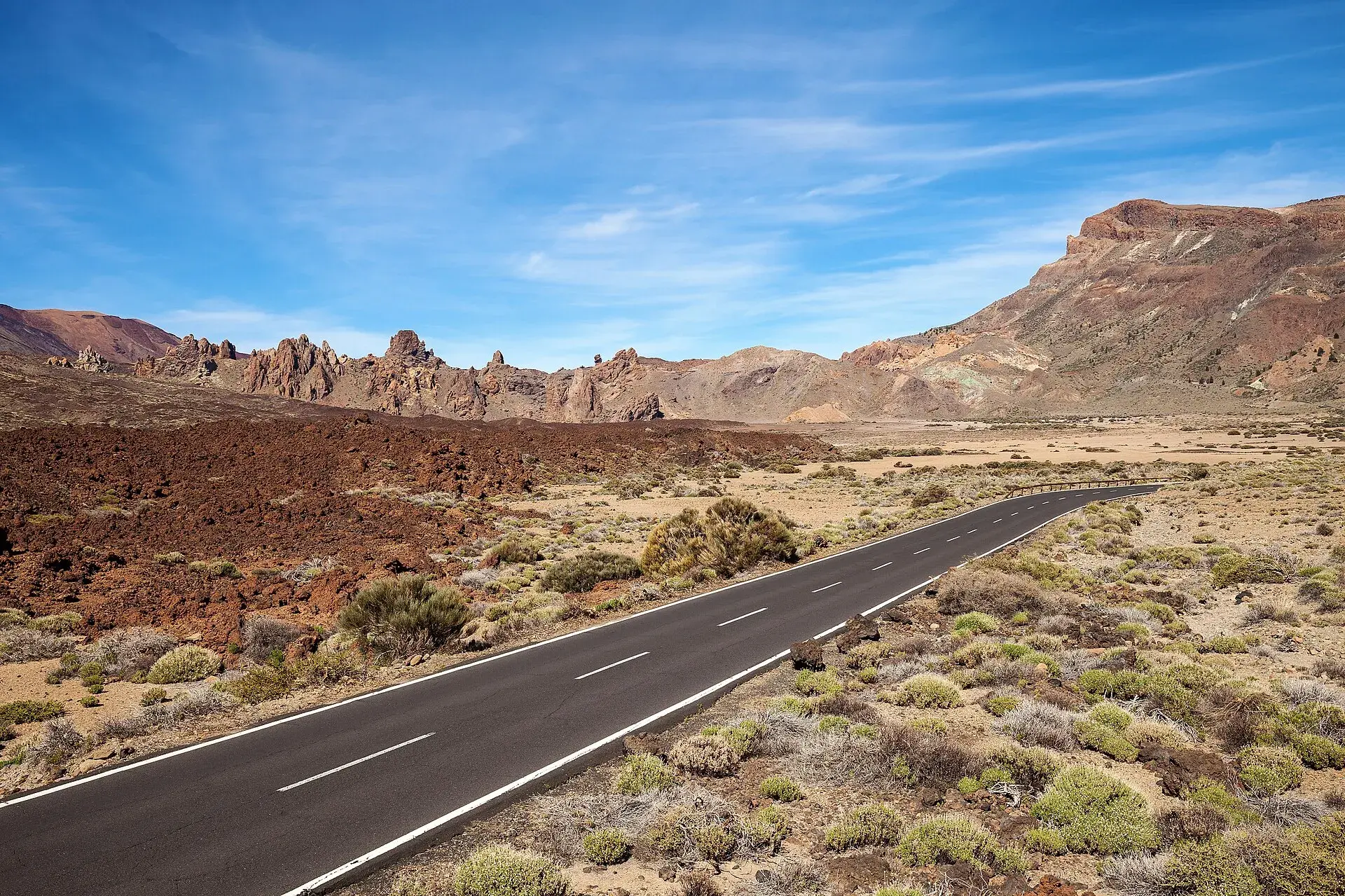
Cycling in Tenerife: riding up Teide and the key routes
Cycling in Tenerife: how to ride up Teide via Vilaflor, La Orotava, La Esperanza and Chío, with distances, elevation gain, best season, rules and bike hire.
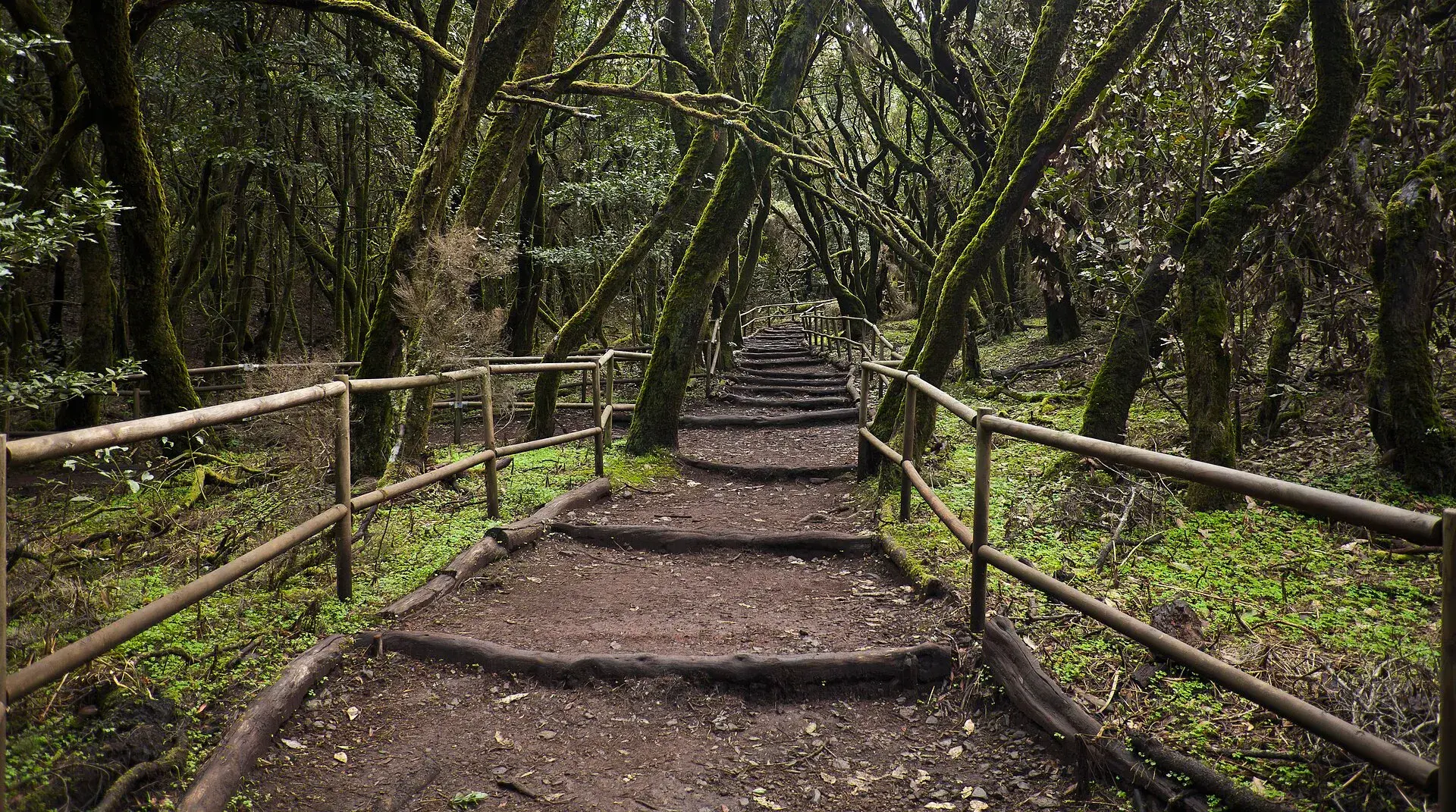
La Gomera day trip from Tenerife: ferry, route and timings
La Gomera day trip from Tenerife: ferries from Los Cristianos, car or tour, a route through Garajonay, Hermigua and Agulo, and how not to miss the last boat.
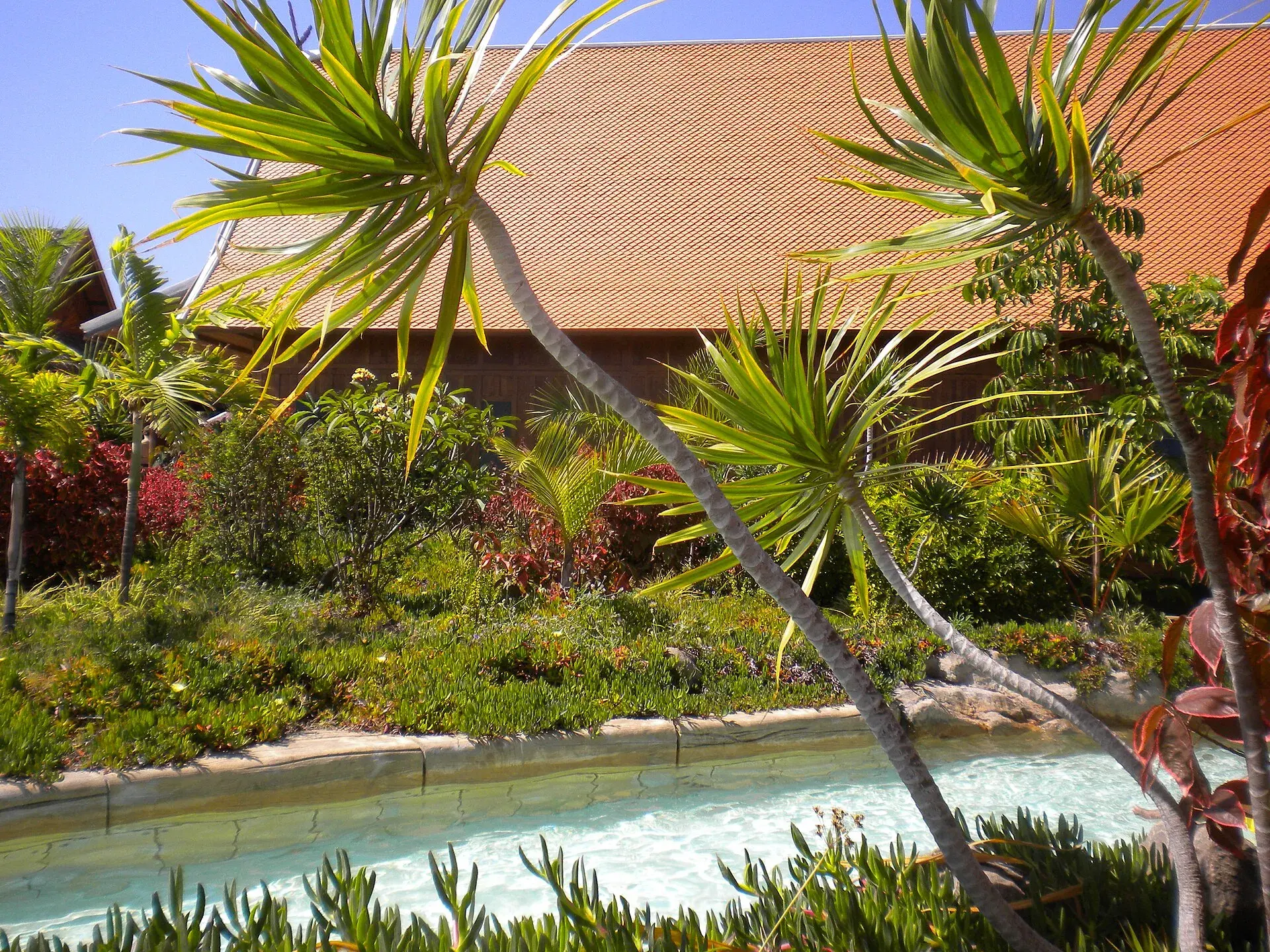 Featured
Loro Parque or Siam Park: which to choose, prices and Twin Ticket
Loro Parque or Siam Park: differences, prices and Twin Ticket in 2026, opening hours, free buses, minimum heights, food, queues and who each park suits best.
 Featured
Masca gorge hike: booking, rules, bus 355 and the boat out
Masca gorge hike in 2026: compulsory booking, official price, bus 355, time slots, minimum age, boat to Los Gigantes and what to do if the trail is closed.