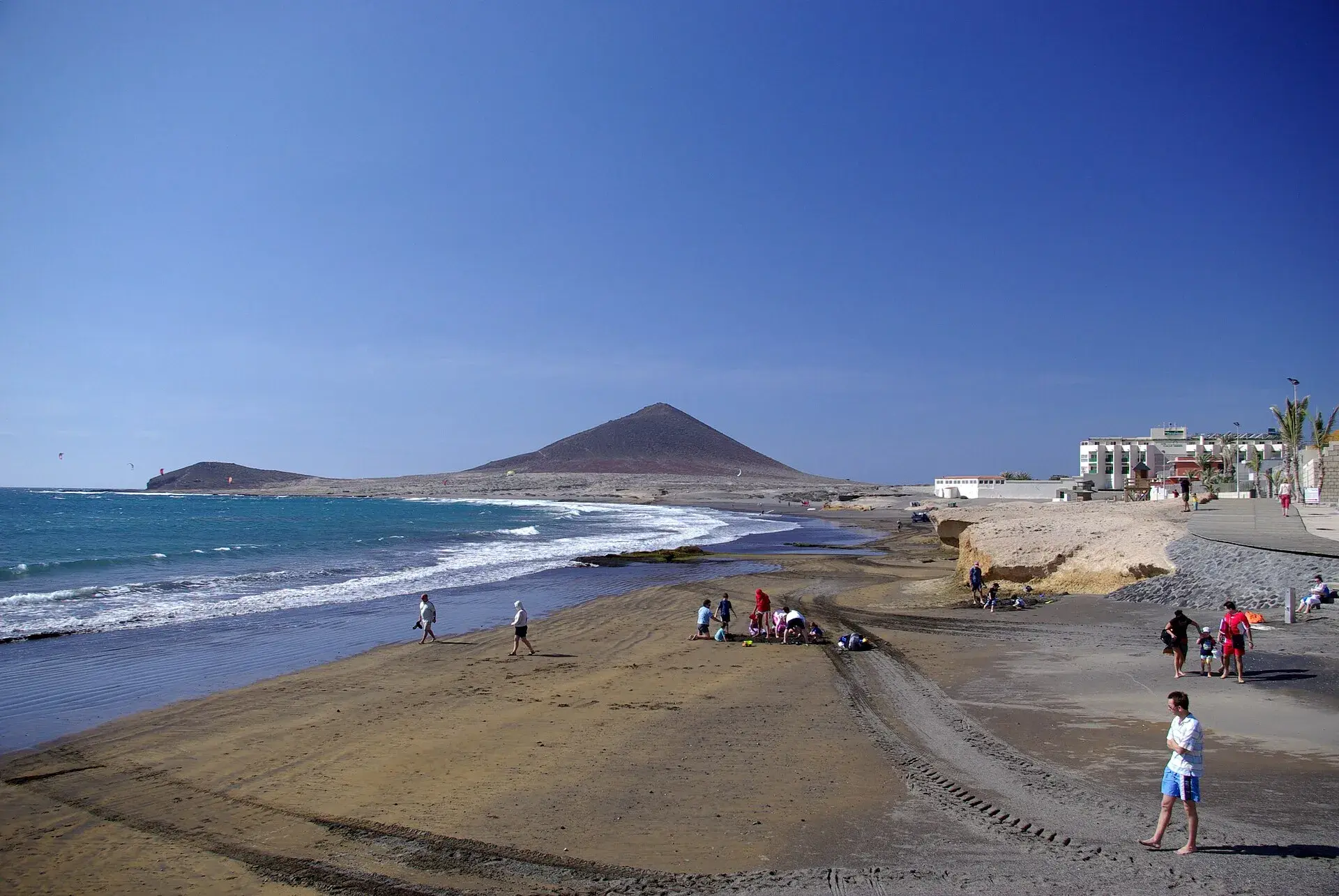
Photo by Papm1949, CC BY-SA 4.0, via Wikimedia Commons
Tenerife weather by month: temperatures, rain and sea
Tenerife weather by month moves within a narrow band on the coast: in the south, average highs range from 21.7 °C in January to 28.4 °C in August, and lows from 15 °C to 21 °C. What really changes from one month to the next is the rain in the north, the cold and snow on Mount Teide and the sea temperature, which bottoms out in February and March and peaks in September. Below you will find each month with AEMET's (the Spanish State Meteorological Agency) climate normals and what usually happens on the island; each month's fiesta dates are in the Tenerife festivals calendar.
Where the data comes from
The air, rain and sunshine figures are AEMET's climate normals for 1981–2010 (thirty-year averages, not the forecast for any particular year):
- South: Tenerife South Airport (64 m), representative of Costa Adeje, Los Cristianos and El Médano.
- Santa Cruz: Santa Cruz de Tenerife observatory (36 m), on the sheltered, sunny east coast.
- North: Tenerife North Airport (632 m), in La Laguna, beneath the sea of clouds. It reflects the climate of the northern midlands (medianías), cooler and wetter than the coast at Puerto de la Cruz, which is closer to Santa Cruz in temperature but cloudier.
- Teide: Izaña Observatory (2,369 m), the closest official data point to Las Cañadas. At La Rambleta, at 3,555 m, it is colder.
Sea temperatures are approximate, based on satellite series, and vary by a few tenths of a degree from one coast to another.
Microclimates: why the north, the south and the summit are three climates
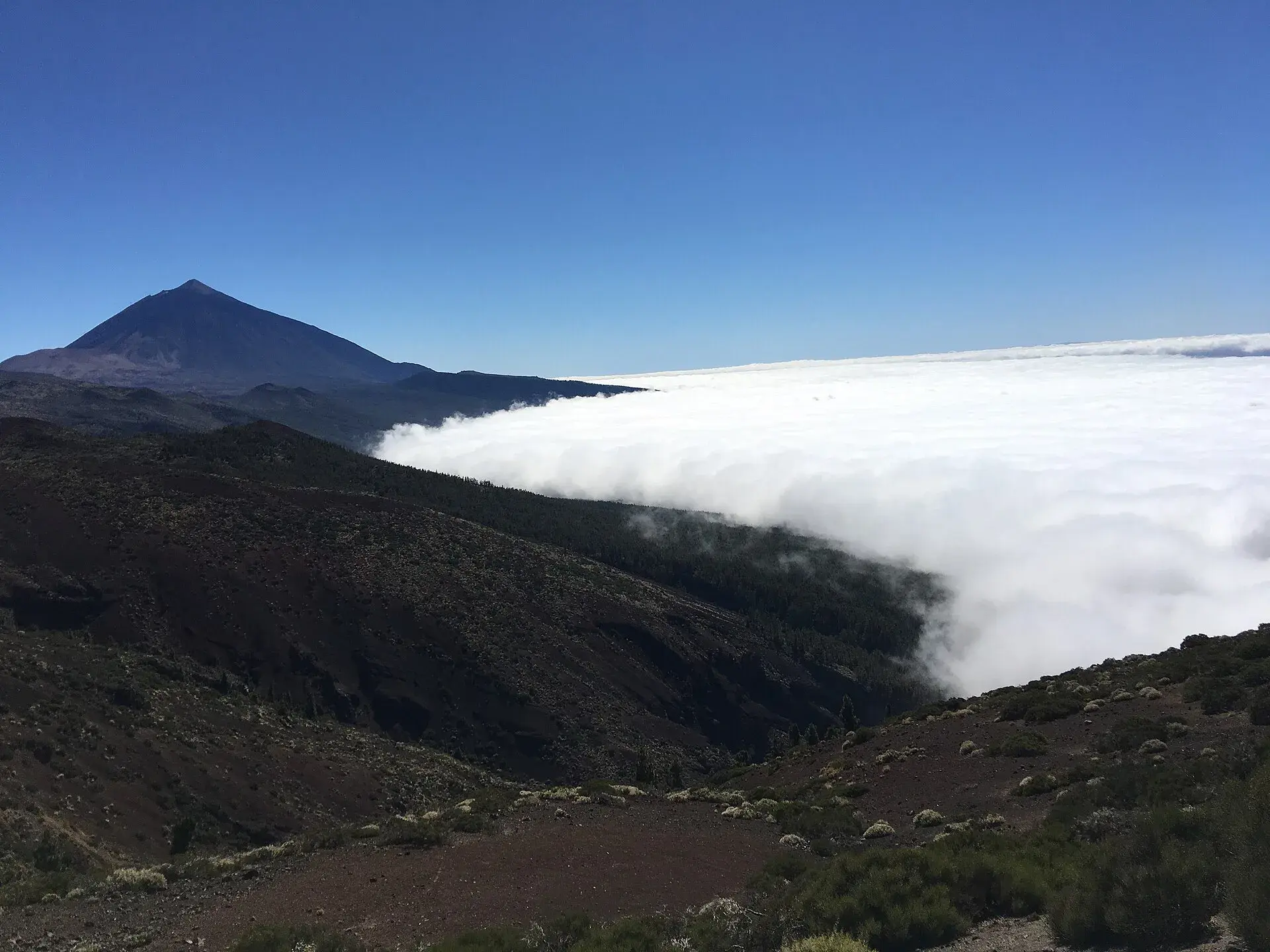
The trade winds blow from the north-east for much of the year and arrive laden with moisture. When they hit the northern slopes they cool and form the sea of clouds (mar de nubes), a layer of stratus that usually sits between 600 and 1,500 m. Below it, in the north and in La Laguna, the day is grey, cool and damp; above it, in Las Cañadas, the sky is clear and the air is dry. The south lies in the lee of the mountain and receives that air once it has dried out: that is why the south airport gets 132 mm of rain a year over 15 days, compared with 520 mm over 64 days at the north airport.
So a single forecast does not apply to the whole island: a cloudy morning in La Orotava can coincide with sunshine in Los Cristianos and a clear sky on Mount Teide. To choose dates according to your plans, see the best time to visit Tenerife.
Tenerife weather month by month
January
- South: high 21.7 °C · low 15.2 °C · 17 mm over fewer than 2 rainy days · 193 hours of sunshine.
- Santa Cruz: high 21.0 °C · low 15.4 °C · 32 mm over 4 days.
- North (La Laguna): high 16.0 °C · low 10.2 °C · 80 mm over almost 8 days; the coldest month in the midlands.
- Sea temperature: around 20 °C.
- Teide (Izaña): high 7.5 °C · low 1.1 °C, with around 12 days of frost and 2 or 3 of snow on average. It is the month with the best chance of seeing snow and of roads closing because of ice.
- Events: Three Kings parades on 5 January; the start of the Santa Cruz Carnival (in 2027, opening gala on 22 January).
- Good for: sunshine in the south to escape the European winter, and snowy landscapes on Mount Teide.
February
- South: high 22.0 °C · low 15.0 °C · 20 mm over 2 days · 195 hours of sunshine.
- Santa Cruz: high 21.2 °C · low 15.3 °C · 35 mm over 4 days.
- North (La Laguna): high 16.7 °C · low 10.0 °C · 70 mm over 7 days.
- Sea temperature: in the region of 19 °C.
- Teide (Izaña): high 8.0 °C · low 1.3 °C, around 10 days of frost and 2 or 3 of snow.
- Events: Santa Cruz Carnival in the streets (19 to 28 February in 2027); the Candelaria festival on 2 February.
- Good for: Carnival, coastal hiking and green midlands.
March
- South: high 23.1 °C · low 15.6 °C · 15 mm over 2 days · 226 hours of sunshine.
- Santa Cruz: high 22.1 °C · low 15.9 °C · 38 mm over 4 days; on average the wettest month in the capital after December.
- North (La Laguna): high 18.2 °C · low 10.7 °C · 61 mm over 7 days.
- Sea temperature: around 19 °C, the lowest of the year along with February.
- Teide (Izaña): high 10.2 °C · low 2.7 °C, 9 days of frost and around 2 of snow.
- Events: Holy Week, which in 2027 falls from 21 to 28 March, with the processions in La Laguna.
- Good for: walking in mild temperatures.
April
- South: high 23.1 °C · low 16.0 °C · 7 mm over 1 day · 219 hours of sunshine.
- Santa Cruz: high 22.7 °C · low 16.5 °C · 12 mm over 2 days.
- North (La Laguna): high 18.5 °C · low 10.9 °C · 39 mm over 6 days.
- Sea temperature: around 20 °C.
- Teide (Izaña): high 11.8 °C · low 3.5 °C, 6 or 7 days of frost; snow is now rare.
- Events: Holy Week, in years when it falls in April.
- Good for: long routes on Mount Teide without ice and Anaga trails that are still green.
May
- South: high 23.9 °C · low 17.0 °C · 1 mm · 246 hours of sunshine.
- Santa Cruz: high 24.1 °C · low 17.8 °C · 4 mm over 1 day.
- North (La Laguna): high 20.1 °C · low 12.0 °C · 19 mm over 4 days.
- Sea temperature: in the region of 20 or 21 °C.
- Teide (Izaña): high 14.5 °C · low 5.8 °C, 356 hours of sunshine; occasional frost.
- Events: the May Festivals in Santa Cruz, Canary Islands Day on 30 May and the flowering of the red tajinastes (tall native viper's bugloss) in Las Cañadas, between May and June.
- Good for: combining beach, mountains and hiking with few crowds.
June
- South: high 25.4 °C · low 18.8 °C · no rain · 259 hours of sunshine.
- Santa Cruz: high 26.2 °C · low 19.5 °C · 1 mm.
- North (La Laguna): high 22.2 °C · low 14.0 °C · 11 mm over 2 days; the sea of clouds is still frequent.
- Sea temperature: in the region of 21 or 22 °C.
- Teide (Izaña): high 18.9 °C · low 9.9 °C, no frost on average; 382 hours of sunshine.
- Events: Corpus Christi in La Orotava with its flower carpets and the sand tapestry; the night of San Juan on 23 June, with bonfires along the coast.
- Good for: the first comfortable swim of the year and the summits with long days.
July
- South: high 27.7 °C · low 20.2 °C · no rain · 295 hours of sunshine and almost 20 clear days.
- Santa Cruz: high 28.7 °C · low 21.2 °C · no rain · 337 hours of sunshine, the highest of the year.
- North (La Laguna): high 24.7 °C · low 15.7 °C · 6 mm over 2 days.
- Sea temperature: around 22 °C.
- Teide (Izaña): high 23.0 °C · low 14.0 °C; 27 clear days on average.
- Events: the San Benito pilgrimage (romería) in La Laguna on the second Sunday of the month and the Carmen festivities in Puerto de la Cruz.
- Good for: the beach, stargazing from Mount Teide on mild nights and village festivals.
August
- South: high 28.4 °C · low 21.1 °C · 1 mm · 277 hours of sunshine.
- Santa Cruz: high 29.0 °C · low 21.9 °C · 2 mm; the warmest month.
- North (La Laguna): high 25.7 °C · low 16.6 °C · 5 mm over 1 day.
- Sea temperature: in the region of 23 °C.
- Teide (Izaña): high 22.6 °C · low 13.8 °C; mild nights for watching the sky.
- Events: the festivities of the Virgin of Candelaria on 14 and 15 August and the Perseids in mid-month.
- Good for: warm sea and starry nights. It is the month with the highest risk of calima and of forest fire alerts.
September
- South: high 27.9 °C · low 21.1 °C · 4 mm over less than 1 day · 213 hours of sunshine.
- Santa Cruz: high 28.1 °C · low 21.7 °C · 7 mm over 1 day.
- North (La Laguna): high 24.9 °C · low 16.5 °C · 16 mm over 3 days.
- Sea temperature: around 24 °C, the highest of the year.
- Teide (Izaña): high 18.6 °C · low 10.4 °C; nights start to get cooler.
- Events: the Bajada del Socorro in Güímar on 7 September and the Cristo de La Laguna festivities, with the main day on 14 September.
- Good for: swimming, diving and boat trips with the warmest sea.
October
- South: high 26.8 °C · low 20.0 °C · 12 mm over 2 days · 214 hours of sunshine.
- Santa Cruz: high 26.3 °C · low 20.3 °C · 19 mm over 3 days.
- North (La Laguna): high 22.5 °C · low 15.2 °C · 47 mm over 6 or 7 days; the rain returns to the midlands.
- Sea temperature: in the region of 24 °C.
- Teide (Izaña): high 14.3 °C · low 6.9 °C; the first cold nights and the odd isolated frost.
- Events: grape harvest season and new wine at the wineries in the north.
- Good for: the beach with warm water, hiking and low-season prices.
November
- South: high 24.8 °C · low 18.2 °C · 26 mm over 2 days · 193 hours of sunshine.
- Santa Cruz: high 24.1 °C · low 18.4 °C · 34 mm over 5 days.
- North (La Laguna): high 19.6 °C · low 13.3 °C · 81 mm over 8 days.
- Sea temperature: in the region of 22 or 23 °C, still warmer than in spring.
- Teide (Izaña): high 11.1 °C · low 4.5 °C, around 4 days of frost; the first snow may fall.
- Events: San Andrés on 29 and 30 November, with the board-sliding tradition (arrastre de tablas) in Icod de los Vinos and the opening of the wineries.
- Good for: swimming in the south and walks through freshly rain-soaked laurel forest (laurisilva).
December
- South: high 22.8 °C · low 16.5 °C · 30 mm over 3 or 4 days · 195 hours of sunshine.
- Santa Cruz: high 22.1 °C · low 16.6 °C · 43 mm over 5 days; on average the wettest month in the capital.
- North (La Laguna): high 17.1 °C · low 11.5 °C · 82 mm over almost 9 days; the wettest in the midlands.
- Sea temperature: around 21 °C.
- Teide (Izaña): high 8.8 °C · low 2.4 °C, around 8 days of frost and 1 or 2 of snow.
- Events: Christmas, nativity scenes in the historic town centres and New Year's Eve in the squares.
- Good for: winter sun in the south, with a few spare days in case a storm comes through.
Trade winds and the sea of clouds: what they mean for your trip
The sea of clouds is most persistent from spring to summer, when the trade winds are steadier, and it thickens in the afternoon. In practice:
- Viewpoints: in the north, go in the morning. In the afternoon, many mid-slope viewpoints end up inside the cloud; summit viewpoints, such as those along the La Esperanza road or in the national park, stay above it and give you the view of the sea of clouds from above. Our selection is in the best viewpoints in Tenerife.
- Driving: when you cross the layer there is dense fog and a wet road surface, especially on the TF-24.
- Wind in the south: the same trade wind blows hard in El Médano, hence the almost daily kitesurfing.
Calima
Calima is air laden with Saharan dust that arrives on easterly or south-easterly winds. It reduces visibility, worsens air quality and can push temperatures up by several degrees, in winter too. AEMET includes it in its warnings as suspended dust, and the Canary Islands Government declares a pre-alert when an episode is intense. On those days it is best to cut back on strenuous outdoor exercise, especially if you have asthma or breathing problems, keep water to hand and avoid long walks in the afternoon. It cannot be forecast weeks in advance, so do not change your dates because of it. When it is most frequent and how to follow the warnings is covered in the guide to calima in Tenerife.
Winter on Mount Teide
Between December and March, Izaña Observatory records between 8 and 12 days of frost a month and around 2 of snow, with highs of 7 to 10 °C. At La Rambleta, at 3,555 m, it is colder still and the wind makes it feel even colder. What you should know:
- Roads: when there is ice or snow on the road, the Cabildo (the island government) closes the access roads to the park (TF-21, TF-24, TF-38) until they are cleared. Check the road status every morning and allow spare days if Mount Teide is your goal.
- Cable car: it closes in strong winds and when there is ice on the cable or at the top, at any time of year. Practical information is in the Teide cable car.
- Clothing: a warm coat, hat and gloves, even if you are in short sleeves on the coast.
The Teide National Park guide covers trails and access in detail.
How to read AEMET and Canary Islands Government alerts
Two systems coexist in Tenerife and are often confused:
- AEMET warnings (yellow, orange, red): yellow means low danger, with possible impacts; orange, significant danger; red, extraordinary danger. They are issued by zones of the island (the summits, the north, the metropolitan area, the east-south-west and the coast separately) for rain, wind, high temperatures, coastal phenomena, thunderstorms, snow and suspended dust. A wind warning for the summits does not affect the beach in the south.
- Pre-alert, alert and maximum alert from the Canary Islands Government: declared by the Directorate-General for Emergencies on the basis of AEMET's forecast, they trigger civil protection measures such as closing natural pools, trails or bathing areas. They are announced by 112 Canarias.
Rule of thumb: with an orange or red warning for coastal phenomena, stay away from charcos (natural rock pools) and northern piers; with a wind alert, postpone summit walks and the cable car; with a fire alert, check whether access to the forests and the TF-436 road to Masca is restricted.
Frequently asked questions
What is the temperature in Tenerife in January?
On the south coast, around 22 °C during the day and 15 °C at night, according to AEMET's climate normals for Tenerife South Airport. In the northern midlands the high drops to about 16 °C, and on Mount Teide the nights are close to zero, with frequent frost.
What is the hottest month in Tenerife?
August, with an average high of 28.4 °C in the south and 29.0 °C in Santa Cruz. September is almost as warm and has the warmest sea of the year, around 24 °C. During calima episodes, highs can comfortably exceed these averages for a few days.
Which months does it rain in Tenerife?
Rain is concentrated between October and March and falls mainly in the north and the midlands: Tenerife North Airport records about 80 mm in November, December and January. In the south, even the wettest month, December, stays at 30 mm spread over 3 or 4 days. From May to September it barely rains on any coast.
When is the sea warmest in Tenerife?
In September and October, at around 24 °C (an approximate value, not official AEMET data). The low comes in February and March, in the region of 19 °C, and in January the water is slightly warmer than in March because it keeps the heat of autumn.
Keep planning
You may also like
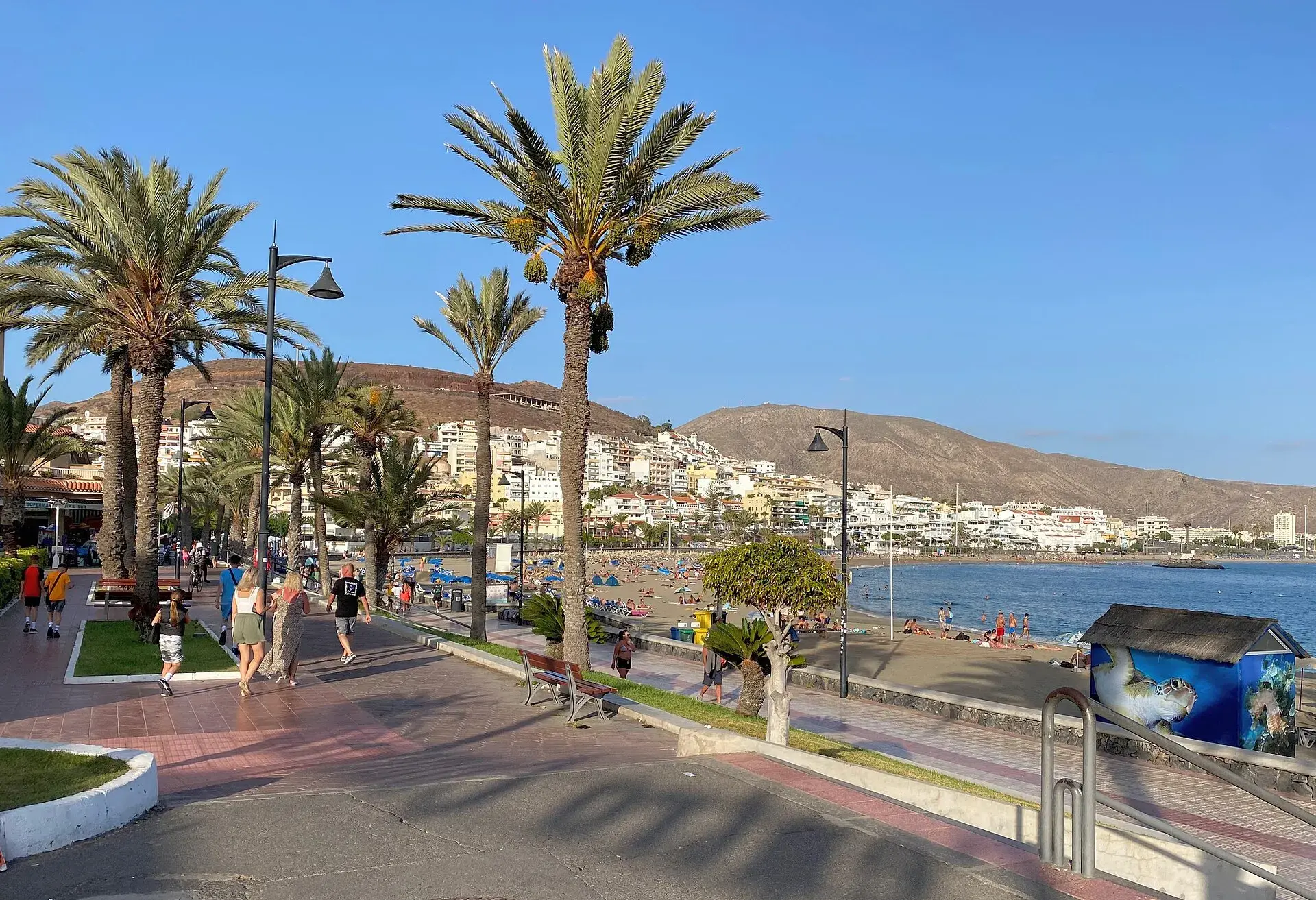
Accessible Tenerife: beaches, transport and step-free visits
Accessible Tenerife: beaches with assisted bathing and amphibious chairs, airport assistance, buses, tram and eurotaxi, and which visits work in a wheelchair.
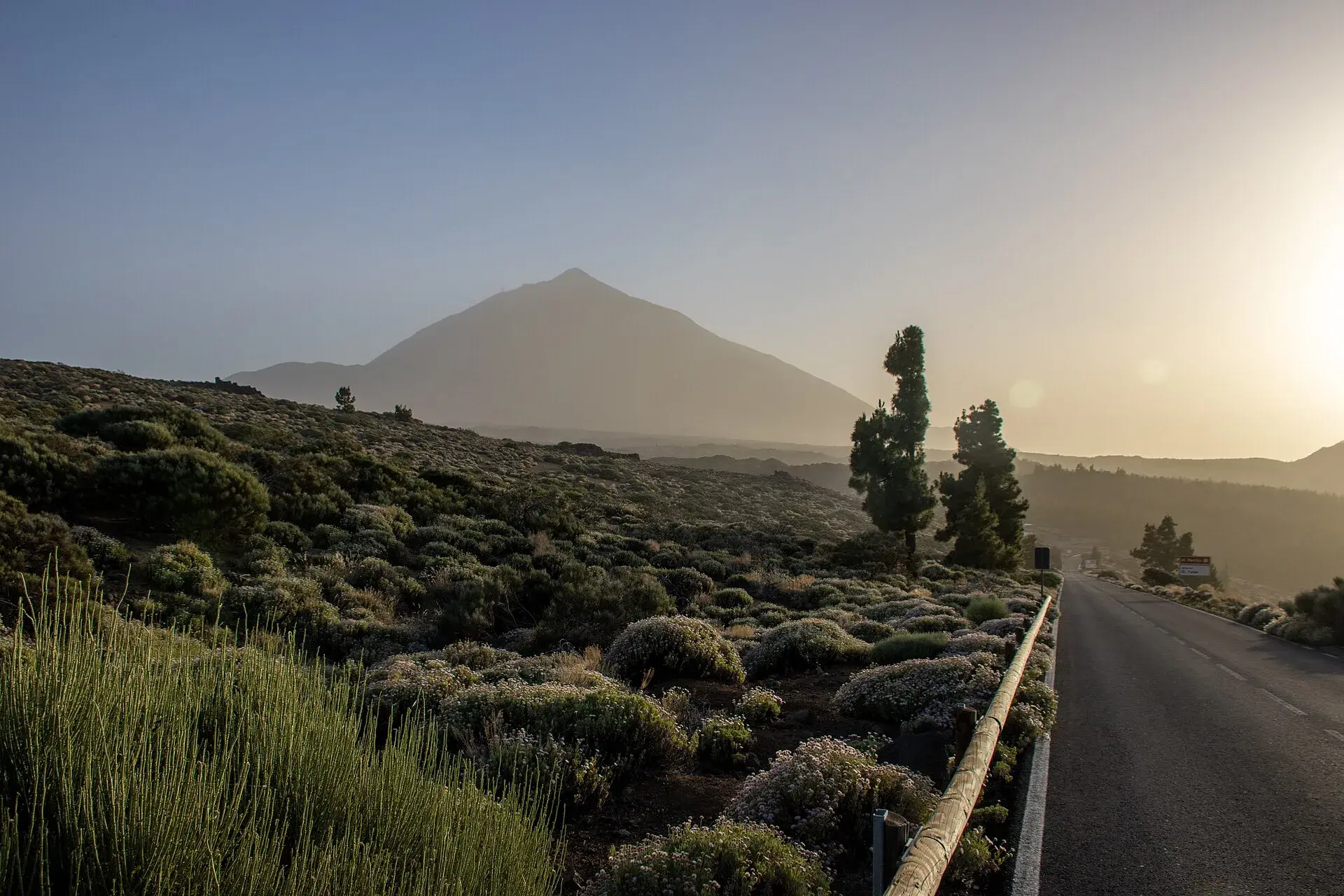
Calima in Tenerife: what it is, when it comes, how it affects you
Calima in Tenerife: what Saharan dust is, which months it tends to arrive, how it affects health and flights, where to check warnings and what to do that day.
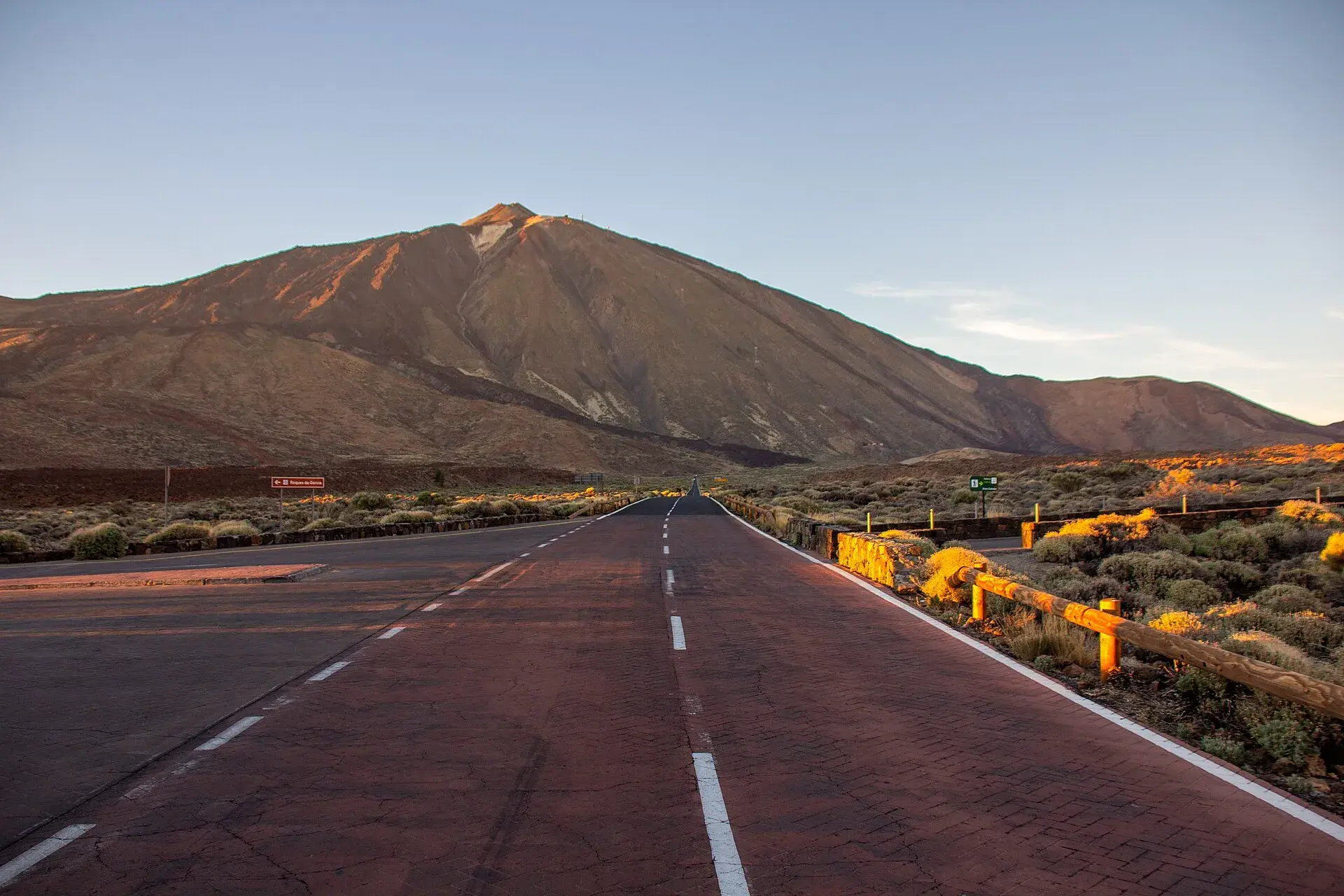
Car hire in Tenerife: insurance, deposit and useful tips
Car hire in Tenerife without surprises: when it pays off, insurance and excess, deposit, fuel, child seats, Masca, Teide and what to check at pick-up.
Digital nomads in Tenerife: visa, areas, housing and internet
Digital nomads in Tenerife: the remote work visa and 2026 requirements, EU citizen registration, the best areas to live, renting, healthcare and internet.