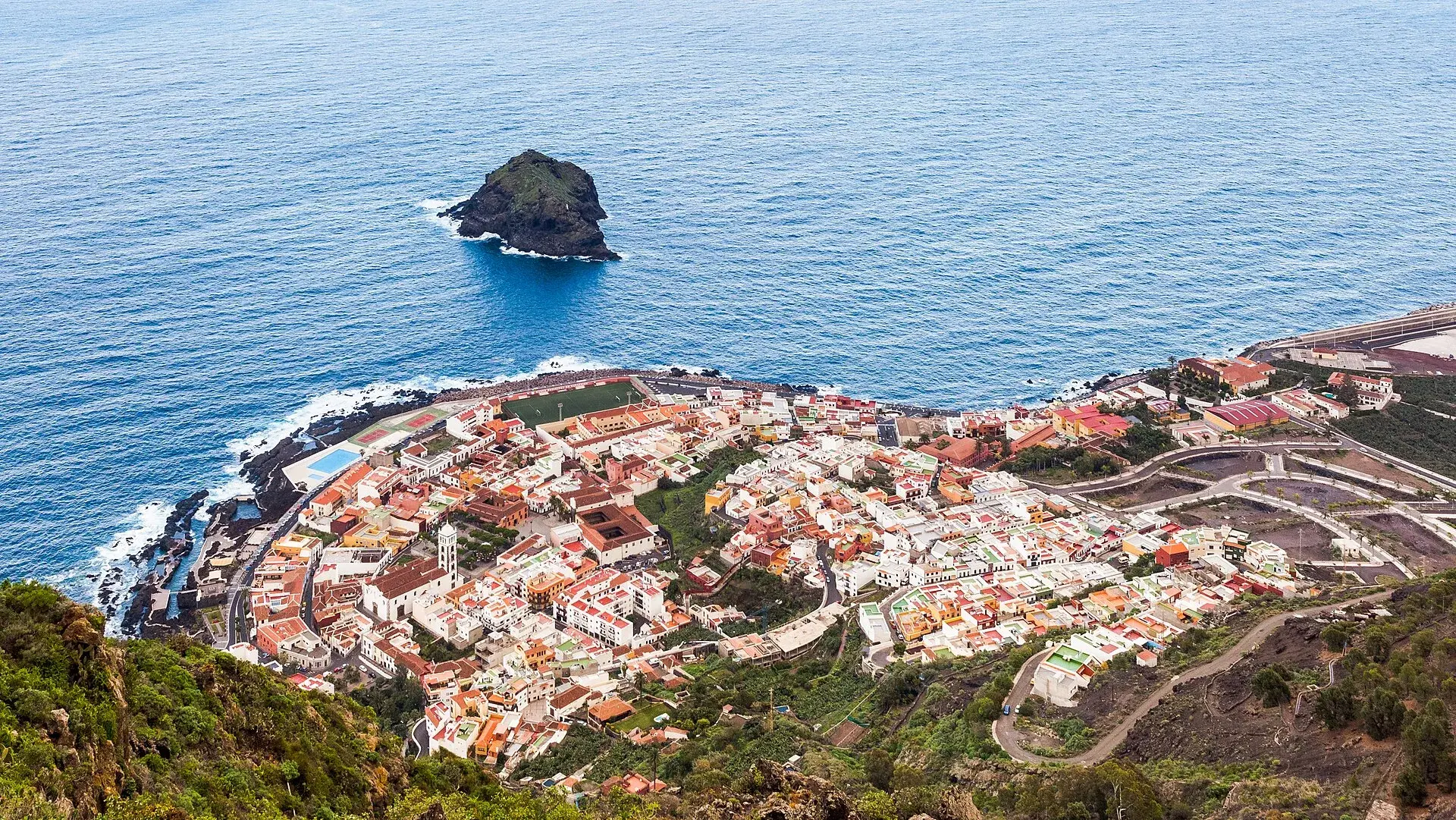
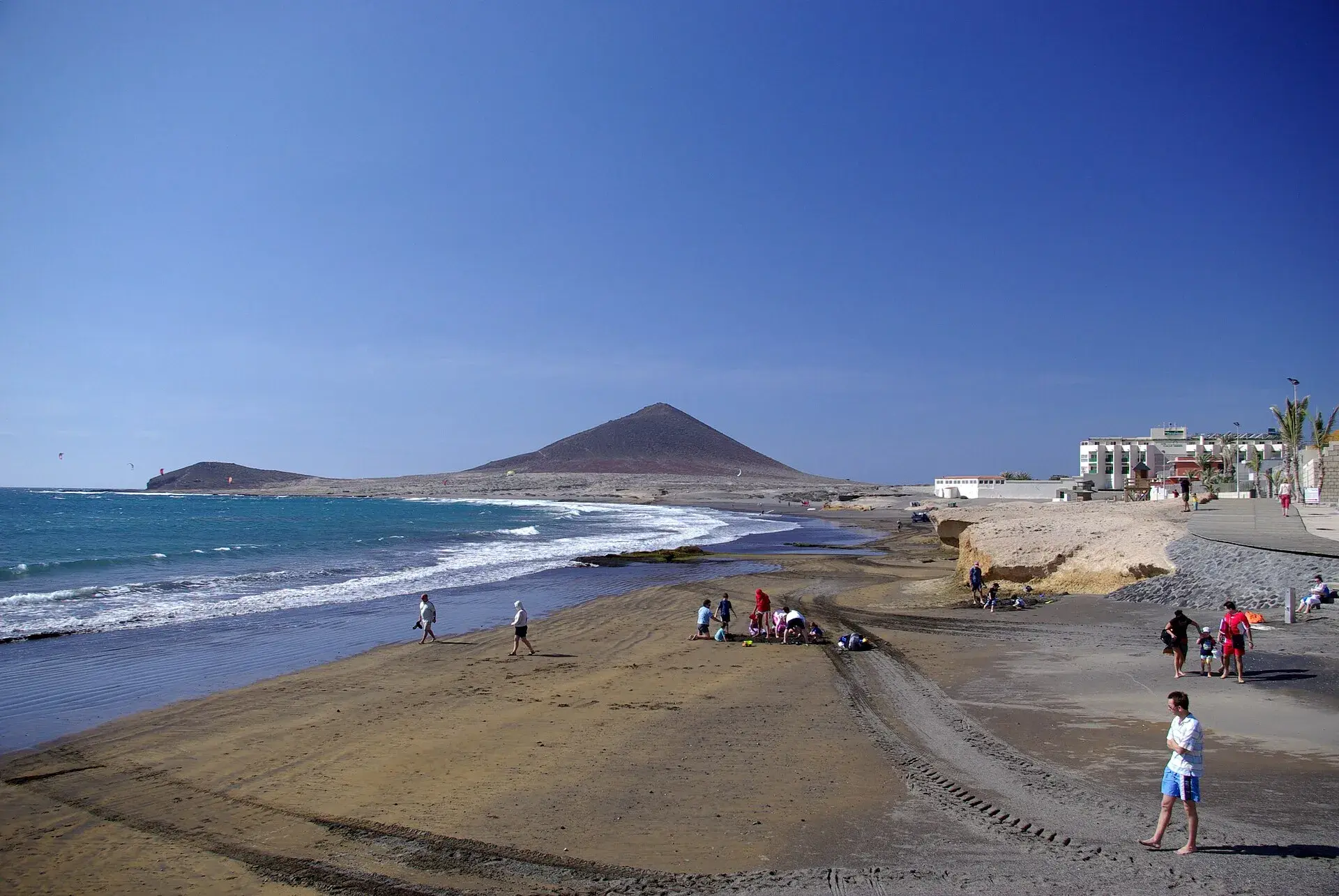
Photo by Diego Delso, CC BY-SA 3.0, via Wikimedia Commons
North or south Tenerife: which to choose for your type of trip
North or south Tenerife comes down to one question: what matters more on your trip, sun and beach or scenery and villages? The south (Costa Adeje, Los Cristianos, Las Américas, El Médano, Los Gigantes) offers almost daily sunshine, calm-water beaches and the widest choice of hotels. The north (Puerto de la Cruz, La Orotava, La Laguna, Garachico, Anaga) offers greenery, historic town centres, local food and trails, in exchange for cloudy afternoons and beaches with waves. For trips of more than a week, the best answer is often both. This guide compares the two sides point by point and ends with a verdict by traveller type.
What counts as north and south
The dividing line is the central mountain range and Mount Teide. The south is the leeward side: from Santa Cruz south-west along the TF-1 motorway to Los Gigantes, with Tenerife South Airport in between. The north is the side that receives the trade winds: from La Laguna to Buenavista along the TF-5, with the Orotava Valley, Icod and Garachico, and the Anaga massif at the north-eastern tip. Santa Cruz and La Laguna form the metropolitan area, straddling both worlds: the capital has the sunny climate of the eastern side; La Laguna, above 500 m, has a northern climate.
This is the decision to make before choosing accommodation. Once you know which side suits you, where to stay in Tenerife compares the specific areas one by one.
Weather
- South: clear skies for most of the year. Tenerife South Airport records an average of 132 mm of rain a year over about 15 days, with highs of 21.7 °C in January and 28.4 °C in August (AEMET climate normals, 1981–2010). Wind is the drawback in El Médano and along the Granadilla coast.
- North: coastal temperatures are similar, but the sea of clouds (mar de nubes) covers the slopes on many afternoons and the rain is concentrated between October and March. In La Laguna (Tenerife North Airport, 632 m), 520 mm falls a year over 64 days, and winter highs are around 16 °C. The coast at Puerto de la Cruz is milder than La Laguna, though cloudier than the south.
In summer the difference narrows: from June to September the north sees hardly any rain and its cool air is welcome when the south heats up. In winter, on the other hand, the difference is real. Month-by-month data is in Tenerife weather by month.
Beaches
- South: golden-sand beaches (the sand is almost always imported) protected by breakwaters, with calm water, lifeguards in season, sunbeds and a promenade. Playa del Duque and Torviscas in Costa Adeje, and Las Vistas in Los Cristianos (Arona), have Blue Flag status in 2026. For long, natural, windy beaches, El Médano and La Tejita.
- North: black volcanic sand, cliffs and Atlantic swell, especially in winter. These beaches are spectacular to look at, for surfing or for a short swim when the sea allows, but not for swimming every day with young children. The alternatives are the natural pools of Garachico, Bajamar or Punta del Hidalgo (closed in rough seas) and Las Teresitas, in Santa Cruz, with golden sand and calm water.
Which one suits each case is in the best beaches in Tenerife.
Atmosphere
- South: an area built for tourism since the 1970s. There are seafront promenades, large hotels, shopping centres, nightlife in Las Américas and a resident population that is largely foreign. It is convenient and predictable; the Canarian character is in the midland villages, such as Adeje, Arona or Vilaflor.
- North: towns and villages with a life of their own all year round: squares, markets, churches, local festivals and locals on the café terraces. La Laguna is a World Heritage Site; La Orotava and Garachico preserve old centres of manor houses and wooden balconies. There is less nightlife and more daytime life.
Prices
Without giving figures that change every season, the trend is stable. The south has most of the four- and five-star hotels and the highest rates in high season, from November to March and in summer. The north has more traditional hotels, guesthouses, rural cottages and apartments, with generally lower prices, and everyday meals away from the tourist areas are cheaper. To do the maths, how much a trip to Tenerife costs breaks down accommodation, food and transport.
Food
- South: most of the island's Michelin-starred restaurants are in Costa Adeje and Guía de Isora, according to Turismo de Tenerife, plus fish restaurants in the coastal villages of Los Abrigos, Los Cristianos or Playa San Juan. Everyday dining is very international.
- North: this is the land of guachinches (family-run eateries that serve their own wine), the wineries of the northern designations of origin and the fish restaurants of Anaga and the Garachico coast. It also has fine dining, with a starred restaurant in Puerto de la Cruz.
Connections and transport
- Airports: Tenerife South is 15–25 minutes from Costa Adeje and Los Cristianos; Tenerife North is 10–20 minutes from La Laguna and Santa Cruz and about 30 from Puerto de la Cruz. Crossing to the other side takes more than an hour. Ideally, fly into the airport on the side where you are staying; transfers are covered in Tenerife airports.
- Guaguas (TITSA buses): the south has good connections to Santa Cruz along the motorway (line 111) and to Mount Teide (342 from Costa Adeje). The north has the bus stations of La Laguna, Santa Cruz and Puerto de la Cruz, the tram between the first two, the 348 from Puerto de la Cruz to Mount Teide, the 910 to Las Teresitas, the 946 to Taganana and Almáciga, and the Aeroexpress lines 20 and 30 from the north airport. The 343 links the two airports.
- Car: in the south, parking is relatively easy outside the resort centres; in the north, the old towns of La Laguna, La Orotava and Puerto de la Cruz have narrow streets and little parking.
Distances to the must-sees
Approximate driving times, without traffic:
- Mount Teide (Las Cañadas): around an hour from Costa Adeje via Vilaflor; about 40 minutes from La Orotava along the TF-21.
- Masca: about 50 minutes from the south via Santiago del Teide; from Garachico, around half an hour via Buenavista or along the TF-436.
- Anaga: an hour and a half from the south; 45 minutes from the north.
- La Laguna and Santa Cruz: 50 to 60 minutes from the south along the TF-1; 20 to 30 from Puerto de la Cruz.
- Ferry to La Gomera: it leaves from Los Cristianos, in the south, with a crossing of 50–60 minutes. From the north, add more than an hour by road.
- Whale and dolphin watching: trips leave from the south-western ports (Puerto Colón, Los Cristianos, Los Gigantes). From the north it is a day trip.
In short: the south is better placed for Masca, the ferry and the boats; the north, for Mount Teide via La Orotava, Anaga and the villages. Neither base puts anything out of reach on a day trip.
Verdict by type of traveller
- Families with young children: south. Calm beaches with lifeguards, flat promenades, hotels with pools and kids' clubs, and excursions with hotel pick-up.
- Couples: it depends on the plan. North (Garachico, La Orotava, Puerto de la Cruz) for villages, quiet dinners and scenery; south (Costa Adeje, Los Gigantes) for a hotel with a spa, sunsets over La Gomera and the sea.
- Hikers: north. Anaga, the Orotava Valley and Teno are close at hand, and Mount Teide is 40 minutes away along the TF-21. As an exception, Vilaflor, in the southern midlands, is a good base for the national park.
- Surfers: both sides. The north gets the winter swell (Almáciga, El Socorro, Punta del Hidalgo); the south has waves in Las Américas almost all year and most of the surf schools. For wind, El Médano, in the south.
- Without a car: the metropolitan north or the resort south, never the small villages. La Laguna and Santa Cruz have the tram and every bus line; Puerto de la Cruz and Los Cristianos have bus stations with connections to Mount Teide and the airports.
- Winter sun: south, no contest. From November to March it is where the sun is most reliable and swimming is still possible.
- Tight budget: north, for cheaper accommodation and food, or an apartment in Los Cristianos if you prefer the south.
- Digital nomads and long stays: El Médano in the south, for its local atmosphere and wind; La Laguna or Puerto de la Cruz in the north, for city life, cafés and rents that are more reasonable than in the resorts.
- Older travellers: south for flat walks, stable weather and accessible services (Los Cristianos and Las Vistas, with an accessible beach); Puerto de la Cruz if they prefer a town, gardens and milder summer temperatures.
The option of splitting your stay
With eight days or more, dividing your nights between the two sides saves long return journeys. A plan that works:
- First part in the south (three or four nights): beach, a whale-watching boat trip, Masca or Los Gigantes, and Mount Teide going up via Vilaflor.
- Transfer day through the national park: from south to north along the TF-21, with stops in Las Cañadas and the cable car if you have booked it.
- Second part in the north (three or four nights): La Orotava, Garachico, Anaga, La Laguna and a guachinche or two.
If you can, fly into one airport and out of the other so you do not retrace your steps. With five days or fewer, one base and a long day trip or two is better.
Common mistakes when choosing
- Choosing the north in winter expecting a daily beach: black sand, waves and afternoon clouds make it unlikely.
- Choosing the south expecting the Tenerife of villages: it is there, but 20 or 30 minutes away by car, in the midlands.
- Not checking the arrival airport: landing at Tenerife South with accommodation in Puerto de la Cruz and no car makes for a long first day.
- Judging the north by one cloudy day: the cloud usually stays in the midlands, and the sky opens up above it and on the coast.
Frequently asked questions
Is the north or the south of Tenerife better for a first visit?
For a first one-week trip with the beach as a priority, the south, for its weather, calm beaches and ease of organising excursions. If you are more interested in villages, food and walking, the north, with Puerto de la Cruz or La Orotava as a base. The basics for a first trip are in first time in Tenerife.
Is the weather better in the north or the south of Tenerife?
Coastal temperatures are similar, but the south has many more hours of sunshine and much less rain: 132 mm a year at the south airport compared with 520 mm at the north airport, which sits at 632 m in La Laguna. The difference is most noticeable from October to March.
Can you see the whole island while staying only in the south?
Yes. From the south you can reach Mount Teide, Masca, La Laguna and Anaga on a day trip, although Anaga means an hour and a half's drive each way. What you miss is the life of the northern villages in the evening and at night.
Is the north of Tenerife cheaper than the south?
Generally yes, especially for accommodation and for food outside the tourist areas. The south has most of the upmarket hotels and prices rise sharply in high season. There are exceptions: the south has budget apartments in Los Cristianos and Las Américas, and the north has charming rural cottages that are not cheap.
Where to stay in Tenerife without a car, north or south?
Either, as long as you choose a town with a bus station: La Laguna, Santa Cruz or Puerto de la Cruz in the north; Los Cristianos or Costa Adeje in the south. Avoid the midland villages, Anaga and the north-west if you are not going to drive.
Keep planning
You may also like
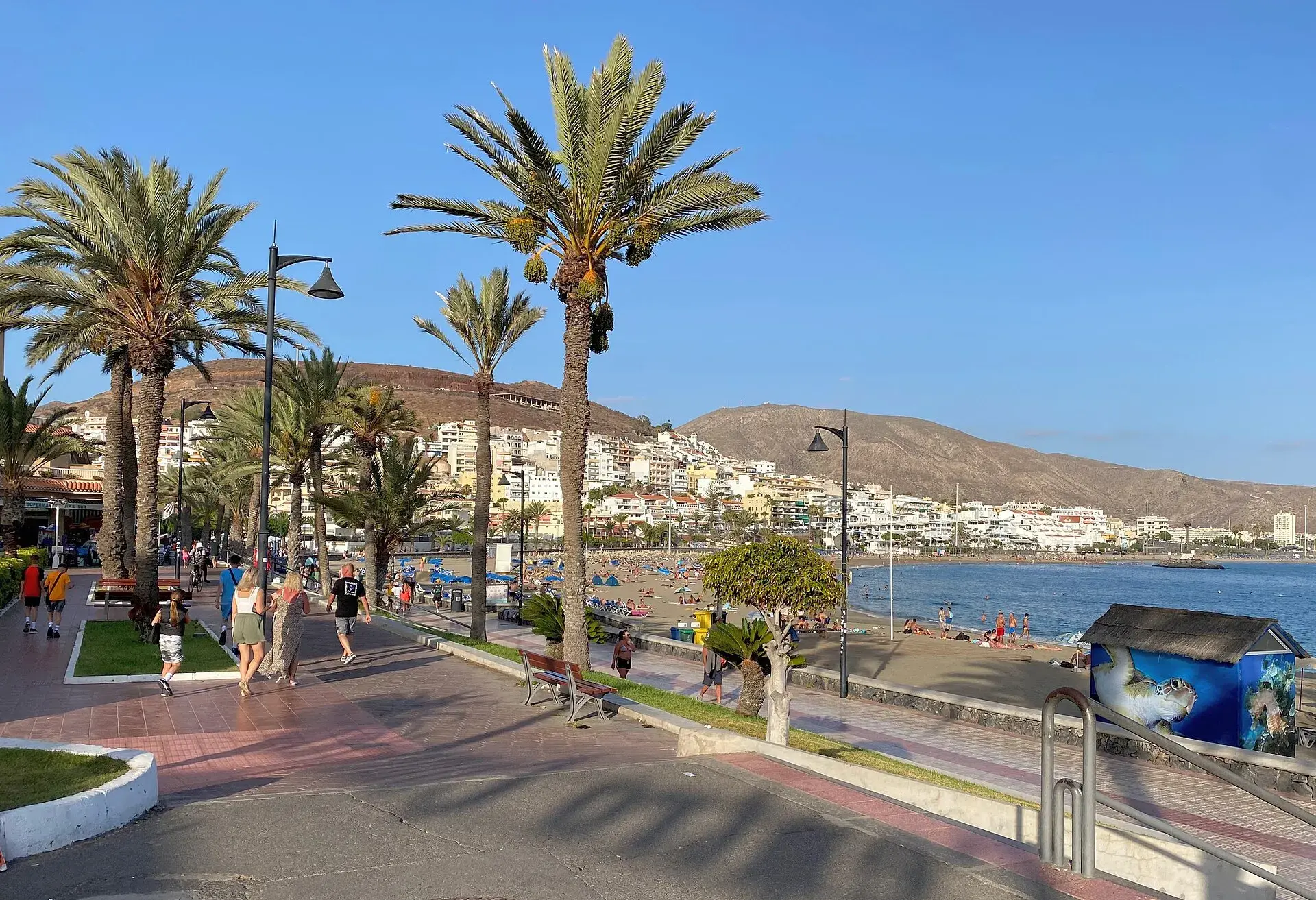
Accessible Tenerife: beaches, transport and step-free visits
Accessible Tenerife: beaches with assisted bathing and amphibious chairs, airport assistance, buses, tram and eurotaxi, and which visits work in a wheelchair.
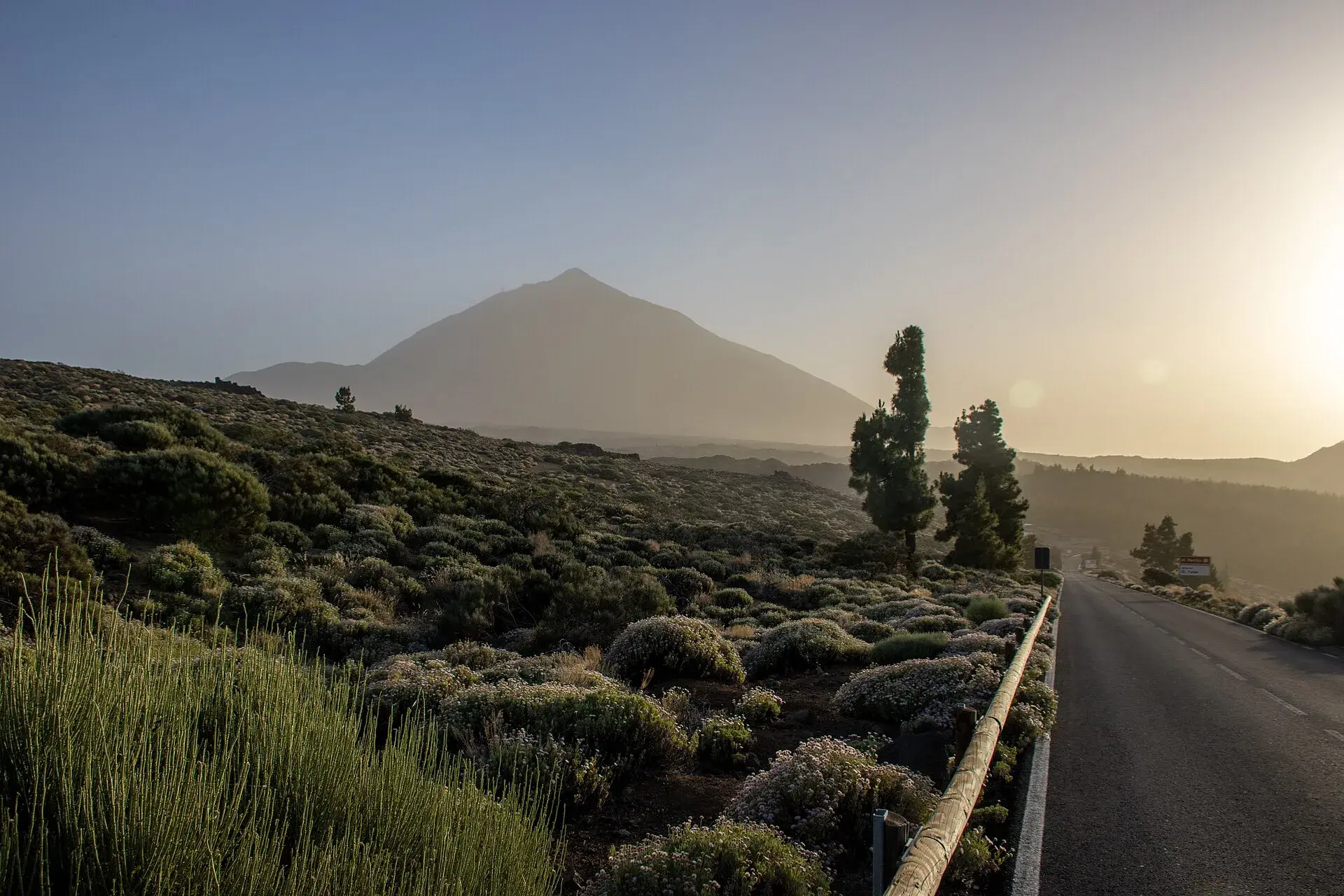
Calima in Tenerife: what it is, when it comes, how it affects you
Calima in Tenerife: what Saharan dust is, which months it tends to arrive, how it affects health and flights, where to check warnings and what to do that day.
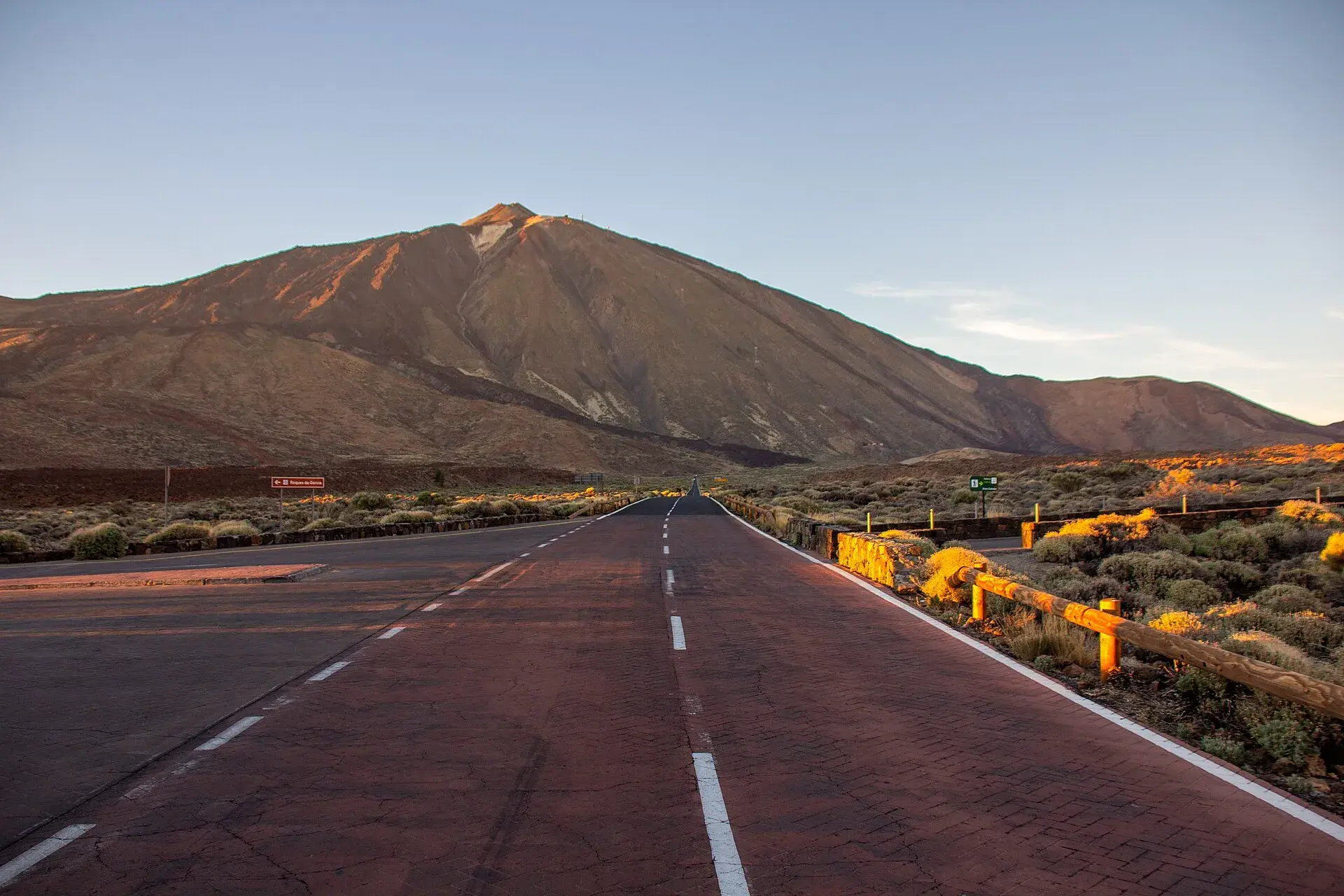
Car hire in Tenerife: insurance, deposit and useful tips
Car hire in Tenerife without surprises: when it pays off, insurance and excess, deposit, fuel, child seats, Masca, Teide and what to check at pick-up.
Digital nomads in Tenerife: visa, areas, housing and internet
Digital nomads in Tenerife: the remote work visa and 2026 requirements, EU citizen registration, the best areas to live, renting, healthcare and internet.