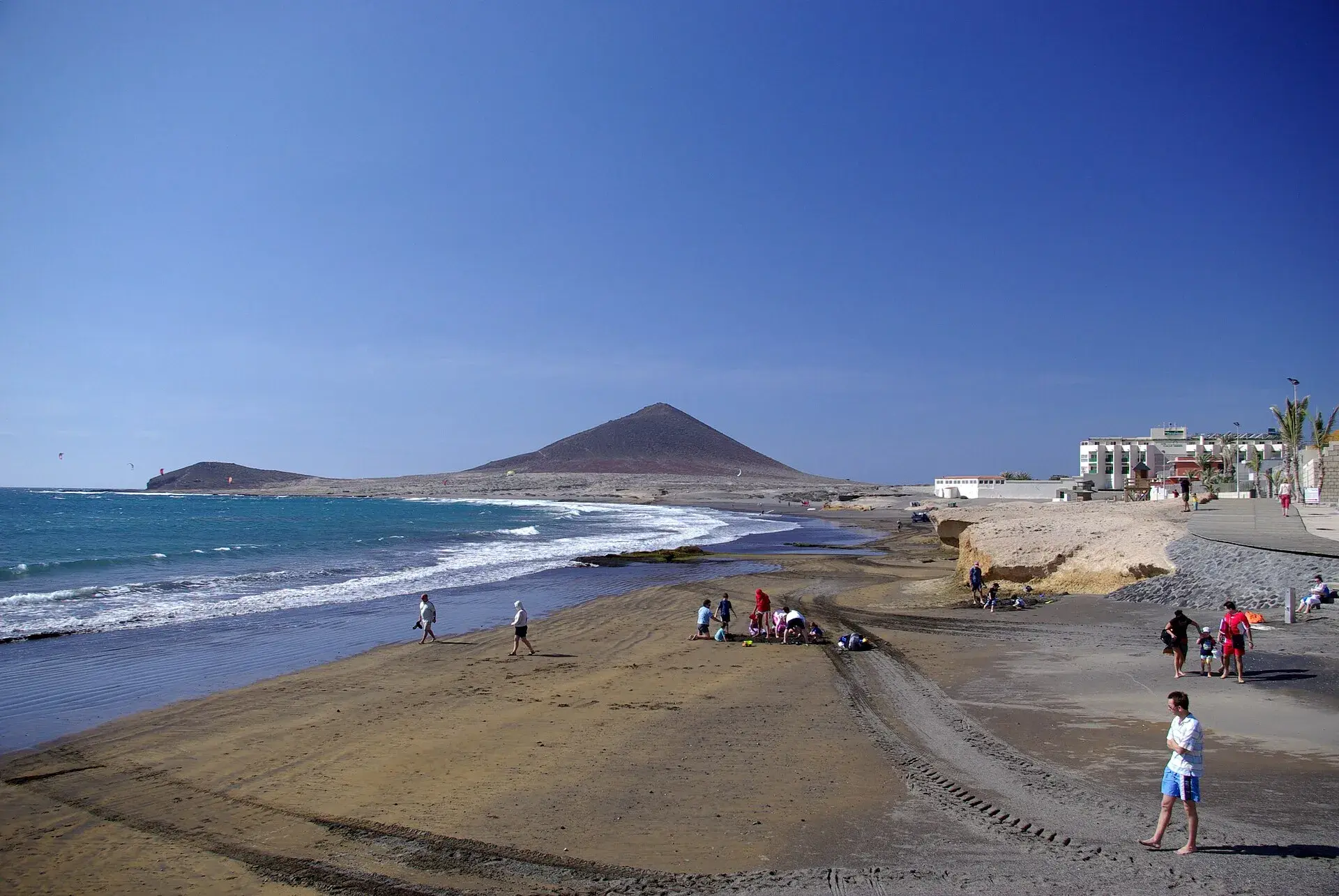
Photo by Berthold Werner, Public domain, via Wikimedia Commons
Digital nomads in Tenerife: visa, areas, housing and internet
Tenerife works well for remote work over a few months: it shares a time zone with London and Lisbon, has mild temperatures all year, good flight connections with Europe and cities with a life of their own such as La Laguna and Santa Cruz. The hard part is not the wifi but housing: the rental market is under strain, the island has a housing access problem for its own residents and the new Canary Islands law restricts holiday rentals. If you are an EU citizen, you only need to register if you stay more than three months; if you are not, Spain's international remote work visa requires, in 2026, an income of around €2,849 gross a month. This guide sums up the requirements, areas and costs using official sources.
Why Tenerife for remote work
- Time zone: the Canary Islands use Western European Time (the same as London and Lisbon), one hour behind mainland Spain. You can work European hours and still have room for afternoon meetings with the Americas.
- Climate: mild daytime temperatures all year on the coast; the south is sunnier and drier, the north cooler and cloudier.
- Flights: two airports with direct flights to much of Europe and to mainland Spain. How to get there from each one is in the guide to Tenerife's airports.
- City life and nature: a university, theatres and guachinches (rustic local wine taverns) in the north, beaches and wind sports in the south, and Teide within an hour of almost anywhere.
EU citizens: registration and empadronamiento
Citizens of the EU, the European Economic Area and Switzerland do not need a visa. If they are going to live in Spain for more than three months, they must apply for the registration certificate for EU citizens:
- Where: by appointment with the Policía Nacional, province of Santa Cruz de Tenerife, under the procedure for the EU citizen registration certificate.
- What is usually required: passport or ID card, form EX-18, payment of the fee (form 790-012) and proof of sufficient funds and health insurance, or of employment or self-employment. Confirm the current list when booking the appointment.
- Empadronamiento: registration on the padrón (residents' register) of the town council where you live. You apply with your rental contract, and it is useful for the health card, resident discounts and other procedures.
Digital nomad visa: requirements for non-EU citizens
The Startups Law (Law 28/2022) created residence for international remote work. You can apply for it as a visa at the consulate in your country of residence or, if you are already legally in Spain, as a residence permit directly with the Unidad de Grandes Empresas y Colectivos Estratégicos (UGE), online. The main requirements, according to official consular information:
- Remote work for companies outside Spain, with an employment or professional relationship of at least three months. Employees need express authorisation from their company to work remotely from Spain.
- Self-employed: you can work for Spanish clients as long as they do not exceed 20% of your total activity.
- Qualifications: a university degree, a vocational qualification or a degree from a business school of recognised prestige, or at least three years of professional experience in the sector.
- Income: 200% of the monthly Spanish minimum wage (SMI). With the 2026 SMI (€1,221 in 14 payments, €1,424.50 spread over 12), that is around €2,849 gross a month. Add 75% of the SMI for the first family member (around €1,068) and 25% for each additional family member (around €356). The figures change every year with the SMI.
- Health insurance, public or private, from an insurer authorised in Spain, with the same cover as the public system.
- No criminal record in recent years, with a certificate from your country of residence.
- Duration: the consular visa is granted for one year; the UGE residence permit for up to three years, renewable for two-year periods.
The procedure has its subtleties (fees, legalisation and translation of documents, Social Security contributions). Check the consulate's or the UGE's website and, if your case is not straightforward, consult an immigration lawyer.
The best areas to live
The guide to where to stay in Tenerife compares every area for holidays; for long stays other criteria matter: year-round services, transport, local atmosphere and price.
La Laguna
A university city and World Heritage Site, with a pedestrianised historic centre, cafés and cultural life. Tram to Santa Cruz and close to the north airport.
- Pros: local atmosphere, everything within walking distance, young community · Cons: cooler, damper and cloudier climate in winter; rents rising sharply. Details in the guide to La Laguna.
Santa Cruz de Tenerife
The capital: services, shops, more sunshine than La Laguna, Las Teresitas about 20 minutes away by bus and city life all year round.
- Pros: the best transport network, healthcare and admin close at hand · Cons: less of a traveller scene and hilly neighbourhoods.
Puerto de la Cruz
A historic resort town in the north, with a mix of locals, European retirees and long-stay visitors. A good base for the Orotava Valley and the north coast.
- Pros: rents somewhat more moderate than in the south, cosmopolitan atmosphere · Cons: cloudier than the south, black-sand beaches with strong waves.
El Médano
A coastal village in the south with a wind-sports vibe, very popular with remote workers and about ten minutes by car from Tenerife Sur airport.
- Pros: almost guaranteed sunshine, international community, everything within walking distance · Cons: wind almost every day, scarce and expensive rentals for the size of the village. More in the guide to El Médano.
Costa Adeje and Los Cristianos
The main tourist area: the best beach weather, plenty of services and a wide choice of restaurants.
- Pros: sunshine, calm beaches, good links with the south airport · Cons: the highest prices, a resort feel and less local life out of season.
Housing: mid-term rentals and the reality of the market
This is the point to prepare with the most time and responsibility. According to the Fundación Alquiler Seguro's Rental Barometer, in the third quarter of 2026 the average rent in the province of Santa Cruz de Tenerife reached €1,240 a month, an increase of close to 14% since the end of 2025. Many residents struggle to find housing, and the arrival of long-stay visitors with more purchasing power is part of the problem.
- Holiday rentals: Law 6/2025 on the sustainable regulation of the tourist use of housing, in force since 13 December 2025, tightens the requirements and reserves the vast majority of residential land in each municipality for permanent homes. Staying in an unregistered tourist flat harms the local market and leaves you without any guarantees.
- Seasonal contract: for a stay of months, the usual option is a written seasonal tenancy (arrendamiento de temporada) with a deposit. Ask for the contract before paying, be wary of listings that ask for bank transfers before you have seen the property and check the owner's identity.
- How to search: spending the first few weeks in accommodation with flexible booking lets you view flats in person. Outside the tourist areas and the high winter season there are more options.
- Rooms and coliving: there are shared flats and coliving spaces aimed at remote workers, especially in the south and in La Laguna.
Internet, fibre and 5G
Fibre reaches most towns and tourist areas, and the national operators offer 4G and 5G coverage in cities and along the coast. The exceptions are the hamlets of Anaga and Teno, the ravines and the higher areas, where mobile coverage drops. Before signing a rental, ask for confirmation of the property's connection type and run a speed test when you view it. For stays of several months, a Spanish mobile plan with plenty of data is worth having as a backup.
Coworking spaces and community
There are private coworking spaces in Santa Cruz, La Laguna, Puerto de la Cruz, El Médano and Costa Adeje, with day, week or month passes; several combine workspace and accommodation. Public libraries are an alternative for the odd day, although their hours are limited. The community gathers through social media groups, weekly meet-ups in cafés and shared activities such as surfing, hiking or language exchanges. If you want to improve your Spanish while you work, the guide to learning Spanish in Tenerife brings the options together.
Cost of living
Food from supermarkets and markets and public transport are cheaper than in many European capitals; IGIC, the Canary Islands tax equivalent to VAT, has a standard rate of 7%. Housing, however, takes up a large share of the budget. Indicative prices for food, transport and leisure are in how much a trip to Tenerife costs. To get around, buses and the tram cover the Santa Cruz–La Laguna axis and the southern motorway well; in rural areas you will need a car.
Healthcare
- EU citizens passing through: the European Health Insurance Card covers necessary care in the public health system during a temporary stay.
- Registered residents and visa holders: the remote work visa requires health insurance; anyone paying Spanish Social Security contributions has access to the Servicio Canario de la Salud (the Canary Islands health service).
- Private insurance: for long stays, check that it covers Spain, without high co-payments and with repatriation.
Tax: what you should know
Spending more than 183 days a year in Spain can make you a tax resident, required to declare your worldwide income here, and the remote work visa has its own tax and Social Security implications. The Canary Islands also have their own Economic and Tax Regime (REF), with indirect taxes different from the mainland and incentives that depend on each case. None of this can be settled with a general rule: consult a tax adviser before you settle in and before you reach six months.
Common mistakes
- Signing from a distance: booking months of rent without seeing the property or having a contract.
- Choosing an area from the photo alone: the north is cloudier and cooler; the south more expensive and touristy.
- Forgetting to register: EU citizens staying more than three months must register.
- Ignoring tax: tax residency arrives sooner than many people expect.
Frequently asked questions
How much do you need to earn for the digital nomad visa in 2026?
200% of the monthly SMI: around €2,849 gross a month in 2026, plus 75% of the SMI for the first family member and 25% for each additional one. The figure is updated every year.
Which area of Tenerife is best for remote work?
It depends on your lifestyle. La Laguna and Santa Cruz offer local life and good transport; El Médano, an international community and sunshine; Puerto de la Cruz, a middle ground on price and atmosphere.
Is it easy to find a rental for several months in Tenerife?
No. The market is under strain and prices have risen sharply. Arrive with flexible accommodation for the first few weeks, view properties in person and insist on a written seasonal contract.
Does Tenerife have good internet?
In cities and tourist areas, yes: fibre and 4G or 5G coverage. In mountain hamlets and ravines the connection can fail; check it at the property before signing.
What time is it in Tenerife compared with Madrid?
One hour behind mainland Spain: Tenerife has the same time as London and Lisbon.
Keep planning
You may also like

Accessible Tenerife: beaches, transport and step-free visits
Accessible Tenerife: beaches with assisted bathing and amphibious chairs, airport assistance, buses, tram and eurotaxi, and which visits work in a wheelchair.

Calima in Tenerife: what it is, when it comes, how it affects you
Calima in Tenerife: what Saharan dust is, which months it tends to arrive, how it affects health and flights, where to check warnings and what to do that day.

Car hire in Tenerife: insurance, deposit and useful tips
Car hire in Tenerife without surprises: when it pays off, insurance and excess, deposit, fuel, child seats, Masca, Teide and what to check at pick-up.

Tipping in Tenerife, money and IGIC: what you need to know
Tipping in Tenerife, paying by card, cash machines, IGIC versus VAT, tax refunds for travellers and tobacco and alcohol allowances when you fly home.