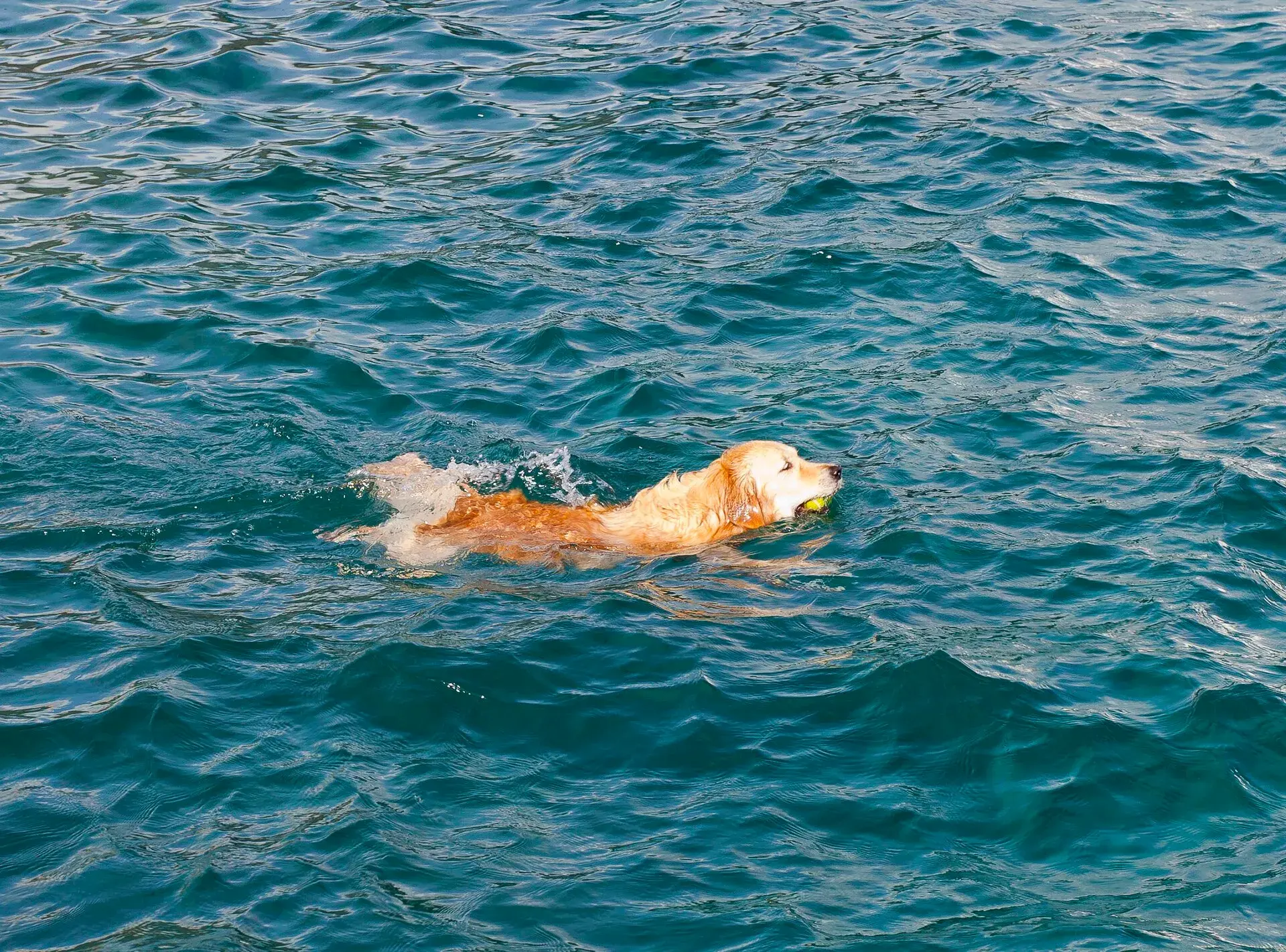
Photo by Diego Delso, CC BY-SA 3.0, via Wikimedia Commons
Tenerife with dogs: travel, dog beaches, buses and rules
Travelling to Tenerife with a dog is perfectly possible, but it takes more planning than on the Spanish mainland. The island has very few beaches where dogs can legally swim (the best known are the dog area at Puertito de Güímar and El Confital, in El Médano), buses and the tram only take large dogs outside rush hours and muzzled, the Teide cable car does not accept pets, and the asphalt and black sand get burning hot for much of the year.
Documents for travelling to Tenerife with a dog
For animal health purposes the Canary Islands are part of the European Union, so the common EU rules apply.
From another EU country or from mainland Spain
- Microchip: compulsory, implanted before the rabies vaccination.
- Valid rabies vaccination: the first dose is given from 12 weeks of age, and you must wait 21 days after it before travelling between countries. Boosters must be given before the previous vaccination expires.
- European pet passport: issued by an authorised vet, it records the microchip and vaccinations.
- Number: a maximum of five animals per person on non-commercial journeys.
From outside the EU (including the United Kingdom)
- Official EU animal health certificate, issued by an official vet in the country of departure no more than 10 days before arrival.
- Rabies antibody test at an approved laboratory for most countries, with a minimum result of 0.5 IU/ml and a three-month wait from the blood sample before travelling. Some countries are exempt: check yours on the European Commission's official list.
- Written declaration that the journey is not for commercial purposes.
- Entry through a designated travellers' point of entry.
European pet passports issued to residents of Great Britain have not been valid since 2021: from there you need the animal health certificate. Start the paperwork months ahead.
By plane and by ferry
Plane
Each airline sets its own rules, and they change often. Usually small dogs travel in the cabin in a carrier under the seat, with a maximum combined weight (animal and carrier) set by the airline, and large dogs go in the hold if the airline allows it. Several low-cost airlines do not accept animals other than assistance dogs, and some restrict brachycephalic breeds (bulldog, pug) in the hold. Book your dog's place with your ticket: there is a quota per flight.
Ferry
If you arrive from mainland Spain by sea or want to visit La Gomera, ferry companies accept pets included in the booking. Baleària offers cabins in which dogs can travel on some of its ships to the Canary Islands (up to two animals of up to 30 kg each) and does not allow dogs in communal areas. On short inter-island crossings, the conditions (carrier, kennel, outside deck, muzzle) depend on the ferry company and the ship: check them when booking. The trip is explained in the guide to La Gomera from Tenerife.
Getting around the island with a dog
TITSA buses
TITSA's rules on guaguas (the Canary Islands word for buses) depend on weight:
- Under 10 kg: no limit on numbers, always in a carrier of up to 60 × 35 × 35 cm, one per person.
- Over 10 kg: one per bus, only on accessible vehicles with a wheelchair space, on a lead shorter than 50 cm and muzzled. They cannot board Monday to Friday from 7:00 to 9:00 or from 13:00 to 15:00, nor when the bus is full. Wheelchairs and pushchairs have priority over the dog.
- The driver can refuse if the dog is aggressive, dirty or wet: after the beach, dry it thoroughly.
Accredited assistance dogs can always travel, across the whole fleet. Useful routes are in the guide to getting around Tenerife.
Tram
Since June 2023, Metrotenerife has accepted dogs without a carrier under similar conditions: one per tram, on a short lead and muzzled, in the last carriage with double doors and in the marked area, without taking a seat, and never Monday to Friday from 7:00 to 9:00 or from 13:00 to 15:00. Pets in carriers and assistance dogs can board at any time.
Taxi and car hire
In a taxi, whether your dog is accepted is up to the driver. Mention it when you book by phone, bring a blanket for the seat and, for a small dog, a carrier. With a large dog, a hire car is the practical option: check in the contract whether the company accepts animals and whether it charges for cleaning. Never leave your dog in the car in the sun: in the south temperatures become dangerous within minutes, in winter too.
Dog beaches in Tenerife
As a general rule, municipal bylaws ban dogs from beaches, with fines. There are few areas where dogs are allowed to swim and their rules change, so check with the town council before you go.
Puertito de Güímar (Güímar)
At the southern end of Puertito beach, next to the marina, there is a dog area of about 200 metres, the best known on the island. The water is usually calm and the village has bars and toilets.
- Area: east of the island, about 30 minutes from Santa Cruz on the TF-1 · Sand and pebbles: dark · Best for: dogs swimming for the first time.
El Confital (Granadilla de Abona)
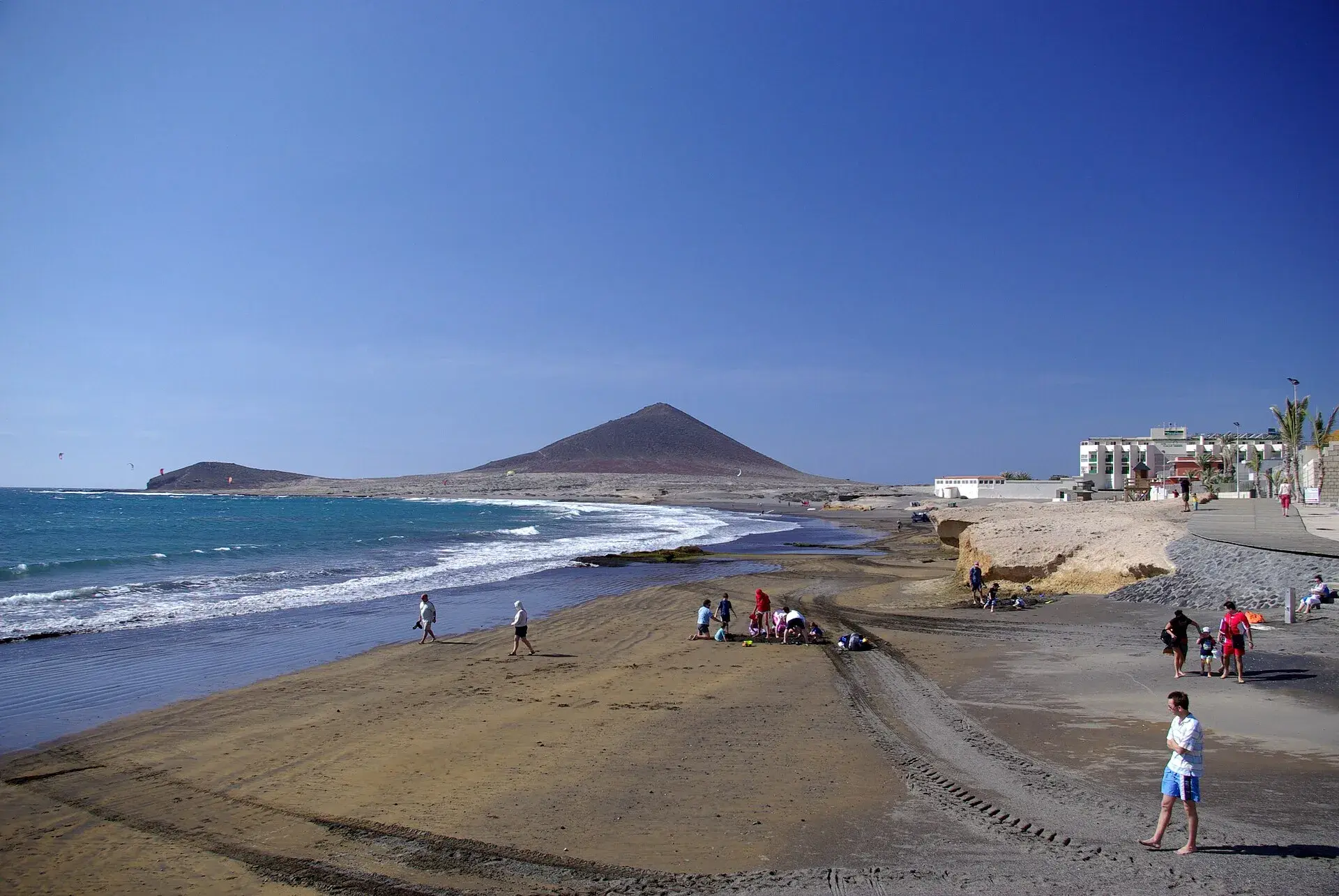
Turismo de Tenerife describes it as one of the few beaches on the island where you can swim with your pet. It is in El Médano, at the foot of Montaña Roja: grey sand, about 210 metres long, no facilities or car park of its own, with a bus stop nearby. The wind blows almost every day and whips up waves: keep an eye on your dog in the water. More background in the guide to El Médano.
Other areas and changes on the way
Some guides also mention El Callao or Las Bajas beach, in Arona, as dog-friendly, but we have found no official confirmation from the council. In Santa Cruz de Tenerife, a study commissioned by the City Council in 2026 found five beaches (Las Gaviotas, Las Teresitas, Acapulco, Añaza and the one next to the Club Náutico) suitable for future dog areas, but as of October 2026 none has been opened: the bylaw has to be changed and authorisation obtained from Costas (the national coastal authority).
Nature: Teide, Anaga and the trails
Teide cable car: no pets, except guide and therapy dogs. Visiting by car and short walks around Las Cañadas are possible: keep your dog on a lead, stay on the trails and avoid the middle of the day, because the volcanic rock heats up and its texture cuts paw pads. Before you go, read the rules of Teide National Park and ask at the visitor centre about current restrictions, as some trails require a booking.
Anaga and Teno: the laurel forest of Anaga is the most pleasant setting for walking with a dog thanks to the shade and humidity. Always use a lead: there is livestock, protected wildlife and ravines. The island's protected areas have restricted-access zones and visitor quotas; they are summarised in the rules for protected natural areas.
Heat, asphalt and other risks
- Hot ground: asphalt, pavements in the south and black sand burn paw pads in summer and on calima days (when dust from the Sahara hangs in the air). If holding the back of your hand on it for five seconds is uncomfortable, it is too hot for your dog. Walk early or at dusk.
- Calima and heatwaves: with dust in the air and high temperatures, cut back on walks and exercise; brachycephalic and older dogs are the most sensitive.
- Water: always carry fresh water. Seawater causes vomiting and diarrhoea if dogs drink it.
- Veterinary emergencies: there are vet clinics with emergency services in the more populated areas, but not in every village. Save the number of the one nearest your accommodation when you arrive.
Potentially dangerous dogs (PPP)
If your dog belongs to one of the breeds classed as potentially dangerous under Spanish national law (such as pit bull, rottweiler, dogo argentino, staffordshire or akita inu) or has their characteristics, Spain requires an administrative licence, third-party liability insurance and registration in the municipal register; the Canary Islands also have their own regional register. In public it must wear a muzzle and be on a non-extendable lead shorter than two metres. If you are coming from another country, bring your licence documents and insurance, and ask the town council of the municipality where you are staying whether your permit is valid for your stay.
Spain's national animal welfare law also provides for third-party liability insurance for all dogs, although making it generally compulsory depends on implementing regulations that, as of October 2026, are still pending. Taking it out is recommended anyway.
Accommodation: what to ask
"Pets allowed" may only mean small dogs. Before booking, ask about:
- Maximum weight or size and number of dogs allowed.
- Nightly supplement and deposit.
- Whether the dog can be left alone in the room and whether it can go on terraces and into communal areas.
- Whether there is a garden or green space nearby, and how far the dog beach is.
Rural houses and apartments usually accept dogs more readily than large hotels. Compare areas in where to stay in Tenerife.
Frequently asked questions
Can I take my dog to any beach in Tenerife?
No. Most beaches ban dogs under municipal bylaws. The best-known dog areas are at Puertito de Güímar and El Confital, in El Médano; check with the town council before you go.
Can dogs travel on buses in Tenerife?
Yes. Dogs under 10 kg, in a carrier and at any time; dogs over 10 kg, one per accessible bus, muzzled and on a short lead, and never Monday to Friday from 7:00 to 9:00 or from 13:00 to 15:00.
Can I go up Teide with my dog?
Not by cable car, except guide and therapy dogs. By car you can tour the park and take short walks with your dog on a lead, avoiding the hottest hours.
What documents does a dog need to travel to Tenerife from Europe?
A microchip, a valid rabies vaccination (with a 21-day wait after the first dose) and a European pet passport. From outside the EU you also need an official animal health certificate and, for most countries, a rabies antibody test.
Keep planning
You may also like

Accessible Tenerife: beaches, transport and step-free visits
Accessible Tenerife: beaches with assisted bathing and amphibious chairs, airport assistance, buses, tram and eurotaxi, and which visits work in a wheelchair.

Calima in Tenerife: what it is, when it comes, how it affects you
Calima in Tenerife: what Saharan dust is, which months it tends to arrive, how it affects health and flights, where to check warnings and what to do that day.

Car hire in Tenerife: insurance, deposit and useful tips
Car hire in Tenerife without surprises: when it pays off, insurance and excess, deposit, fuel, child seats, Masca, Teide and what to check at pick-up.
Digital nomads in Tenerife: visa, areas, housing and internet
Digital nomads in Tenerife: the remote work visa and 2026 requirements, EU citizen registration, the best areas to live, renting, healthcare and internet.