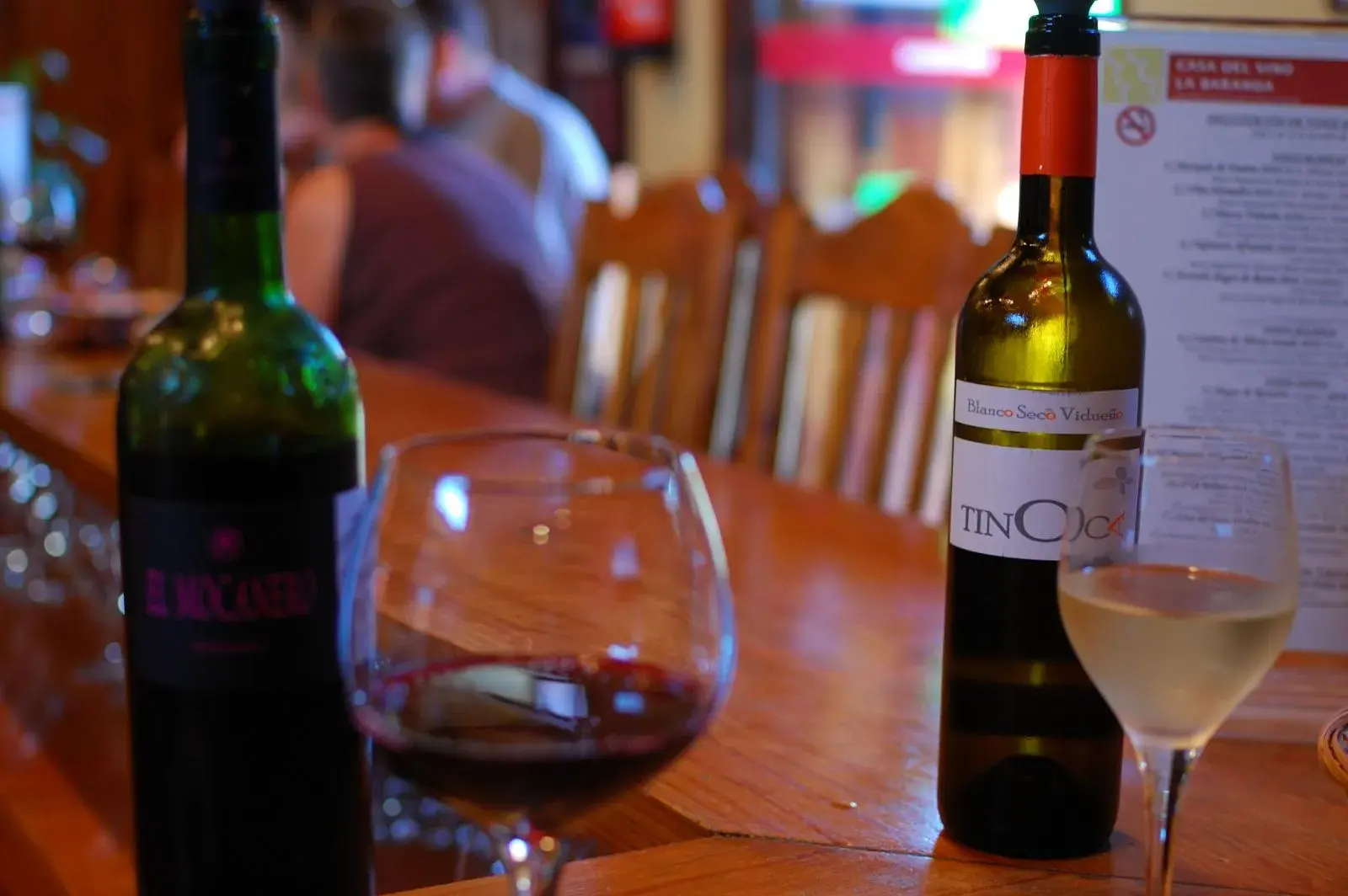
Photo by Jaume Escofet from London, UK, CC BY 2.0, via Wikimedia Commons
Canarian food in Tenerife: typical dishes and where to try them
The Canarian food you eat in Tenerife is simple, produce-led cooking with rural roots: wrinkled potatoes with mojo, gofio, vegetable stews, goat and rabbit, fish from the coast, goat's cheese and honey. For a first visit, the essentials are papas arrugadas with red and green mojo, a bowl of gofio escaldón, a plate of goat or rabbit in salmorejo, a grilled vieja or cherne, and a piece of goat's cheese with honey. The most reliable places to try them are the guachinches and village taverns of the north, the fish restaurants in coastal villages and the municipal markets.
This guide does not recommend specific establishments: places change often, and what helps is knowing what to order and in which kind of place it is usually done well.
What traditional Tenerife cooking is like
According to Turismo de Tenerife's gastronomy dossier, the island's cooking is built on vegetables, fruit, potatoes (called papas in the Canaries, never patatas) and fish, with roast goat and rabbit dressed with mojo or salmorejo, stews and the Canarian puchero. It is a cuisine of making the most of what there was: gofio replaced bread, stews were made with whatever the vegetable patch gave, and meat was kept for special days.
Papas arrugadas and mojos
Papas arrugadas
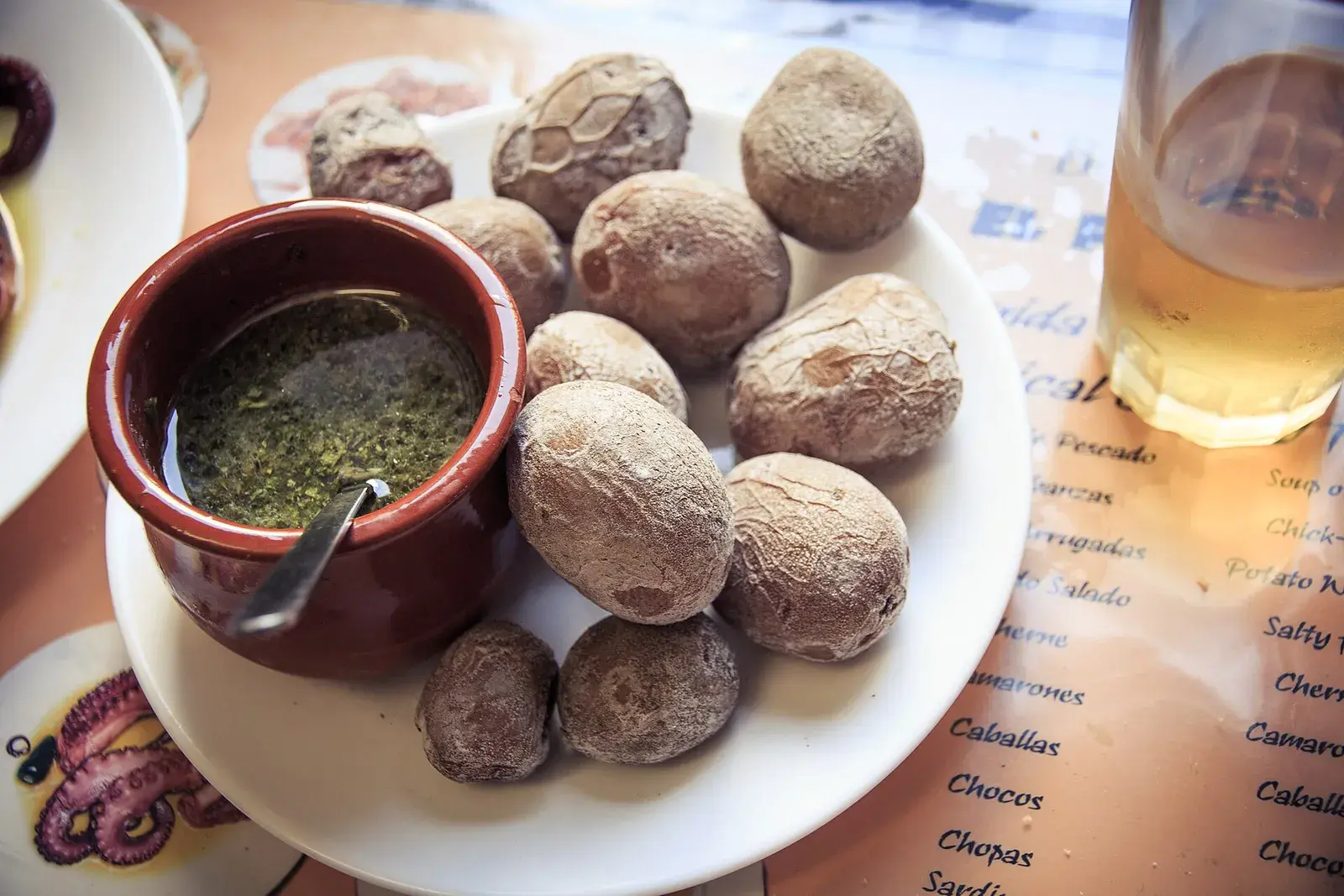
Small potatoes boiled in their skins in heavily salted water until the water evaporates, the skin wrinkles and is left with a thin white crust. You eat them skin and all, dipped in mojo, as a starter or alongside meat and fish.
The best are made with papas antiguas, heritage local varieties protected by the Papas Antiguas de Canarias Protected Designation of Origin (PDO), which according to Turismo de Tenerife covers 29 varieties. For papas arrugadas, the same dossier singles out the negra, bonita and azucena potatoes, with denser, tastier flesh than ordinary potatoes. Not every plate of papas arrugadas uses a heritage variety: ask if it matters to you.
Red mojo, or mojo picón
Mojo is the quintessential Canarian sauce, served in small bowls for dipping. The red one, also called colorado or picón, is made with chilli pepper or paprika (the Cabildo describes it as the mojo with plenty of paprika), garlic, cumin, oil and vinegar. Depending on the kitchen it is mild or quite hot. It goes mainly with potatoes and meat.
Green mojo
Green mojo is made with coriander (sometimes parsley), garlic, green pepper, cumin, oil and vinegar. It is fresher and works especially well with fish and potatoes. In many places both mojos arrive at the table unasked, with the potatoes or the bread.
Gofio: the islands' oldest food
Gofio is a flour of toasted, ground cereals: wheat, millo (maize), barley or blends; there are also gofios that include pulses. It dates back to the islands' Indigenous population and has been eaten without interruption ever since. Turismo de Tenerife counts it among the island's emblematic products. Since 2014 the name Gofio Canario has been entered in the EU register as a Protected Geographical Indication (PGI), under Commission Implementing Regulation (EU) No 128/2014.
At the table it appears in several forms:
- Escaldón: gofio mixed with hot fish, meat or puchero broth into a thick paste. It comes in a bowl, often with raw onion and mojo, and is eaten in pinches or with a spoon. Every household makes it its own way.
- Pella de gofio: gofio kneaded with water, sometimes with sugar, honey or almonds, rolled into a log and sliced. It goes with salted fish and stews. According to Turismo de Tenerife's dossier, there is no romería (a traditional pilgrimage festival) on the island without pellas de gofio.
- In stews and at breakfast: a spoonful thickens a stew on the plate, and many people still take it with milk in the morning.
Stews and spoon dishes
Potaje de berros
One of Tenerife's most characteristic stews: watercress (a water plant with small, slightly peppery leaves) cooked with potatoes, sweetcorn, pulses and often pork ribs. It is usually finished with gofio on the plate and a piece of cheese on the side. It is a dish of the medianías (the mid-altitude belt between the coast and the summits) and of the north, typical of the cooler months.
Rancho canario
A thick stew halfway between soup and potaje, with chickpeas, potatoes, thick noodles and meat. It is home and tavern food, filling and inexpensive, more common in winter.
Puchero canario
The islands' great one-pot dish, with several meats, chickpeas, vegetables and potatoes; its broth is used to make escaldón. It is usually cooked to order or on set days.
Meat: goat, rabbit and carne fiesta
Goat and kid
Goat is the meat most closely tied to Tenerife. Turismo de Tenerife points out that the Canaries have three native goat breeds. It is eaten stewed in sauce (carne de cabra), with a hint of heat, or as roast kid (cabrito). It features heavily in guachinches.
Conejo en salmorejo
Probably the island's best-known meat dish. Rabbit is marinated for hours in salmorejo, a sauce of garlic, pepper, herbs, vinegar, wine and oil, then fried and finished in the sauce itself. The Cabildo also mentions conejo en condumio, a variant, and kid prepared the same way. It is served with papas arrugadas.
Carne fiesta
Pieces of pork marinated in paprika, garlic, oregano, vinegar and oil, then fried. The name comes from its role as village festival food, and it is still sold at ventorrillos (food stalls) at romerías and patron saint festivals. It comes with chips or with papas sancochadas (boiled potatoes). If you want to catch a festival, check the events calendar.
Cochino negro
The Canarian black pig is a native breed prized for its flavour, according to Turismo de Tenerife. Look for it at the grill houses (asaderos) of the north, which the Cabildo highlights for chargrilled meat.
Fish and seafood
Small-scale inshore fishing is still part of life in the coastal villages, and the catch of the day is one of the best reasons to eat by the sea. The most popular species:
- Vieja (parrotfish): the fish Canarians value most, according to the Cabildo, with very white, delicate flesh. It is boiled, grilled or baked.
- Cherne (wreckfish): a firm-fleshed fish. It is the base of sancocho canario, with salted fish, potatoes and sweet potato, served with mojo and pella de gofio.
- Sama (dentex): another rock fish, very common grilled.
- Others: bocinegro, salema, grouper, sardines and tuna or skipjack depending on the season.
- Lapas (limpets): rock molluscs served grilled in their shells with green mojo. A typical starter at seaside restaurants. From 1 December to 30 April, gathering limpets and winkles (burgados) is banned on all the islands, according to the Canary Islands Government.
Fish is usually chosen whole from the display and charged by weight; ask which is the catch of the day, the surest way to eat the freshest.
Tenerife cheeses
The Canaries have three cheese designations of origin, and none of them is from Tenerife: Queso Majorero (Fuerteventura), Queso Palmero (La Palma) and Queso de Flor de Guía, Media Flor de Guía and Queso de Guía (Gran Canaria). You can find them in Tenerife, but they are not the island's own cheeses.
Tenerife's cheeses are mainly goat's milk or goat and sheep blends, often made by hand and without a PDO of their own. According to Turismo de Tenerife, the most eaten is fresh cheese, with a milky taste and a salty edge; there are also semi-cured and cured cheeses, sometimes with the rind rubbed with paprika or gofio, and smoked cheeses. The Cabildo highlights those from El Tanque, cured and slightly spicy.
At the table they appear as a nibble, alongside stews, or as grilled or fried cheese with mojo or honey, one of the most popular starters.
Tenerife honey
Miel de Tenerife has held EU-wide Protected Designation of Origin status since January 2014. It covers multifloral honey, honeydew honey and a long list of single-flower honeys, among them Teide broom (retama del Teide), tajinaste, avocado, chestnut, heather, fennel and tedera. According to Turismo de Tenerife's dossier, the island has over 60 % of the beekeepers and hives in the Canaries. Retama honey, which comes from the high-mountain flora of Teide, is one of the most sought after.
When buying, check the label: the PDO logo is the guarantee that it comes from Tenerife. You will find it at municipal markets, local produce shops and some beekeepers' sales points.
Desserts and sweets
- Bienmesabe: a cream of ground almonds, sugar, egg and lemon. Holaislascanarias associates it with La Palma, but it appears on menus all over the island, often over ice cream.
- Frangollo: a dessert of maize flour cooked with milk, sugar, raisins, almonds and cinnamon, served cold and firm.
- Quesillo: the Canarian flan, denser and made with condensed milk. It is the most common homemade dessert.
- Quesadillas: small pastries filled with soft cheese, sugar and spices. The best known in the Canaries are those from El Hierro, although quesadillas already appear in sixteenth-century records of the Cabildo of Tenerife.
- Truchas de Navidad: fried sweet pasties filled with sweet potato or angel hair (cabello de ángel, a candied squash preserve). Turismo de Tenerife's dossier notes that there is no Christmas on the island without truchas. Bakeries sell them, especially in December; if you travel then, see also the events calendar.
- Fruit: Canary Islands bananas, which hold a PGI, avocados and papayas are grown on the island and are often the simplest dessert.
Where to try Canarian food in Tenerife
Guachinches
Guachinches are seasonal eateries run by wine-growing families, mostly in the north (La Orotava, Santa Úrsula, La Matanza, La Victoria de Acentejo), serving their own wine with a short menu of home cooking such as goat, rabbit, ribs or chickpeas. They are the most direct way to taste home-style food. Before you go, read our guide to guachinches: it explains how they work, what to order and how to tell a genuine one. For the wine that goes with them, see the guide to Tenerife wine.
Village bars and taverns
Bars in the old town centres and the mid-altitude villages serve tapas and portions of Canarian food: papas arrugadas, grilled cheese, carne fiesta, escaldón, the stew of the day. It is the most flexible option if you do not want a big meal. Northern villages, such as those in our selection of the prettiest villages in Tenerife, have this kind of place around their squares.
Municipal markets
The Mercado de Nuestra Señora de África in Santa Cruz de Tenerife, the Mercado de La Laguna and the farmers' markets (mercadillos del agricultor), such as the one in Tacoronte, are good places to buy cheese, honey, gofio, bottled mojos, fruit and heritage potatoes. Some have food stalls or bars inside. Days and opening hours vary by market and time of year: check each one's official website before you go. There is more detail in our guide to markets in Tenerife.
Fish restaurants in coastal villages
The fishing villages of the north and south are where fresh-fish restaurants cluster, with the day's display, limpets and vieja. They fit well with a day at the beach or the natural pools. Harbours, fishermen's guilds and what to order are in where to eat fresh fish in Tenerife.
How to order and eat: useful customs
- Sharing: the norm is to order several dishes for the middle of the table. Turismo de Tenerife's gastronomy guide recommends asking for a table that makes sharing easy. To decode the menu, the Canarian food glossary explains the names of dishes and products.
- Mojos: if they do not arrive with the potatoes, ask for them; there is almost always red and green. Try the red one carefully, as the heat varies a lot from kitchen to kitchen.
- Meal times: as in the rest of Spain, people eat late by northern European standards. Many kitchens close between lunch and dinner, and in villages some places do not open in the evening or on certain days of the week. Times change: confirm before you set off.
- Portions: usually generous. Better to start with a few dishes and order more later.
- Fish by weight: Turismo de Tenerife's guide advises asking the price and size before choosing the fish.
- Allergies and diets: the same guide advises mentioning them when booking and confirming them on arrival. Bear in mind that many stews contain meat and that escaldón is made with broth.
- Prices: they vary a lot by area; village places and guachinches tend to be cheaper than the tourist areas on the coast.
Frequently asked questions
What is the most typical dish in Tenerife?
Papas arrugadas with mojo are the most widespread dish and the one almost everyone tries first. Other dishes closely tied to the island are conejo en salmorejo, goat stew, potaje de berros and gofio escaldón.
What is the difference between red and green mojo?
Red mojo, also called picón or colorado, contains chilli pepper or paprika and can be hot; it goes mainly with potatoes and meat. Green mojo is made with coriander or parsley, is milder and fresher, and is the usual partner for fish.
Do Tenerife cheeses have a designation of origin?
No. The three Canarian cheese PDOs belong to Fuerteventura, La Palma and Gran Canaria. Tenerife's cheeses are mainly goat's milk or blends, many handmade and without their own PDO, eaten fresh, cured, smoked or grilled with mojo or honey.
What Tenerife products can you take home?
The most practical are Miel de Tenerife PDO honey, gofio, bottled mojos and well-wrapped cured cheese. If you are flying outside the European Union, check your destination country's food import rules first.
Are there vegetarian Canarian dishes?
Yes, but it is worth asking. Papas arrugadas with mojo, grilled cheese, frangollo and bienmesabe contain no meat, but many stews and escaldón are made with meat or fish broth.
Where can you eat the most home-style Canarian food?
At the guachinches of the north during their opening season, and in the taverns and casas de comida (simple eateries) of the mid-altitude villages. The tourist areas of the south also have Canarian food, but mixed with international cooking.
Keep planning
You may also like
Canarian food glossary: menu words to order in Tenerife
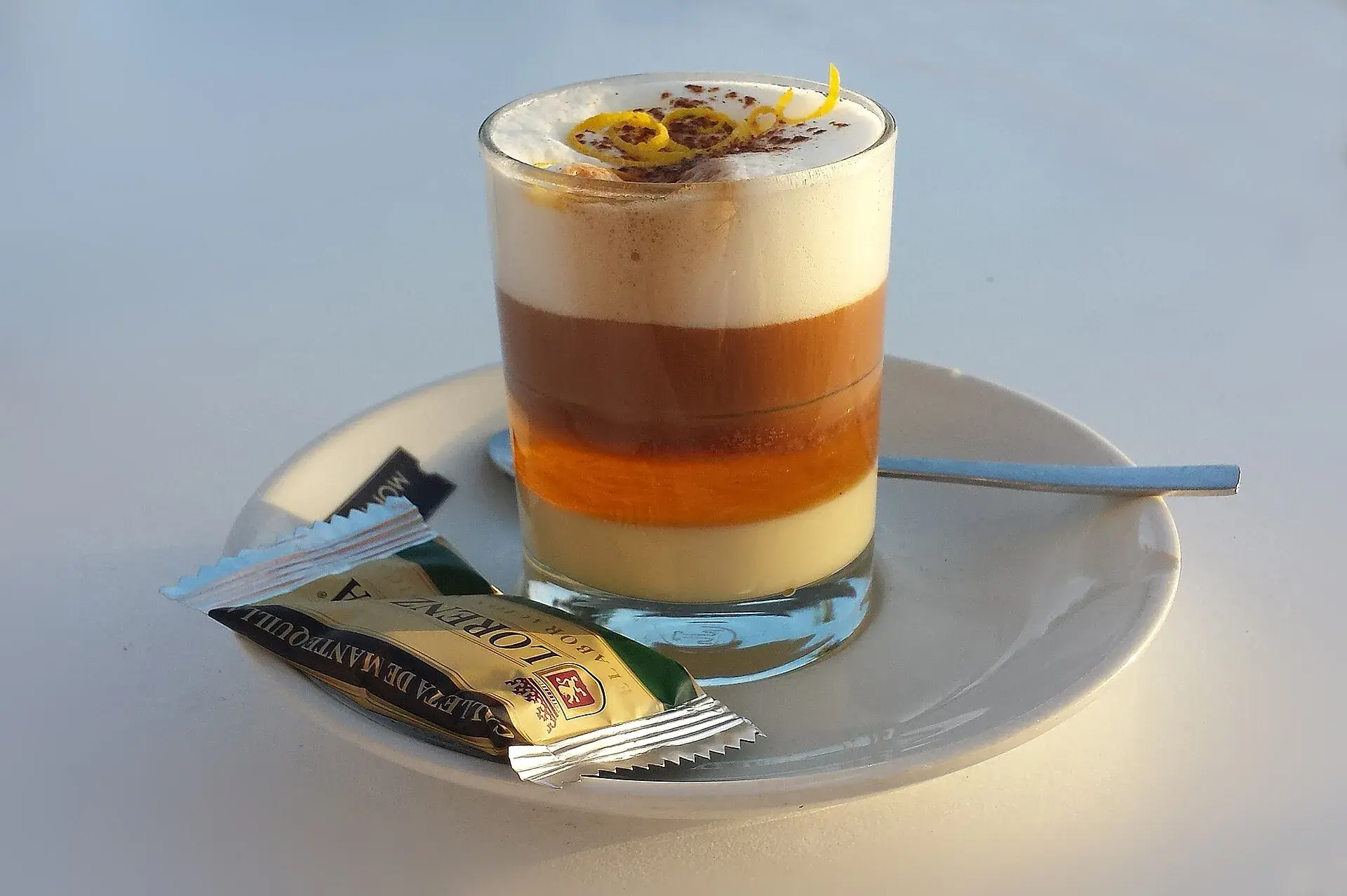
Canarian food glossary with the words you will see on the menu: what barraquito, escaldón, enyesque, pella and carne fiesta mean, plus phrases for ordering.
Where to eat fresh fish in Tenerife: harbours and fishermen
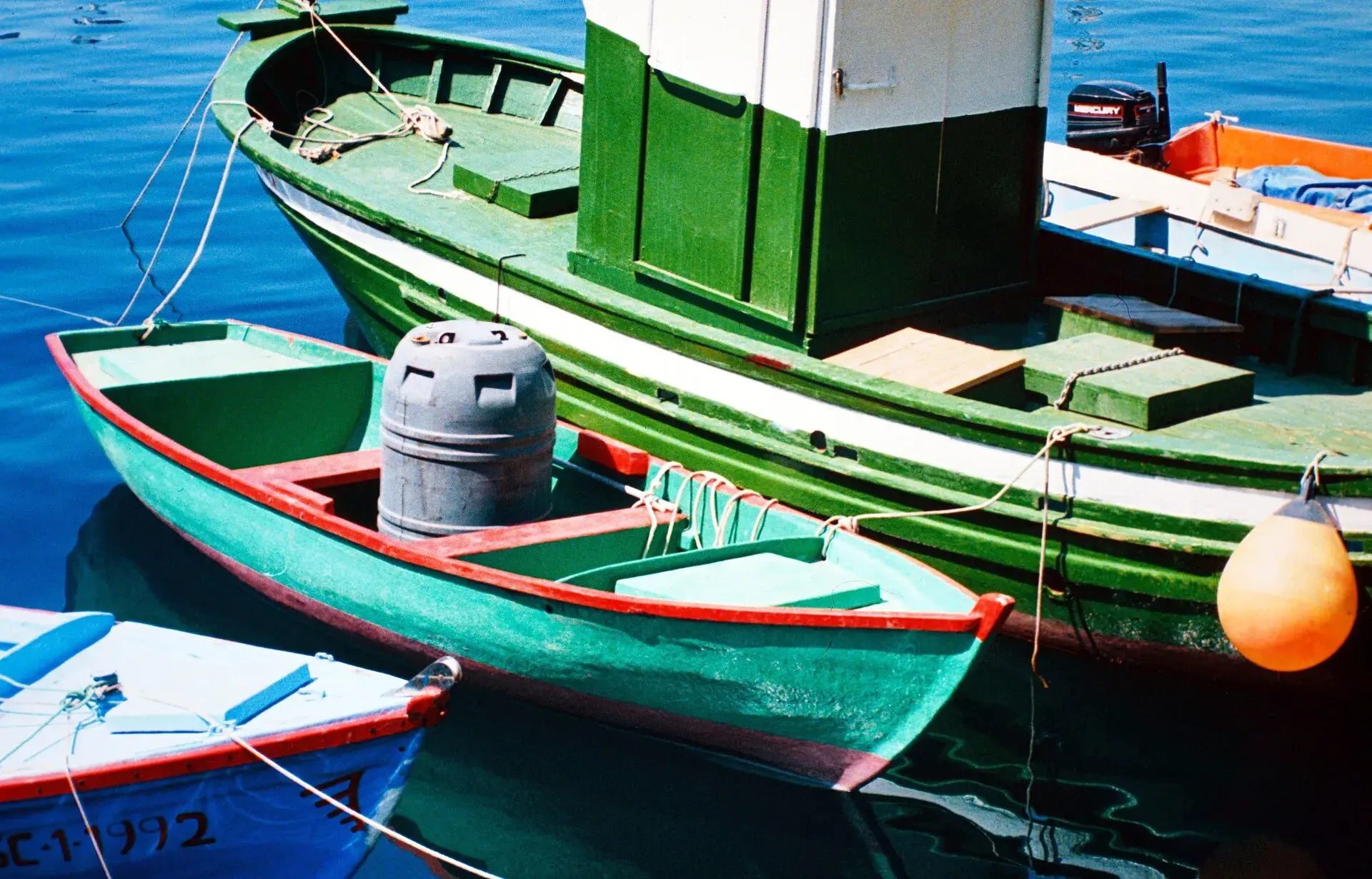
Where to eat fresh fish in Tenerife: harbours with a fishermen's guild, local species such as vieja or cherne, how ordering by weight works and the limpet ban.
Michelin-starred restaurants in Tenerife and Repsol Suns
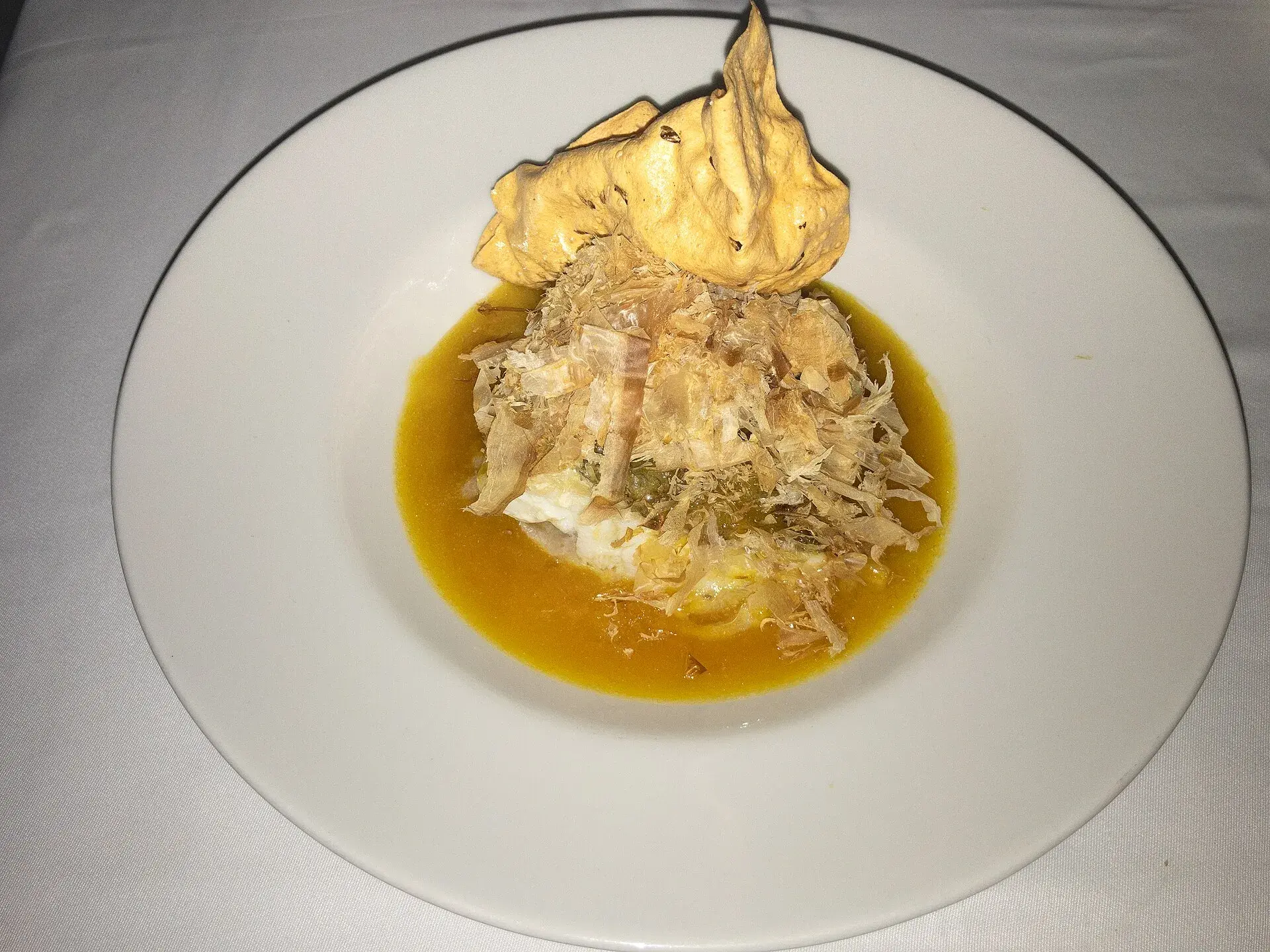
Michelin-starred restaurants in Tenerife in the 2026 edition: the 9 winners, their chefs and areas, the Bib Gourmands, the Repsol Suns and how to book a table.
Tenerife wineries to visit: a practical wine tourism guide
Tenerife wineries to visit by designation of origin, the Casa del Vino, what a tasting includes, harvest, San Andrés and getting around without driving.