Photo by Diego Delso, CC BY-SA 3.0, via Wikimedia Commons
Santa Cruz de Tenerife: what to see in the capital on foot
What to see in Santa Cruz de Tenerife comes down to a day's walk around a flat, compact centre: Plaza de España by the port, calle del Castillo, the Iglesia de la Concepción, two first-rate museums (MUNA and TEA), the Mercado de Nuestra Señora de África, the Rambla and the García Sanabria park, and south of the centre the Calatrava-designed Auditorio and the Palmetum. If you have an afternoon to spare, Las Teresitas beach is a quarter of an hour away by guagua (the Canary word for bus). The capital is not a beach or resort destination, but it is the island's city with the most everyday life and it is very easy to explore without a car.
How to plan your visit
The historic and shopping centre fits into a rectangle of just over a kilometre between the port, the Barranco de Santos (a ravine that crosses the city) and the García Sanabria park. You can see it on foot in a long morning. The Auditorio and the Palmetum are to the south, about twenty minutes' walk along the seafront avenue or a couple of bus stops away, and Las Teresitas is about 8 kilometres to the north, in San Andrés.
An order that works: start early at the Mercado de África, cross the ravine to the Concepción and the museums, carry on to Plaza de España and calle del Castillo, walk up the Rambla to García Sanabria and leave the afternoon for the Auditorio and the Palmetum, or for the beach. To save steps, the tram runs through the centre and connects with La Laguna.
Highlights of the centre
Mercado de Nuestra Señora de África
Known as La Recova, this is the capital's municipal market: a building with courtyards and arches selling fruit, vegetables, fish, cheeses, mojos (Canarian sauces) and flowers, with bars inside for breakfast. It opens every morning until 14:00, Sundays included, and that is the best time to see it in full swing. On Sundays there is also the Santa Cruz flea market (the rastro), which since 2025 has been set up around avenida Marítima. Opening times are detailed in the guide to markets in Tenerife. The market car park gives customers one hour free.
Iglesia de la Concepción
On the other side of the Barranco de Santos, the city's mother church, with its bell tower visible from the port, is the oldest church in Santa Cruz. Inside is the founding Holy Cross, which according to tradition the Castilian conquerors planted when they landed in 1494 and which gave the city its name. Opening hours depend on services.
MUNA, Museum of Nature and Archaeology
A few metres from the Concepción, MUNA is the essential visit for understanding the Guanches, the island's inhabitants before the conquest: the archaeology section, with its mummies, is the main reason to go, and the natural sciences section explains the volcanic origin of the archipelago. According to Museos de Tenerife, it opens Monday to Saturday 9:00 to 19:00 and Sundays and public holidays 10:00 to 17:00, with general admission at €5 (€3 for Canary Islands residents) and free entry on Fridays and Saturdays from 16:00 (as of October 2026). It closes on Carnival Tuesday and some days over Christmas. Allow at least two hours.
TEA Tenerife Espacio de las Artes
The Herzog & de Meuron building next to the ravine brings together contemporary art exhibitions, the Óscar Domínguez collection, the Photography Centre and a library. Exhibitions are free and it closes on Mondays; check the opening hours on its official website, because they have changed several times. Even if contemporary art does not interest you, the architecture and the public square that runs through the building are worth the detour.
Plaza de España and the Castillo de San Cristóbal
This is the city's great square facing the port, redesigned by Herzog & de Meuron and opened in 2008, with a saltwater pool in the centre and the Monumento a los Caídos, a cross-shaped tower. During the works, the remains of the Castillo de San Cristóbal appeared, the old fortress that defended the bay; today you can visit them in an interpretation centre beneath the square, open Monday to Saturday 10:00 to 18:00 according to Museos de Tenerife. It is a short visit about the fortress's role in defending the bay, including Nelson's attack in 1797.
Calle del Castillo and plaza de la Candelaria
From Plaza de España, plaza de la Candelaria leads into calle del Castillo, the city's main pedestrian shopping street, with shops, cafés and some early 20th-century buildings. The parallel and cross streets (Bethencourt Alfonso, and La Noria on the other bank of the ravine) concentrate the centre's bars and restaurants.
La Rambla and the García Sanabria park
The Rambla de Santa Cruz is a long tree-lined boulevard with benches, kiosks and open-air sculptures, one of the most pleasant residential areas of the city. Halfway along the Rambla you enter the García Sanabria park, dating from 1926, the largest urban park in the Canary Islands, with about 6.7 hectares of gardens, fountains, the flower clock and some of the sculptures from the 1973 International Street Sculpture Exhibition. It is free and the best place to rest in the shade at midday.
South of the centre: Auditorio and Palmetum
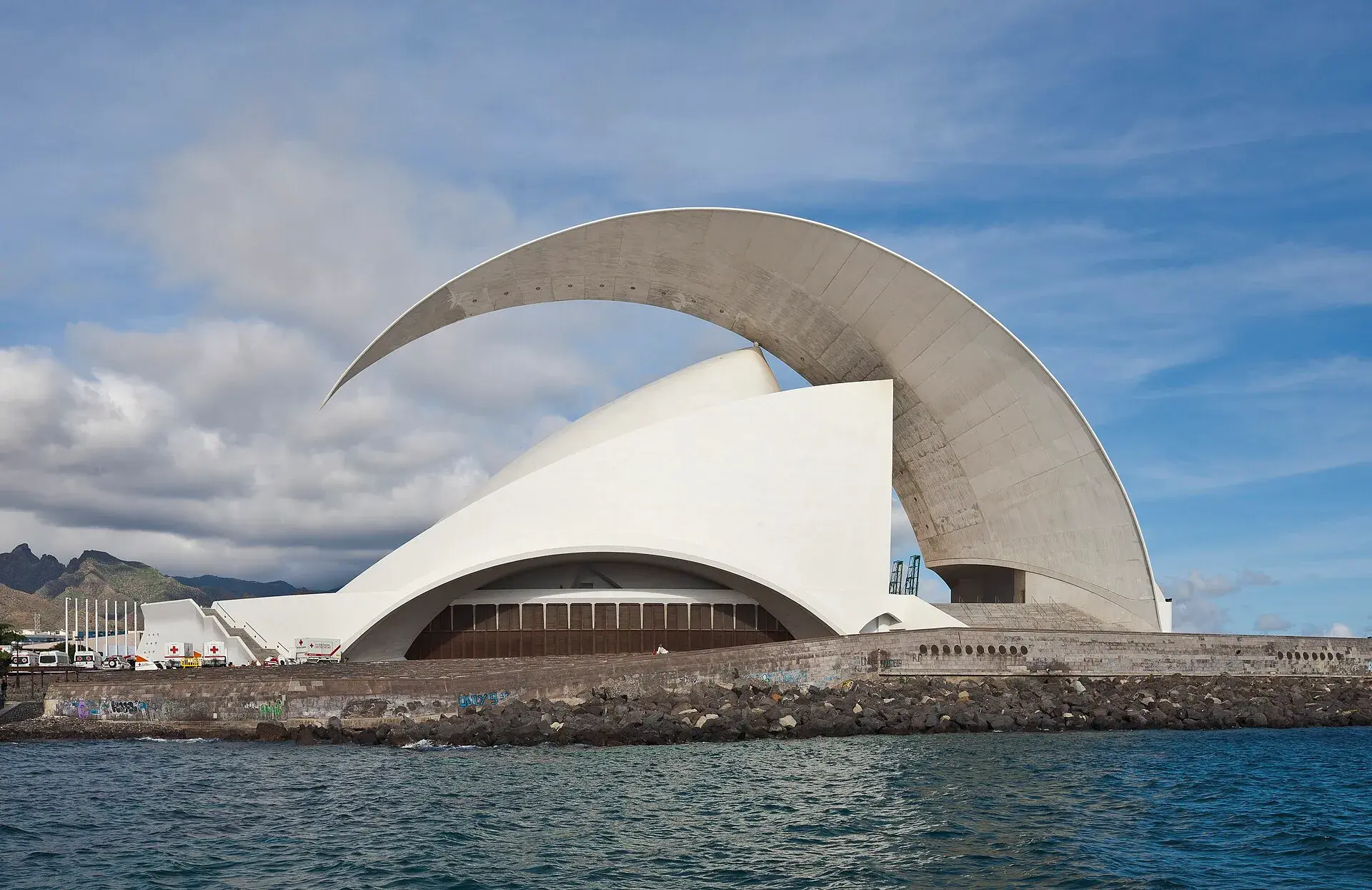
Auditorio de Tenerife Adán Martín
Santiago Calatrava's white building, with its great concrete wing over the sea, is the image of the modern city and home to the Tenerife Symphony Orchestra, the opera and much of the island's music programme. You can walk around the outside freely, and the seafront promenade is the best spot to photograph it. There are guided tours of the interior on limited days and times, depending on rehearsals: check the Auditorio's official website. The best way to see it inside is with a concert ticket; the programme appears in the events calendar.
Palmetum
Next to the Auditorio, on a hill reclaimed from the sea, the Palmetum is a 12-hectare botanical garden specialising in palm trees, built on a former landfill. According to its official website, it opens every day from 10:00 to 18:00, with last entry at 17:00, and admission costs €6 for non-resident adults and €2.80 for children (as of October 2026). Allow an hour and a half; bring water and a cap, because shade is scarce in the higher areas, from where you can see the city with Anaga in the background.
Las Teresitas and San Andrés
Santa Cruz's beach is not in the centre but in San Andrés, about 8 kilometres away: Las Teresitas, a golden beach of sand brought from the Sahara, with palm trees, a breakwater and calm water. TITSA bus 910 leaves the Intercambiador (main bus station) frequently and stops next to the beach. San Andrés, the fishing village right beside it, has fish restaurants and is the start of the road up to Anaga. All the practical information is in the guide to Las Teresitas beach and, if you want to continue into the mountains, in the guide to the Anaga Rural Park.
Port and cruise ships
Santa Cruz is Tenerife's main cruise port and the walk to Plaza de España depends on where the ship berths: 10 to 15 minutes from the nearest quays and considerably longer from the breakwater. If you are ashore for a few hours, the most efficient plan is the centre on foot (Plaza de España, Concepción, MUNA, market) or the tram to La Laguna; Las Teresitas is the beach option on bus 910. Mount Teide is more than an hour away by road: it is only worth it on an organised excursion that guarantees your return to the ship. On days with several cruise ships in port, the centre fills up by mid-morning. The guide to Tenerife in a day for cruise passengers plans the stop around the hours you have.
Santa Cruz Carnival
The Carnival, in February or early March, is the capital's big festival and one of the best known in the world: competitions for murgas and comparsas (satirical choirs and dance troupes), the gala to choose the Carnival Queen, the Coso (the great parade) and several days of street parties with thousands of people in costume. On those dates accommodation in Santa Cruz and La Laguna sells out early, and the Cabildo's museums close on Carnival Tuesday. Each year's dates are published in the events calendar.
Sundays and shop opening hours
Sunday changes the city: many shops in the centre close or open only on designated dates, and life concentrates in the morning at the market, the flea market and the terraces. The Cabildo's museums open on Sundays with reduced hours (10:00 to 17:00) and the Palmetum all day. If your only day in the capital is a Sunday, prioritise the market, museums and a stroll, and leave shopping for another day. On weekdays, many small shops still close for a break in the middle of the day.
Getting there and around
Tram
Tram line 1 starts at the Intercambiador in Santa Cruz, crosses the centre (the Teatro Guimerá stop is a step away from plaza de la Candelaria and the Weyler stop is near García Sanabria) and climbs to La Laguna in about 40 minutes. It is the way to combine both cities on the same day; the guide to what to see in La Laguna suggests a route there.
Buses
The Intercambiador in Santa Cruz, next to the Barranco de Santos and a few minutes from the market, is the hub of the TITSA network: the 111 runs down the TF-1 to Costa Adeje via the south airport, the 102 and 103 go to Puerto de la Cruz via La Laguna, the 910 to Las Teresitas and the 946 to Taganana and Almáciga. From Tenerife North airport, Aeroexpress line 20 reaches the Intercambiador. Fares, the ten+ card and tourist passes are covered in getting around Tenerife.
Car and parking
On-street pay-and-display parking (zona azul) in the centre is limited. The practical options are the paid underground car parks (Plaza de España, Intercambiador and others in the centre) or the market car park if you are shopping. Mid-morning on weekdays is the hardest time to park; on Sundays it is easy.
Climate and best time to go
Santa Cruz is on the east coast, drier and sunnier than La Laguna, with mild temperatures all year and some heat in summer. Weekdays have more atmosphere in the centre; Saturday morning is the best time to combine the market, shopping and terraces. In summer, do the centre first thing and leave the beach for the afternoon.
Staying in Santa Cruz: yes or no?
Yes, if you want a well-connected, car-free urban base with cultural attractions and city restaurants, and if your plans include La Laguna, Anaga and the north. No, if you are looking for a hotel pool and a beach within walking distance: Las Teresitas is on the outskirts and the centre has no beach. Compare with other areas in where to stay in Tenerife.
Frequently asked questions
How much time do you need to see Santa Cruz de Tenerife?
A full day: the morning for the market, the Concepción, MUNA and the walk to García Sanabria, and the afternoon for the Auditorio and the Palmetum or for Las Teresitas. With half a day you can see the centre and one museum.
Can you visit Santa Cruz without a car?
Yes. The centre is walkable, the tram connects with La Laguna, and buses leave the Intercambiador for Las Teresitas beach, Anaga, the north and the south.
What is the best museum in Santa Cruz?
To understand the island, MUNA, for its Guanche archaeology section. For art and architecture, TEA, with free exhibitions. Both are a few metres apart, next to the Iglesia de la Concepción.
What should you see in Santa Cruz if you arrive on a cruise?
With four or five hours: Plaza de España, calle del Castillo, the Concepción and MUNA, or the tram to La Laguna. Las Teresitas is a quarter of an hour away on bus 910. Teide only on an organised excursion.
Are shops open on Sundays in Santa Cruz?
Many shops in the centre close on Sundays, except on authorised opening dates and in some shopping centres. The Mercado de África and the flea market open in the morning.
Keep planning
You may also like
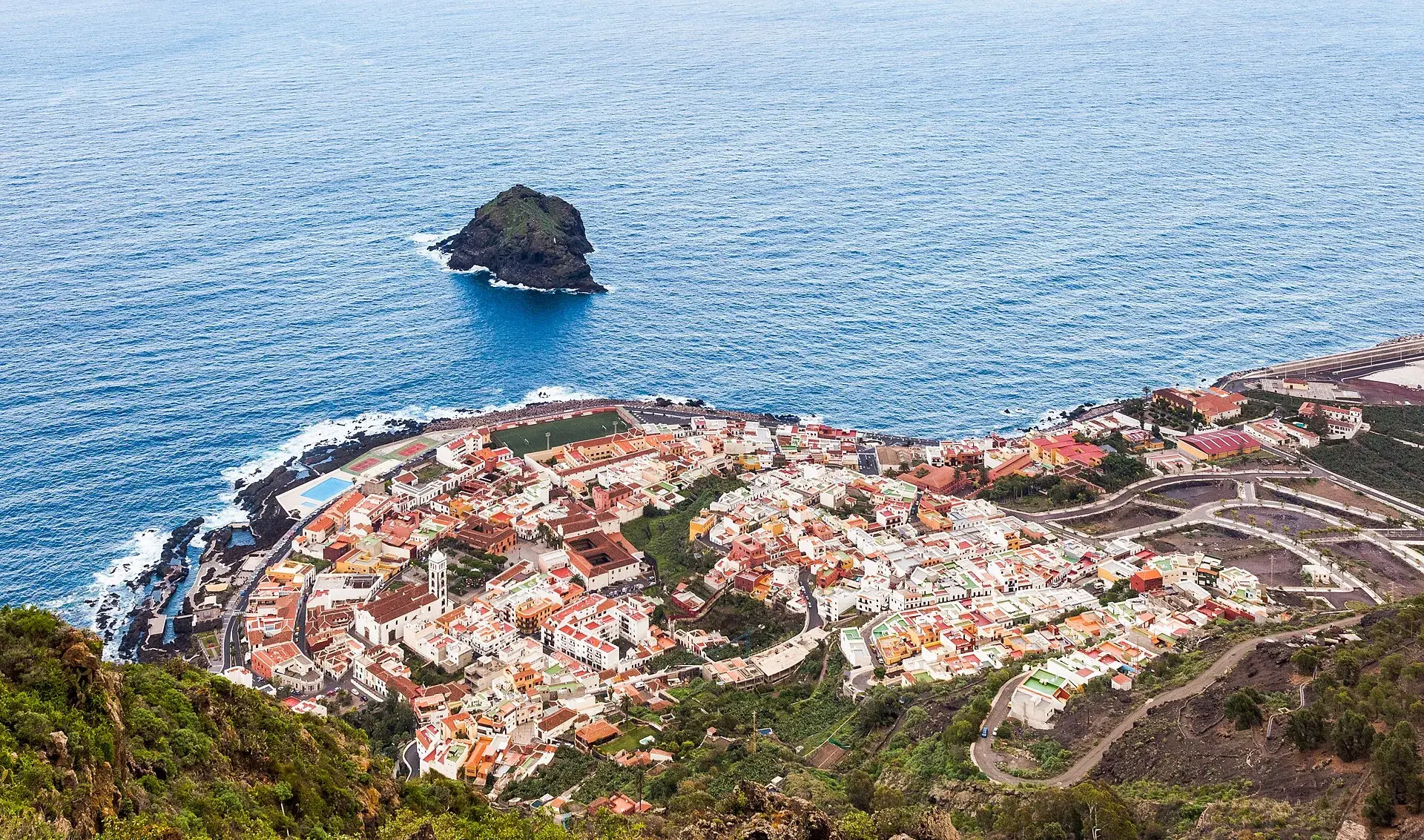
Garachico, Tenerife: old town, El Caletón and the Isla Baja
What to see in Garachico in half a day: the port buried by lava in 1706, the historic centre, El Caletón, the castle, San Roque, buses and where to park.
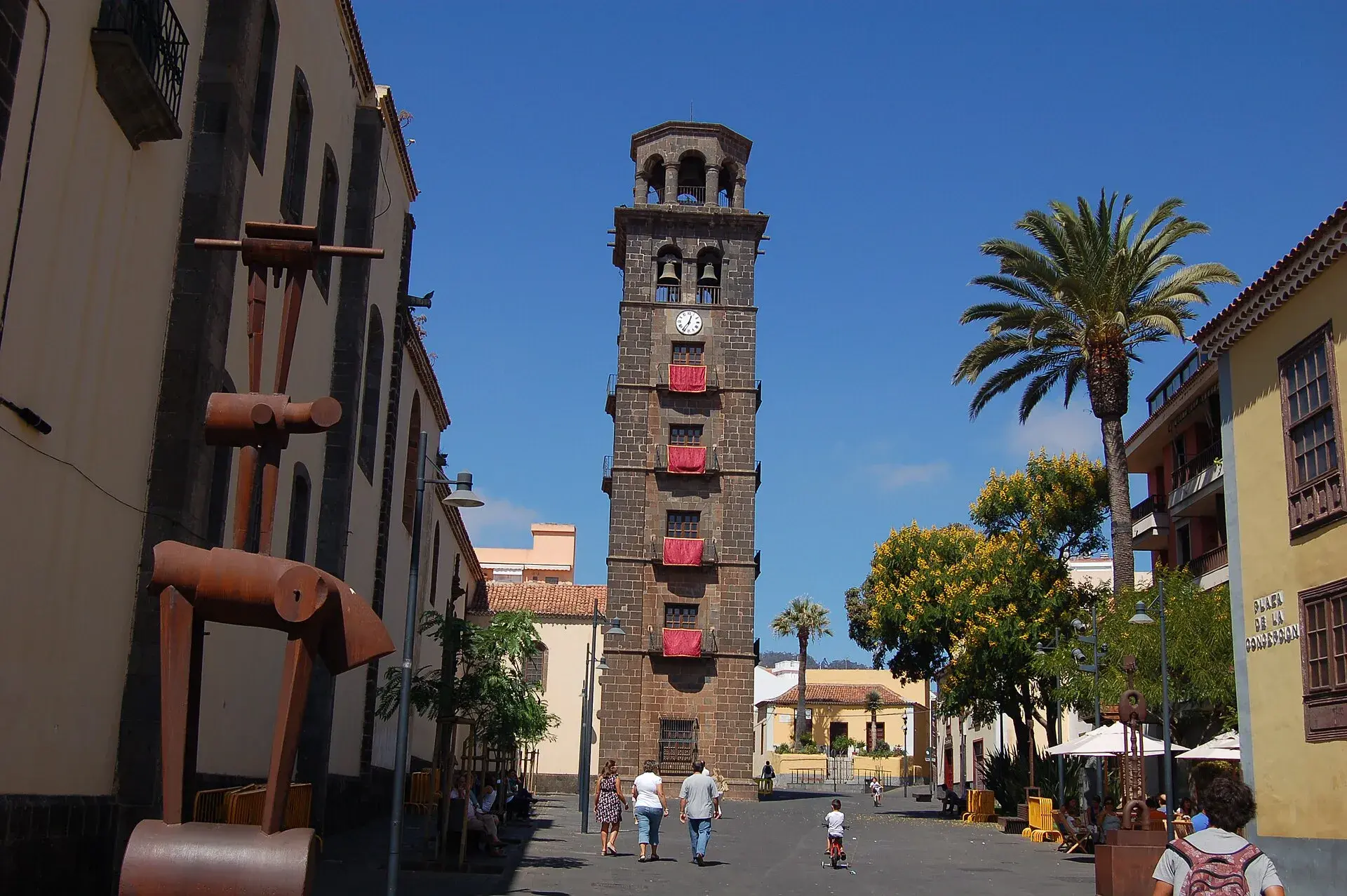
La Laguna, Tenerife: old town, museums and how to get there
What to see in La Laguna step by step: walking route through the World Heritage old town, cathedral, museums, tram, parking, festivals and a trip to Anaga.
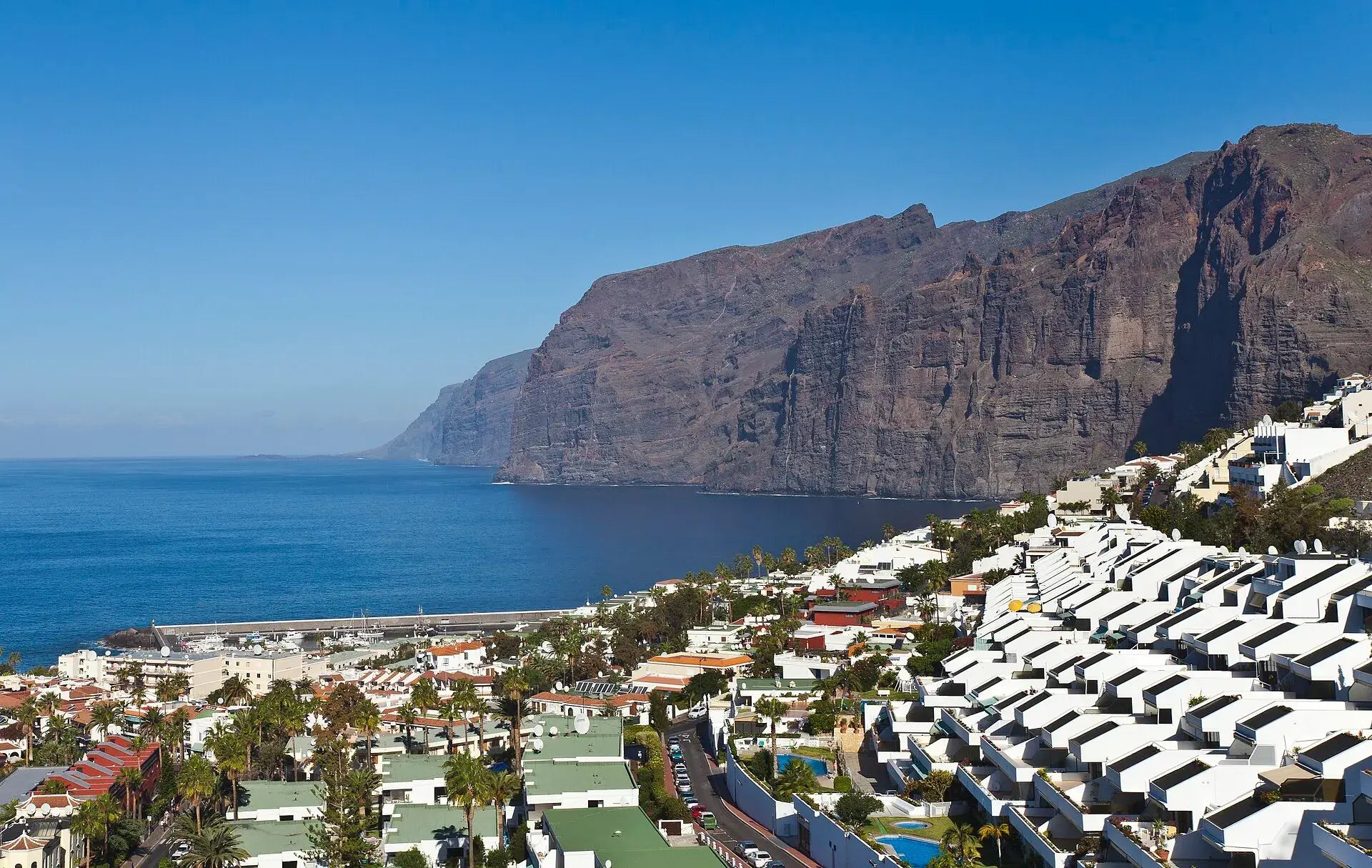
Los Gigantes Tenerife: cliffs, boat trips, beaches and access
Los Gigantes (Tenerife): cliffs up to 600 m, Archipenque viewpoint, boats from the marina, Los Guíos, rock pools, buses 473 and 477 and where to park.
Tenerife protected areas rules: trail quotas and drones
Rules for Tenerife's protected areas: trails that need booking, Teide, Masca and El Pijaral, drones, camping, wildfire alerts, dogs and fines in 2026.