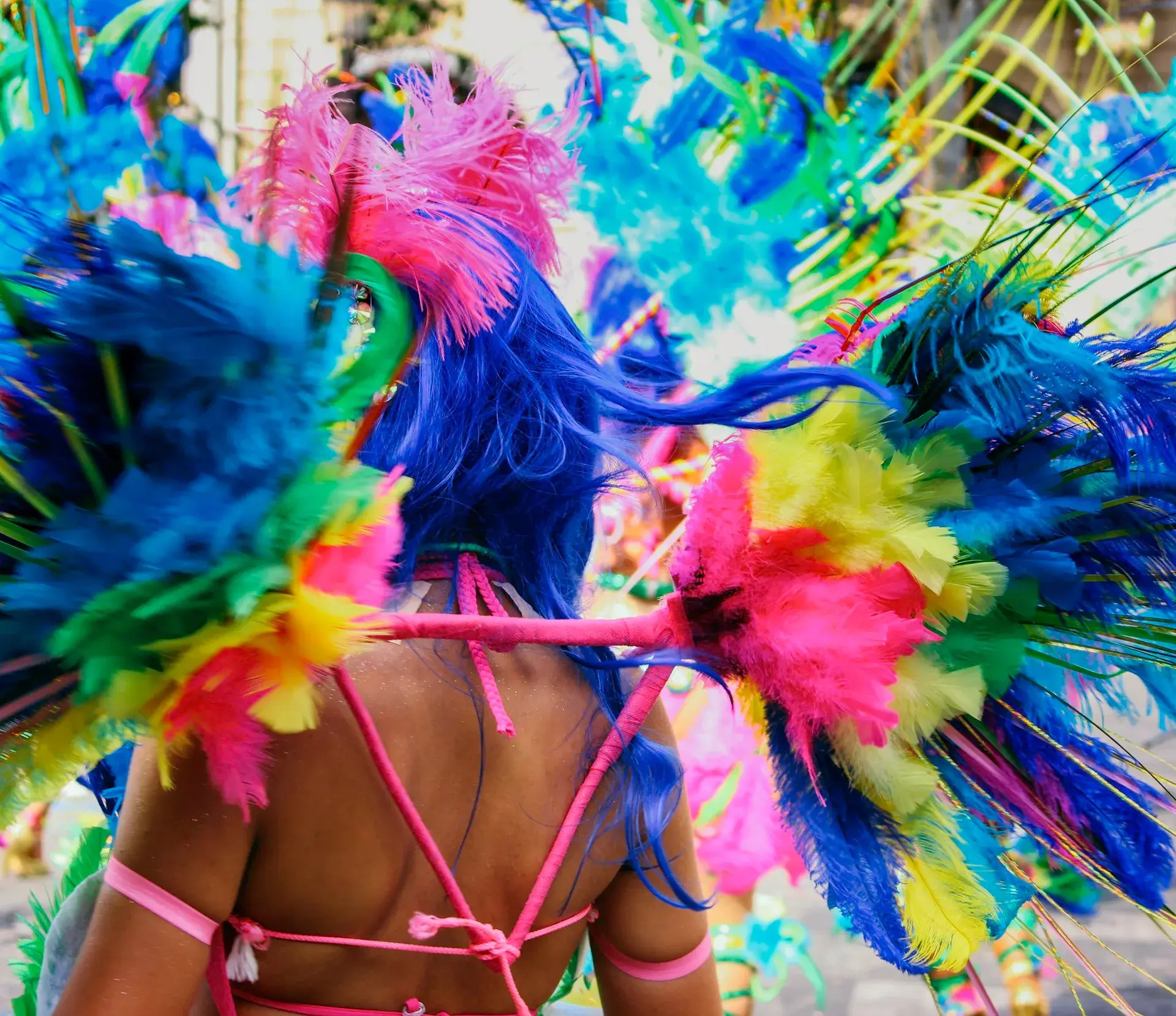
Photo by VENUS MAJOR on Unsplash
Santa Cruz Carnival 2027: Transport, Where to Stay, What to See
The 2027 Carnival of Santa Cruz de Tenerife is dedicated to Rome and arrives later than usual: the competition season opens with the inaugural gala on 22 January, and the street carnival, the free one that draws the crowds, runs from Friday 19 to Sunday 28 February. The Carnival Queen election gala is on Wednesday 17 February and the Coso Apoteosis on Tuesday 23, a local public holiday in the capital. This guide is meant to help you plan the trip: which nights to choose, how the competitions work, how to get there without a car, where to sleep and which other carnivals take place on the island. The full day-by-day calendar is on the Santa Cruz de Tenerife Carnival page in our events calendar.
Carnival 2027 at a glance
- Theme: «Roma Eterna: El Imperio del Carnaval» (Eternal Rome: the Empire of Carnival), as announced by the City Council in May 2026 (the official carnival website shortens it to «Roma: El Imperio del Carnaval»).
- Official carnival (competitions and galas): from 22 January to 17 February, mostly at the Recinto Ferial exhibition grounds.
- Street carnival: from Friday 19 to Sunday 28 February, in the centre of Santa Cruz.
- Local holiday: Carnival Tuesday, 23 February, is a public holiday in Santa Cruz and also in La Laguna, which moved its holiday to that date.
- Price: the street events are free; the galas and competition rounds require a ticket.
- Poster: «El legado de un Imperio» (The Legacy of an Empire), by Nareme Melián, chosen by public vote in October 2026.
Why so late: the Recinto Ferial, where the galas are held, is occupied by the Parque Infantil y Juvenil de Tenerife (a children's and youth fair) until 6 January, and the City Council judged it unworkable to build the stage in barely 48 hours. So it pushed the whole calendar back by two weeks. Ash Wednesday falls on 10 February 2027, which means that this time the street carnival takes place after the start of Lent, not before.
The theme: Rome, forty years on
Every edition of the Santa Cruz Carnival revolves around an allegory that inspires the stage, the street decorations and many costumes. Rome was the very first theme in the history of the capital's carnival, in 1987, the year of the Celia Cruz concert in Plaza de España that entered the Guinness Book of Records as the largest gathering of people in an open-air square for a concert. The City Council has brought it back forty years later as a tribute to that edition, and this time the Fiestas department chose it without a public vote.
In practice, expect a Roman-inspired stage at the Recinto Ferial and plenty of togas, laurel wreaths, gladiators and empresses in the streets. Dressing up to the theme is not compulsory, but it helps you get into the spirit.
How the festival works: from the competitions to the street
The Santa Cruz Carnival has two halves, and it is worth telling them apart before you book your flights.
The official carnival: competitions and galas
For four weeks the groups compete at the Recinto Ferial in front of a jury and an audience that fills the stands. A record 109 groups have registered for 2027. The main categories:
- Murgas: satirical singing groups that poke fun at local and national current affairs with their own lyrics and colourful costumes. There are 27 adult and 19 children's murgas registered. The adult rounds run from 1 to 4 February and the grand final is on Saturday 6.
- Comparsas: dance troupes with percussion, feathers and Latin rhythms, inspired by Brazil and the Caribbean. They compete on Saturday 13 February and return to the street for the Ritmo y Armonía (Rhythm and Harmony) contest.
- Rondallas: string and vocal ensembles with a lyrical repertoire; their contest is on Sunday 31 January.
- Musical and choreographic groups: carnival bands and dance groups, with contests on 23 and 24 January.
If you want to see a competition, the most characteristic is a murgas round: the local humour is easier to follow with some Spanish and some knowledge of Canary Islands news, but the atmosphere in the stands is just as enjoyable without.
The queens' galas
The Carnival Queen election gala, on Wednesday 17 February, is the most televised night. The candidates parade in huge costumes mounted on wheeled frames that they pull themselves, designed over months. Before it come the Children's Queen gala (Sunday 7 February) and the Seniors' Queen gala (Wednesday 10). Tickets for the Queen election and the murgas final sell out quickly; buy as soon as sales are announced on the official carnival website.
The street carnival
From 19 to 28 February the city centre becomes a free, non-stop party, with stages, bands and the open-air dances known in Santa Cruz as mogollones. The highlights of the provisional 2027 programme:
- Friday 19 February: Cabalgata Anunciadora (the opening parade), with the contest of floats and decorated cars, and the first night of dancing.
- Saturday 20: the comparsas' Ritmo y Armonía contest and dancing; usually the busiest night.
- Sunday 21: first Carnaval de Día (daytime carnival).
- Monday 22: Dragnaval gala and dancing, on the eve of the holiday.
- Tuesday 23: Coso Apoteosis, the big daytime parade with floats, groups and queens.
- Friday 26: children's Coso and the dances of the Piñata weekend.
- Saturday 27: Carnaval de Día, with music from morning until the small hours.
- Sunday 28: closing events, with a fireworks display.
The Entierro de la Sardina (Burial of the Sardine), a mock funeral with weeping «widows» that ends with the sardine in flames, is traditionally held on the Wednesday after the Coso. Its 2027 date was not in the provisional programme; confirm it in the official programme.
Where it takes place
The galas and competitions are held at the Recinto Ferial de Tenerife, near Avenida de la Constitución, next to the Auditorio. The street carnival takes over the centre: Plaza de España, Plaza de la Candelaria, Plaza del Príncipe, Calle del Castillo and Avenida de Anaga, facing the port, where the big stages are usually set up. The parades run along the avenues near the sea. The City Council usually publishes a map with stages, toilets, first-aid points and road closures; download it before you go.
Getting there and getting around
The rule is simple: do not drive into the centre on the main nights. Streets are closed and parking nearby is almost impossible.
- Tram: Line 1 links La Laguna with central Santa Cruz. During the 2026 carnival it ran with double trams only in the first week, at 10–15-minute intervals at the busiest times and with extended night hours. Some stops near the parades, such as Weyler during the Cabalgata, were closed for safety, and on the Carnaval de Día the line terminated at Teatro Guimerá. Check the 2027 arrangements on the Metrotenerife website.
- Guaguas (the local word for buses): in 2026 TITSA reinforced around twenty routes, ran continuous overnight services on lines 014 and 015 between Santa Cruz and La Laguna, and offered night buses to the north (102, 104, 108) and to the south as far as Costa Adeje (111 and 711). From the south, lines 110 and 111 reach the Santa Cruz bus station in about an hour.
- Parking: the car parks at the Santa Cruz and La Laguna bus stations opened 24 hours on the key nights of 2026. Parking in La Laguna and taking the tram down is the easiest option if you are driving in from the north.
- Taxi: there are ranks on the edges of the party zone, with long queues in the small hours. Agree a meeting point outside the centre.
For getting around the rest of the island, getting around Tenerife explains fares, cards and routes.
Where to stay
Hotels in Santa Cruz fill up months in advance for the street carnival week, and prices rise. Book as soon as you have your dates.
- Central Santa Cruz: right at the party, with the downside of noise until dawn.
- La Laguna: the natural alternative, connected by tram, with more life of its own and somewhat lower prices.
- Puerto de la Cruz and the south: work for day trips or the odd night, as long as you check the last guagua or book your ride back.
Where to stay in Tenerife analyses each area.
Safety and practical tips
- Comfortable costume: almost nobody goes out without one. Prioritise closed shoes and bring a layer for the small hours: February nights in Santa Cruz are mild, not warm.
- Belongings: phone and wallet in a front pocket or a bum bag; pickpockets work the crowds. Carry little cash and a copy of your ID.
- Meeting point: with the mobile network overloaded, agree on a fixed spot in case the group gets separated.
- Children: Tuesday's Coso, the children's Coso and the Carnaval de Día are the most family-friendly events; the dance nights are not.
- Local rules: respect the municipal notices on containers, music hours and use of the official toilets, which the City Council publishes before the festival.
- Emergencies: the number is 112, and there are first-aid posts in the party zone.
Other carnivals in Tenerife
Almost every municipality holds its own carnival, and most do so after the capital's, between late February and March. With Santa Cruz's delay in 2027, their dates may shift; at the time of writing they have not been published.
Puerto de la Cruz
The Carnaval Internacional of Puerto de la Cruz has a more relaxed, family-friendly feel than the capital's. Its best-known event is the Mascarita Ponte Tacón, a race of men in costume and high heels held since 1990, along a course of about 600 metres between Plaza de los Reyes Católicos and Plaza del Charco, with obstacles along the way. In 2026, 419 people took part. That year the programme ran from 6 to 28 February, with galas to elect the Queen, the Gran Dama and the King of the carnival.
Los Cristianos and the south
The Carnaval Internacional de Los Cristianos, in Arona, is the big carnival of the south and is usually held in March; in 2026 it ran from 5 to 16 March, with the Cabalgata Anunciadora, a Coso, Carnaval de Día and the Entierro de la Sardina. It is a good option if you are staying in the south or cannot make the Santa Cruz dates.
Other towns
Candelaria, Granadilla de Abona (with the Carnaval de Día in El Médano), Garachico, Los Gigantes, Tegueste and others hold their own celebrations in the following weeks. Check each municipality's events listings from January onwards, and our events calendar.
Frequently asked questions
When is the 2027 Santa Cruz de Tenerife Carnival?
The inaugural gala is on 22 January 2027 and the street carnival runs from 19 to 28 February. The Queen election is on 17 February and the Coso Apoteosis on Tuesday 23.
What is the 2027 Carnival theme?
Rome. The City Council announced it as «Roma Eterna: El Imperio del Carnaval» (Eternal Rome: the Empire of Carnival), as a tribute to the 1987 carnival, whose theme was also Rome.
Do you have to pay to see the carnival?
Not for the street carnival, the Cabalgata, the Coso or the Carnaval de Día, which are free. You do for the galas and competitions at the Recinto Ferial, whose tickets are sold in advance and sell out for the most popular events.
Which night is best?
If you only have one weekend, the Friday of the Cabalgata and Saturday 20 concentrate the night-time atmosphere; Tuesday 23, with the Coso, is the best daytime option. Saturday 27, the Carnaval de Día, suits those who prefer to party in daylight.
Can you go to the carnival with children?
Yes. The Coso Apoteosis, the children's Coso and the Carnaval de Día are very family-friendly events; the children's galas are also open to the public. The mogollón nights, with crowds until dawn, are not suitable for young children.
Keep planning
You may also like
What's on in Tenerife in November 2026
23 events in Tenerife in November 2026 with date, time and venue: concerts, theatre, local fiestas, sport and more. The agenda is updated every week.
Things to do in Tenerife this weekend (23–25 October)
12 plans for this coming weekend in Tenerife with date, time and venue: concerts, theatre, local fiestas and more. The agenda is updated every week.
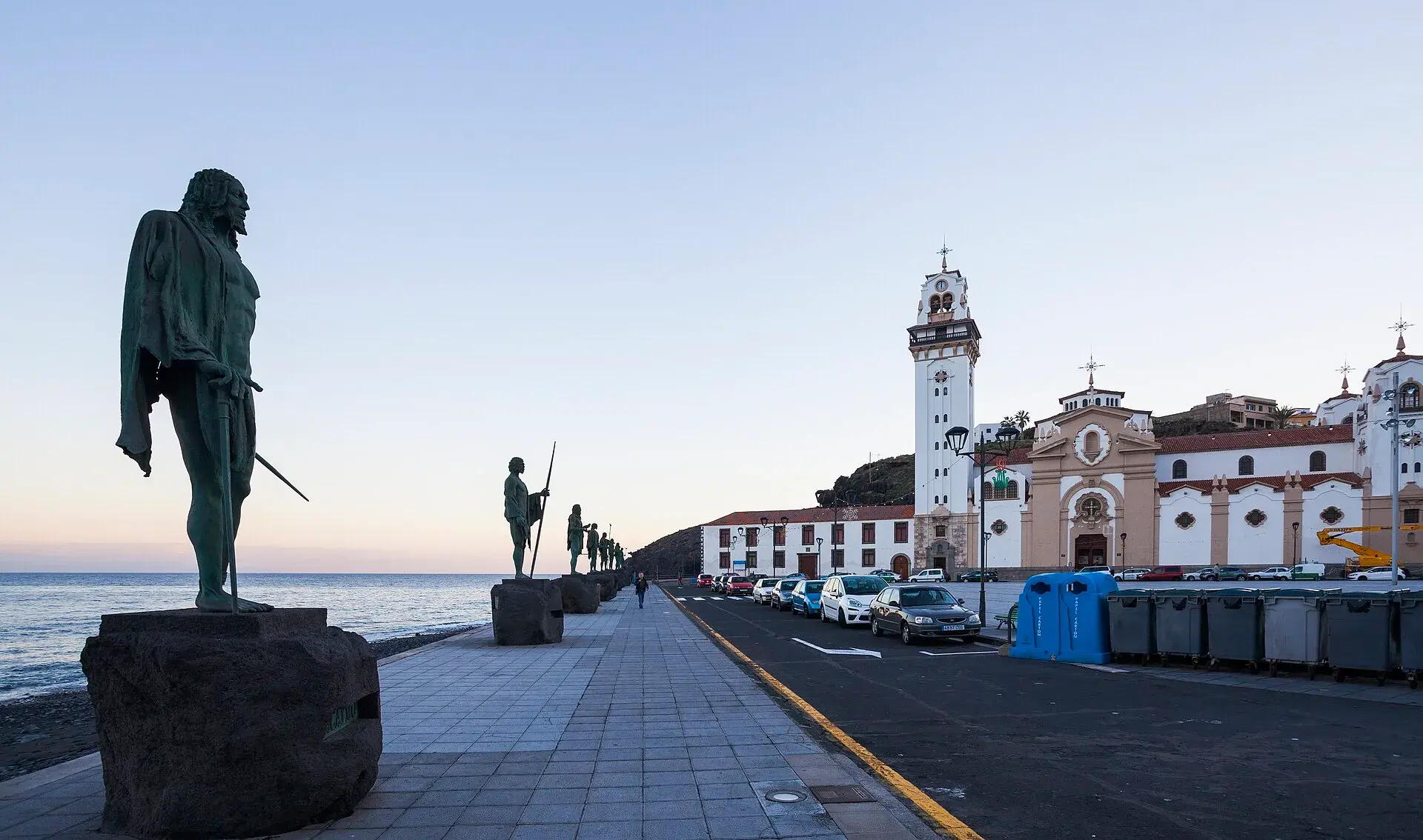
Candelaria Festival 2027: 2 February in Tenerife
The Candelaria festival on 2 February 2027: the candle procession, Mass and procession of the Patroness, usual times, buses and what to see in Candelaria.
Easter in Tenerife 2027: Processions, Adeje and Holidays
Holy Week in Tenerife 2027, 21 to 28 March: La Laguna's Madrugada, the Passion of Adeje, Garachico, La Orotava, public holidays, buses and March weather.